
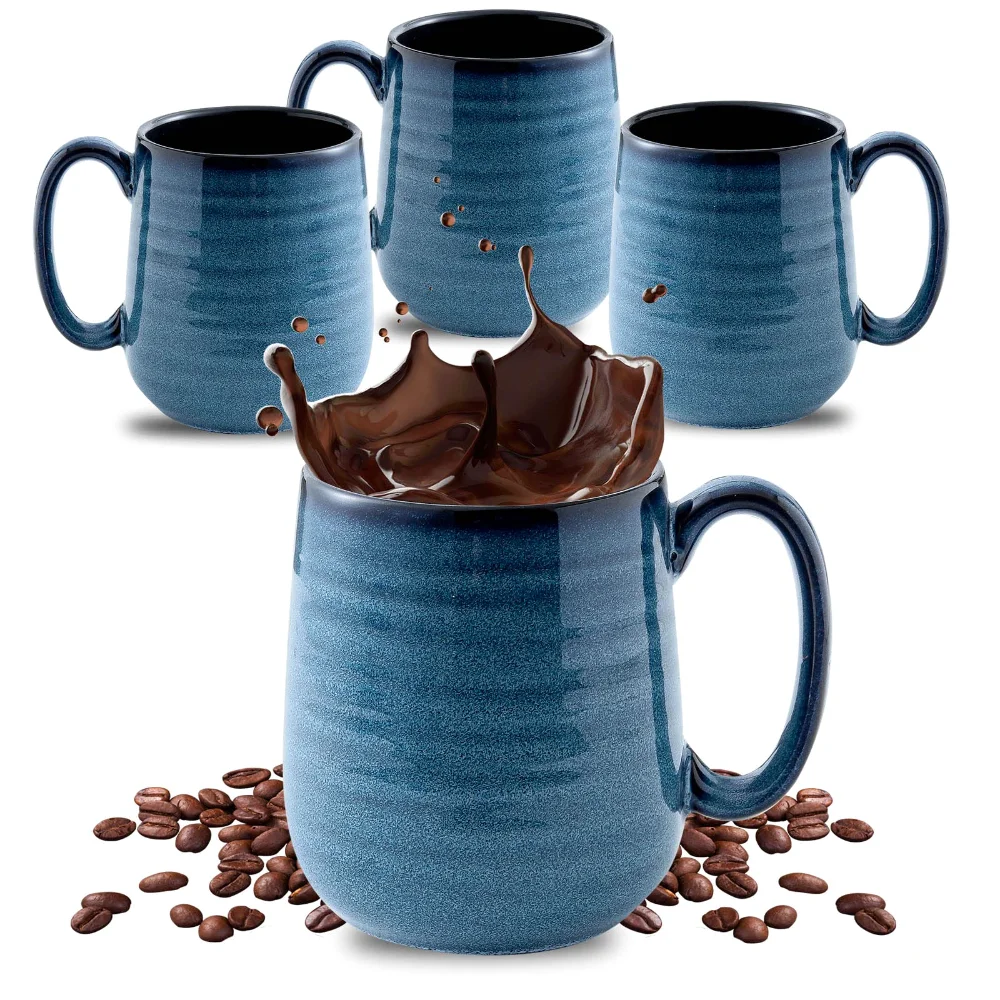
HASENSE Coffee Mugs (Set of 4), 15 oz, Navy
Navy
15 oz
Set of 4
4.8(1,310)
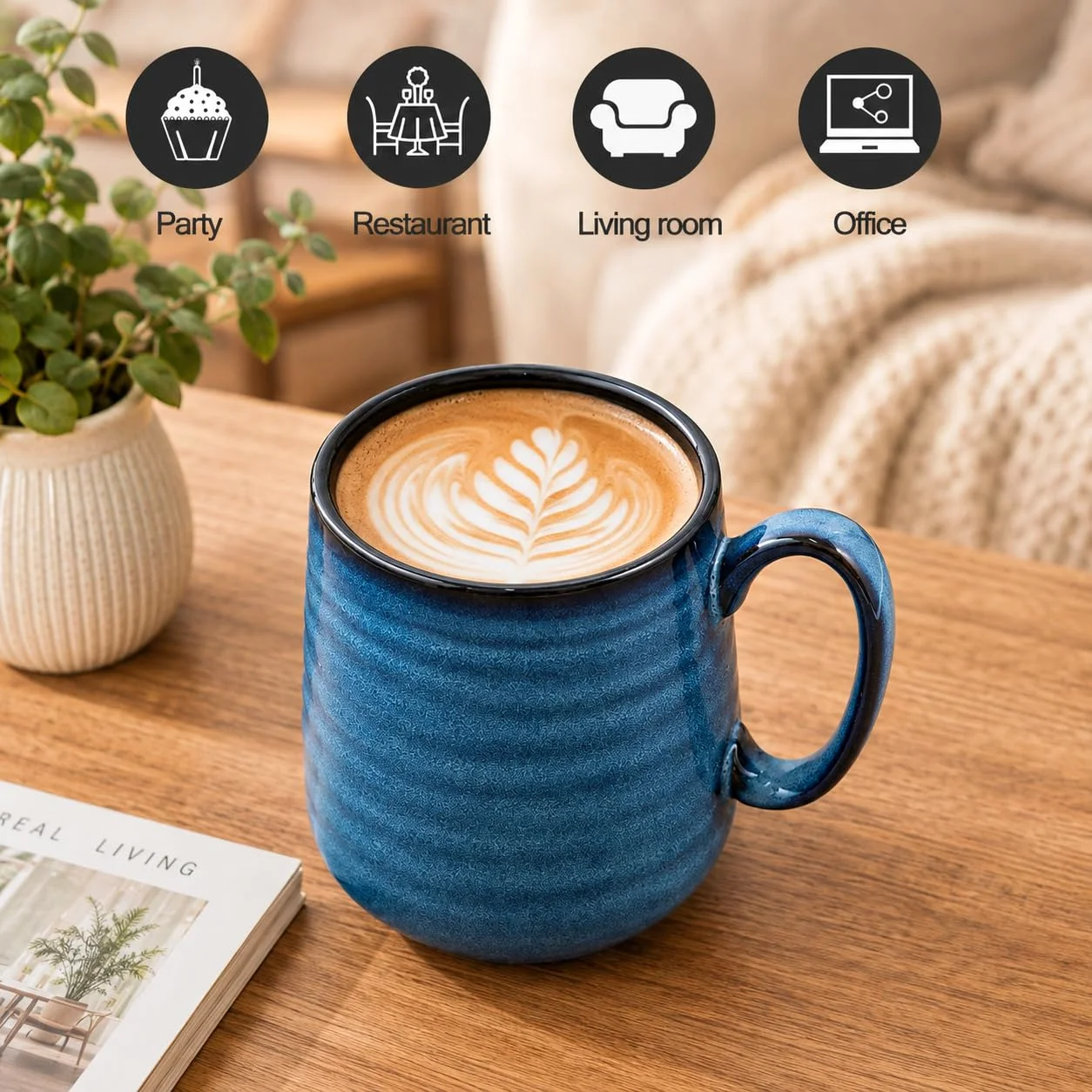
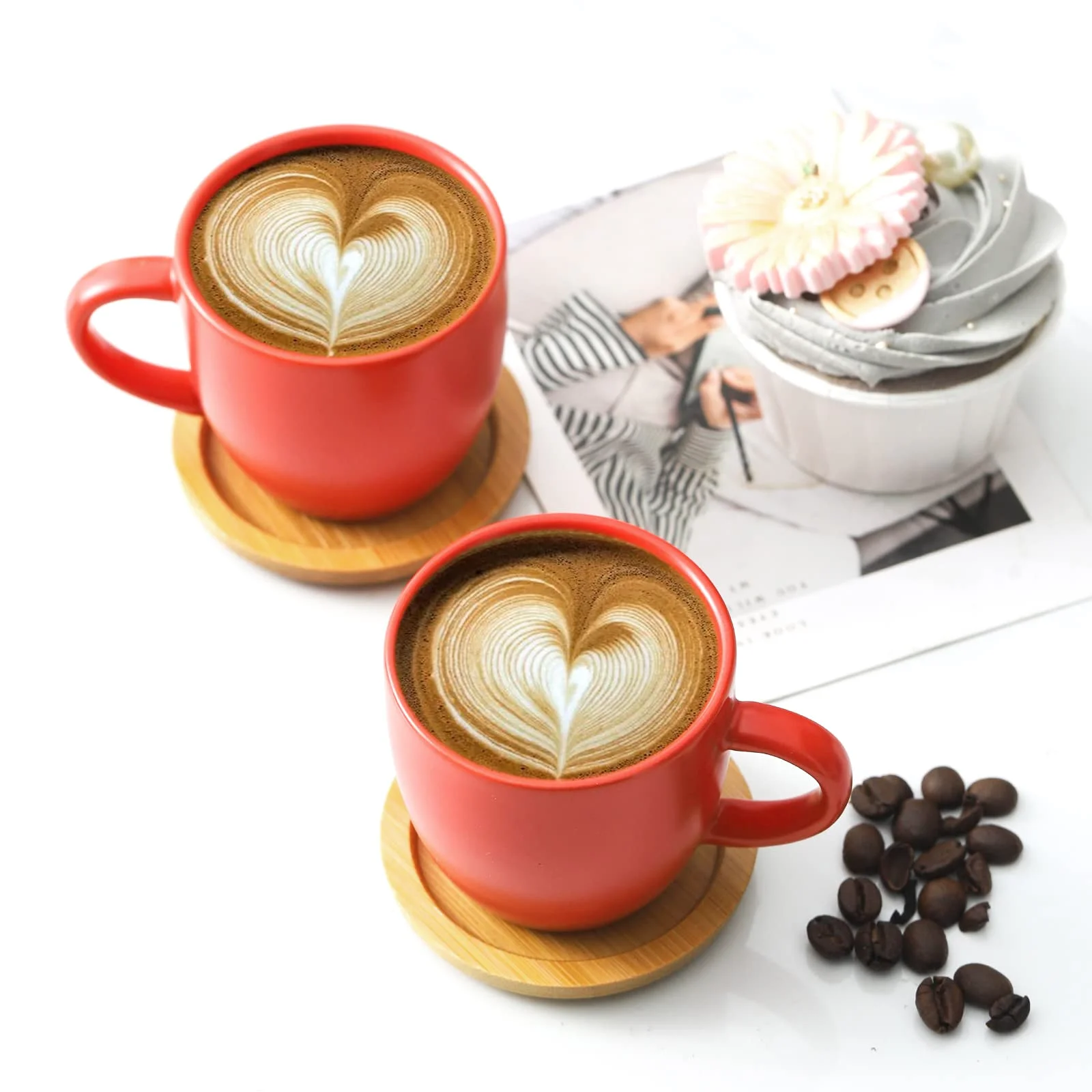
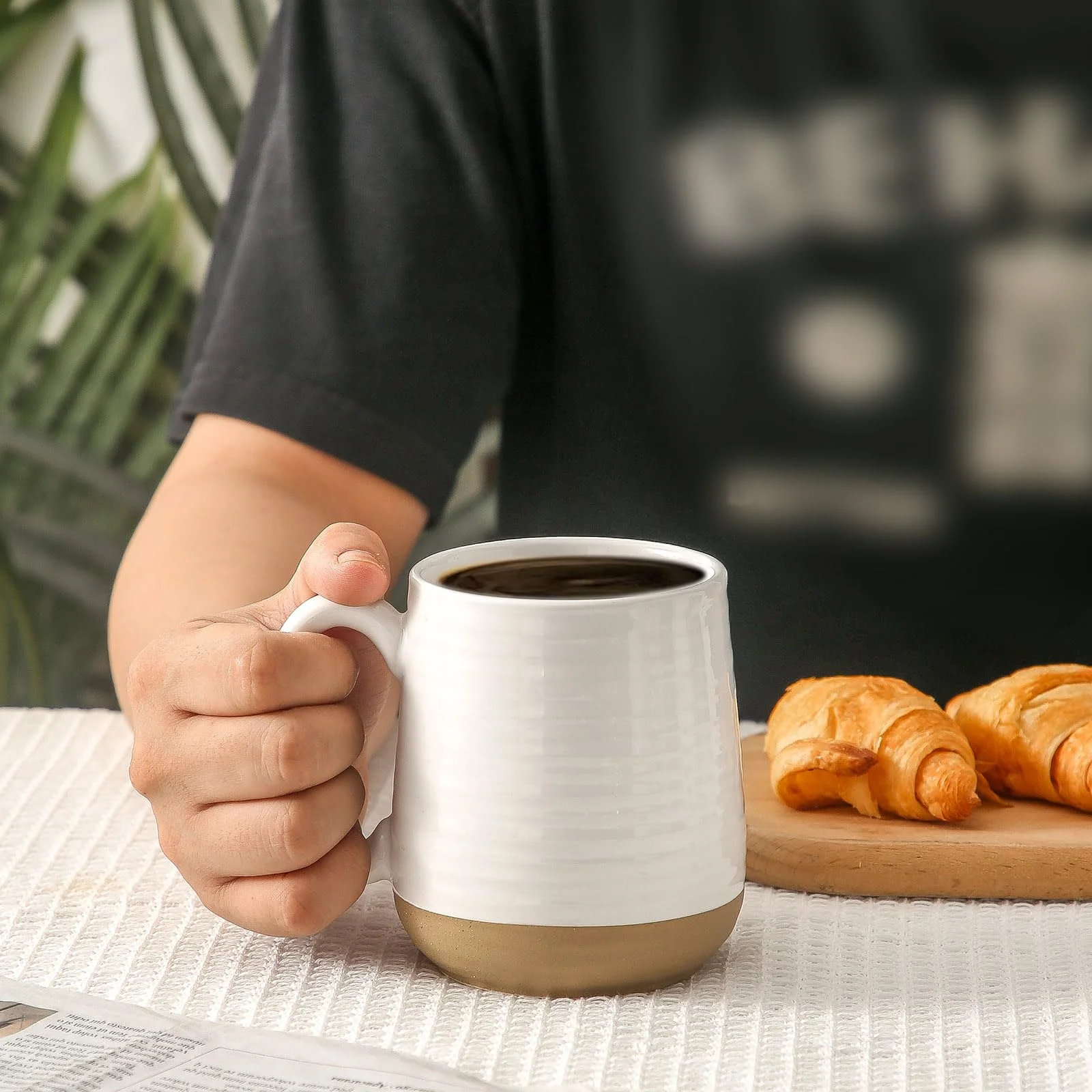
An everyday mug with a thick wall that holds the heat. 4 in the box, 15 oz.
$28.49$7.12 a piece

Mugs, bowls, plates and the small covered pieces that live on a counter, in high-fired bodies with lead-free glazes. 412 pieces are in stock right now, most of them between $15 and $45.
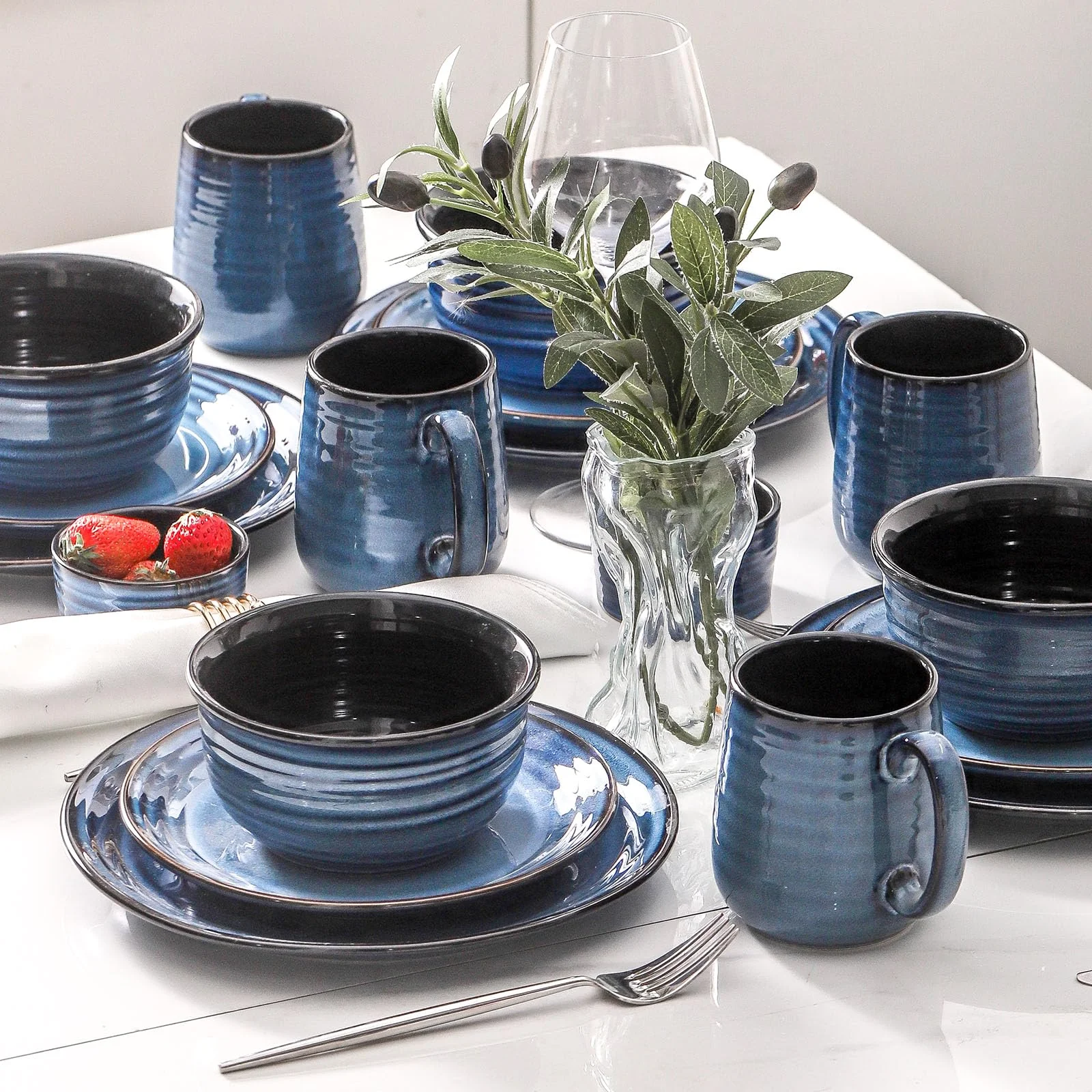
Pick the shape you are short of. Every shelf holds one kind of thing in every size and glaze we make it in, and every card carries its own price and its own button.
Thick-walled bodies in the sizes people actually pour: fifteen ounces for a large coffee, twenty for a slow one, four for an espresso with its own saucer. Every one of them goes in the dishwasher and the microwave.
An everyday mug with a thick wall that holds the heat. 4 in the box, 15 oz.
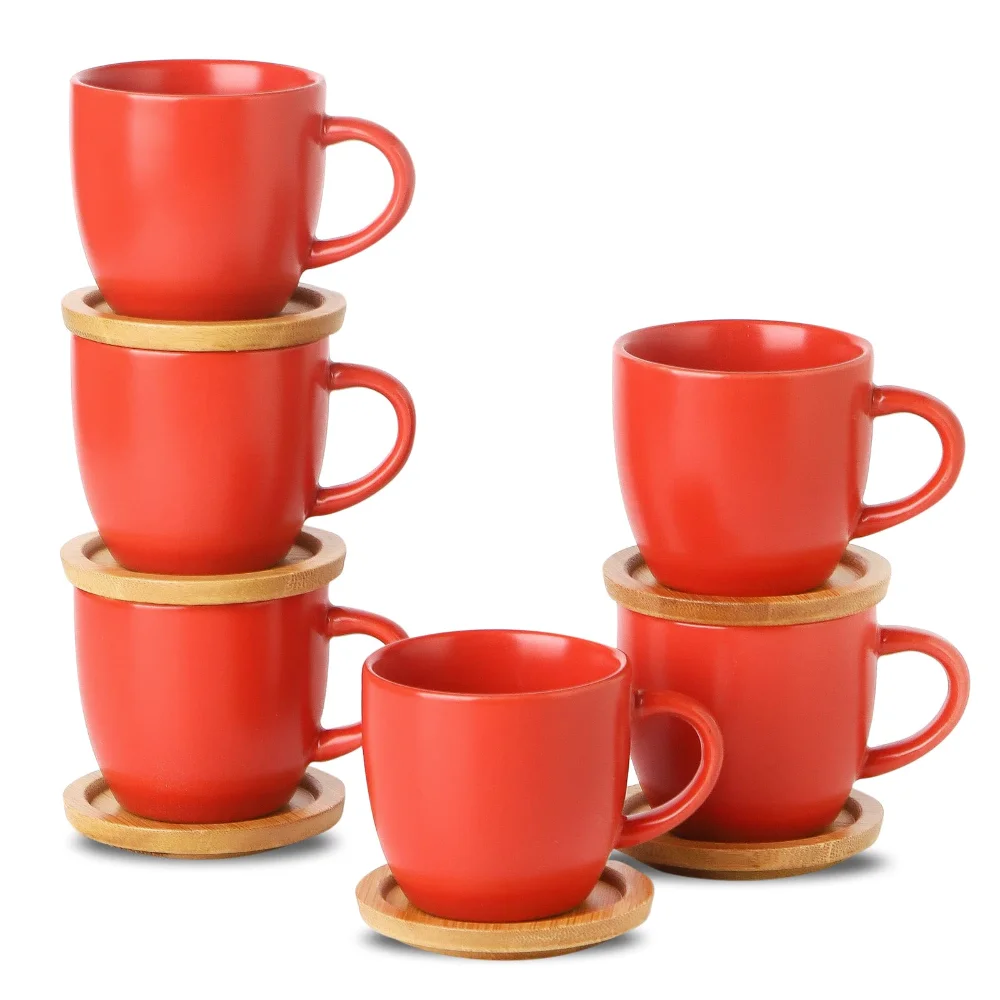
Demitasse cups with their own saucers, thick-walled for heat. 6 in the box, 3.5 oz.
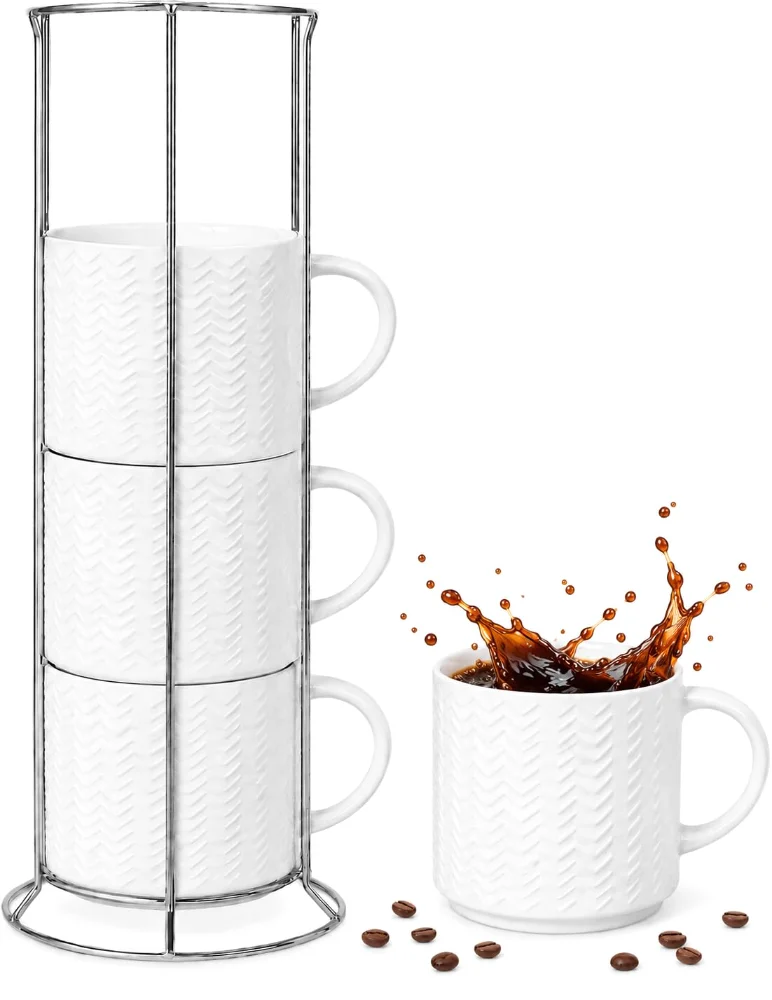
Four mugs and the stand that keeps them off the shelf. 4 in the box, 12 oz, embossed finish.
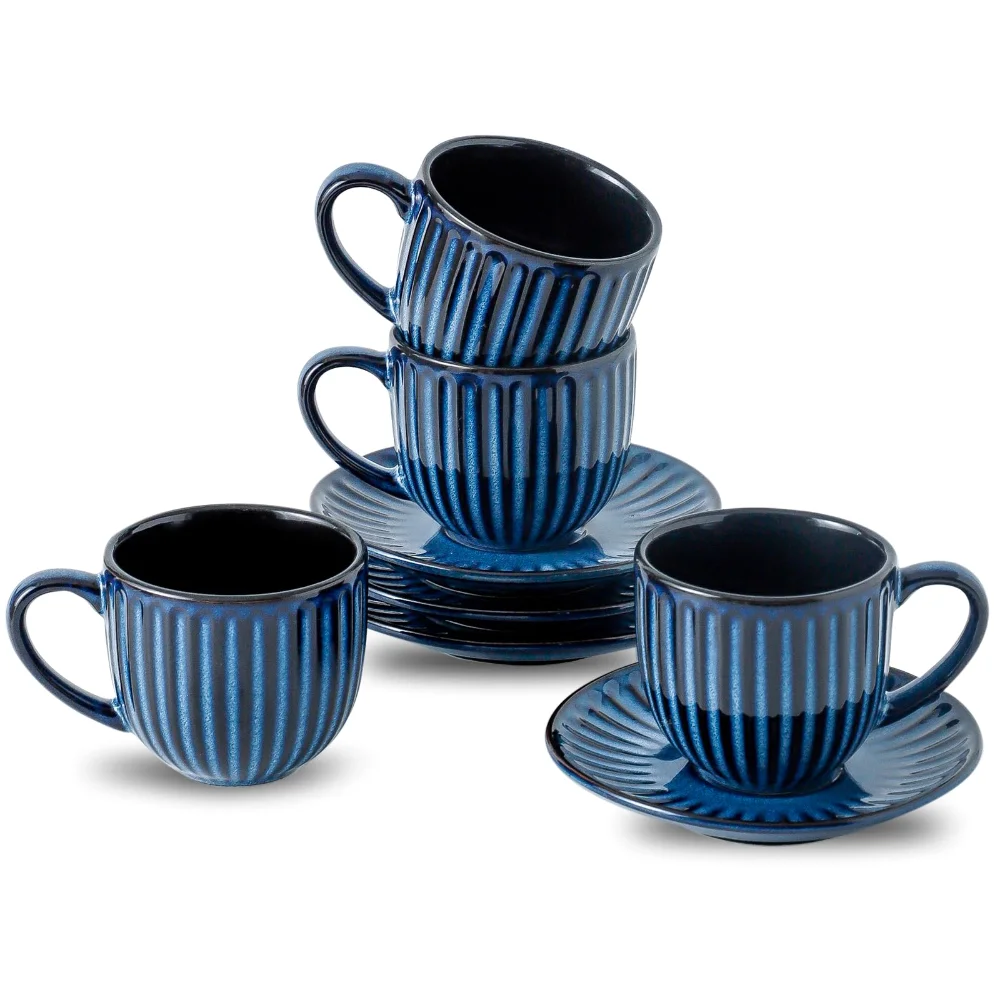
Wider than a demitasse, sized for milk and foam. 4 in the box, 6 oz, ribbed finish.
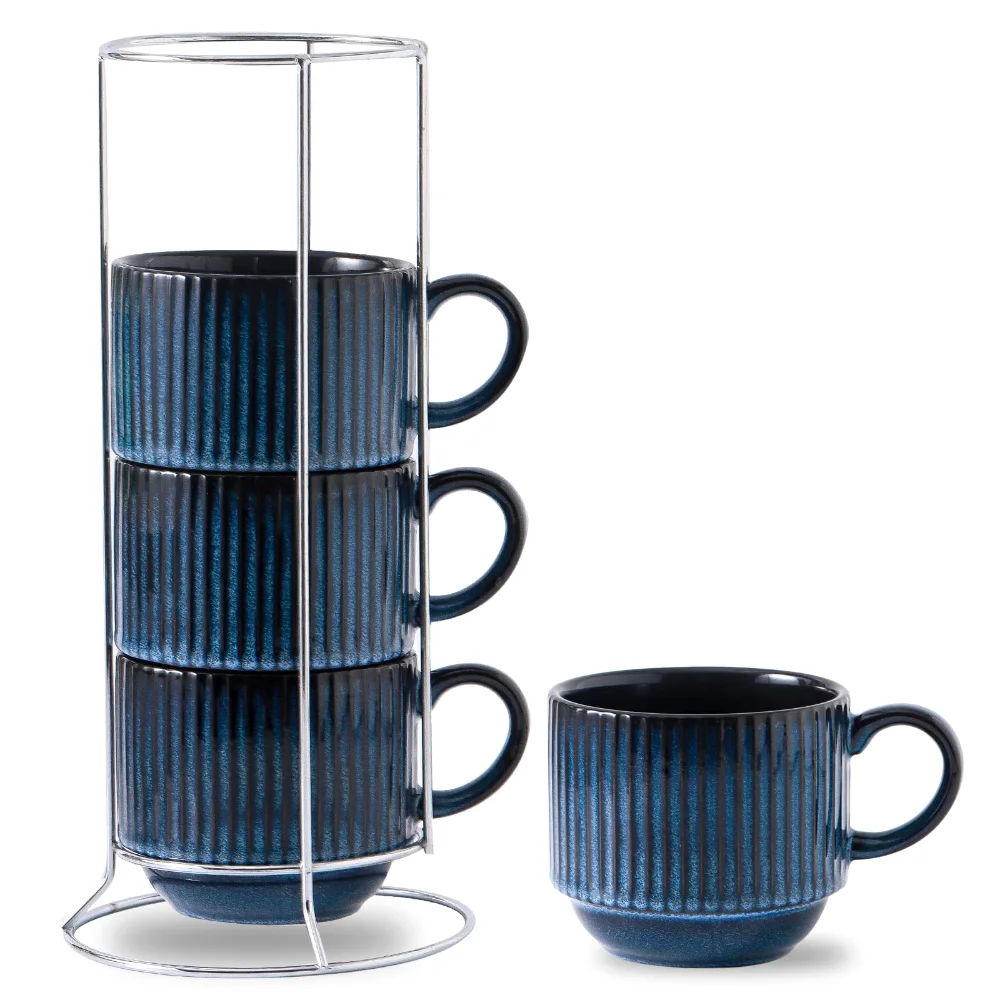
Tapered to drop inside one another and save a shelf. 4 in the box, 15 oz, ribbed finish.
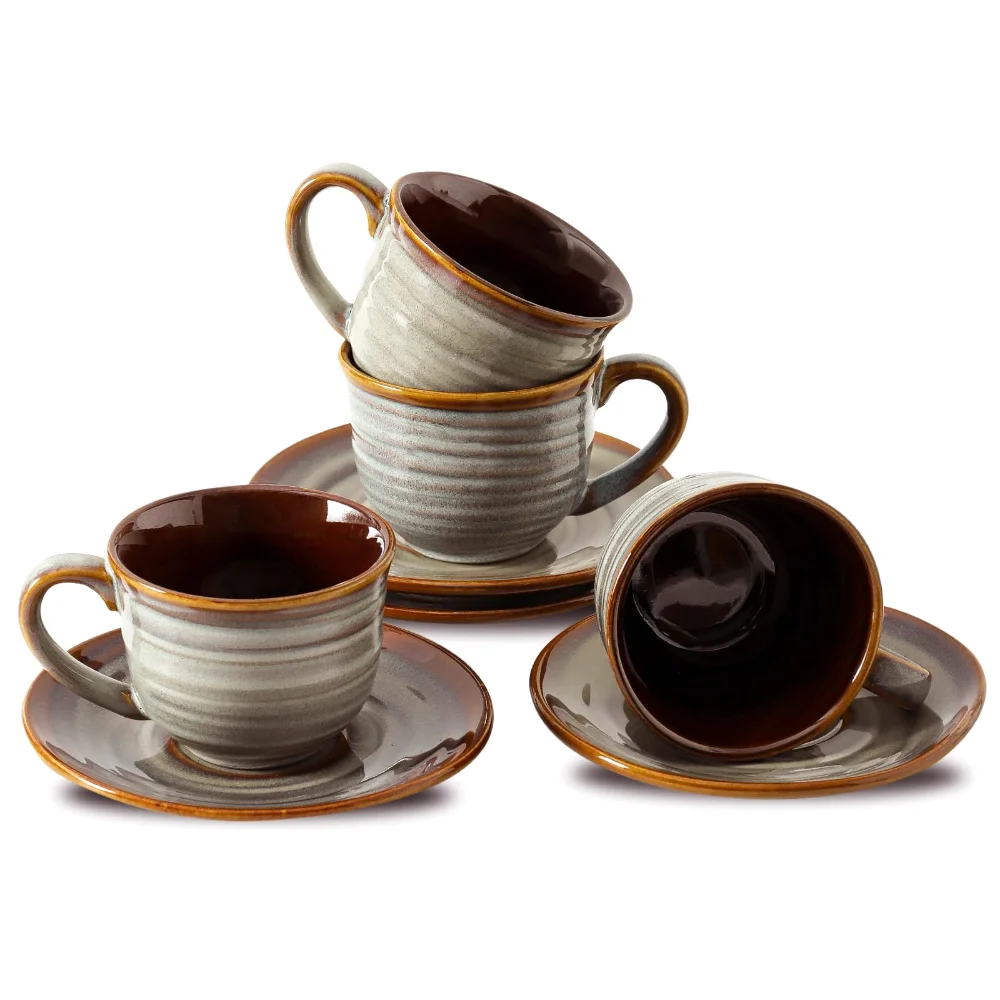
A cup and saucer for tea, thinner in the wall than a mug. 4 in the box, 8 oz.
Clay, ground rock and water, shaped and then heated until the rock melts into the gaps and seals the body. Everything a buyer notices afterwards follows from how hot that went and for how long.
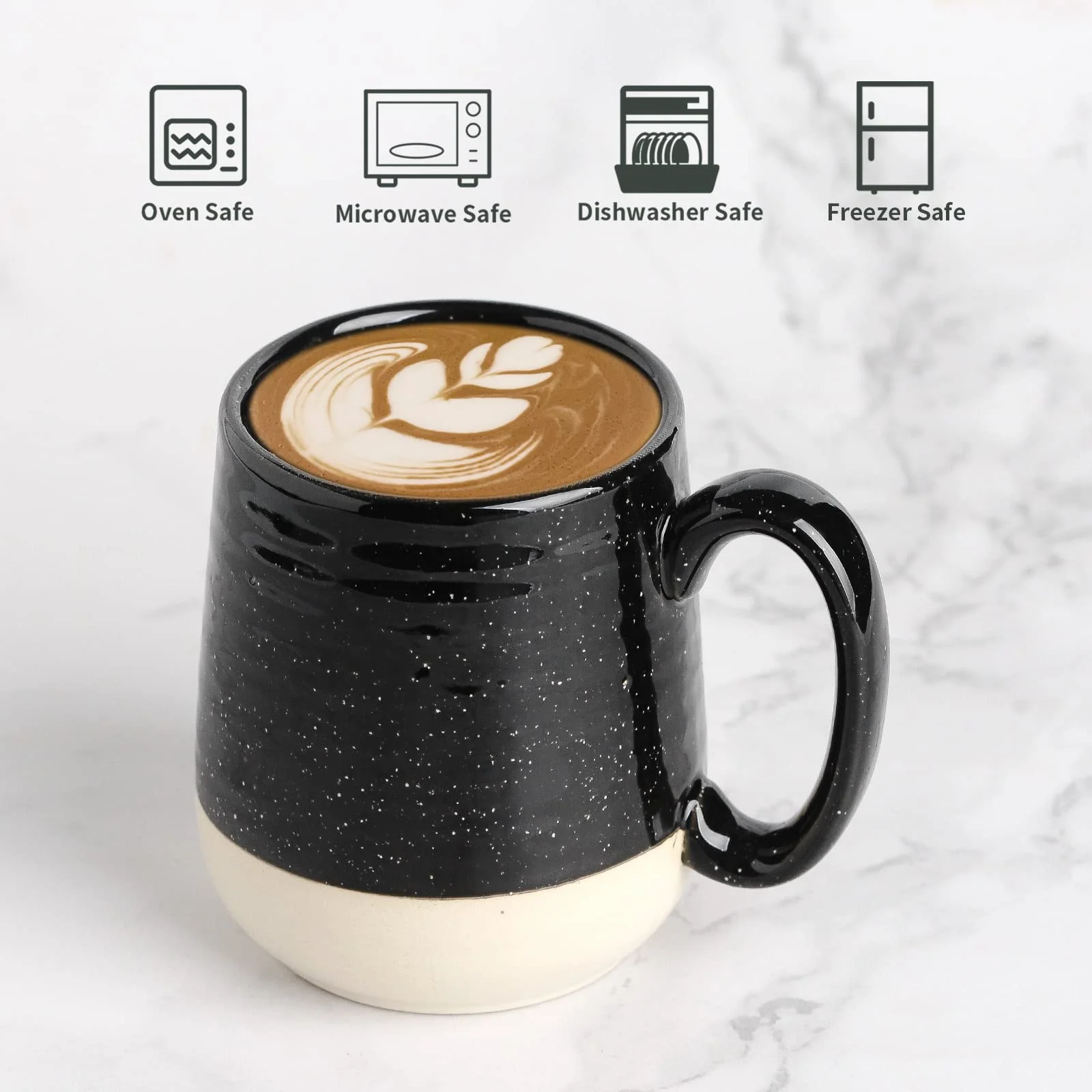
Our mugs, bowls and plates are fired twice at around 2,200 degrees Fahrenheit. The first pass hardens the body and drives the water out of it. The second melts the glaze on and bonds it to a surface that has already finished shrinking. Two passes cost a whole extra kiln cycle, and they are the reason a glaze stays put through years of dishwashing instead of crazing into fine lines.
At that temperature the ground rock in the mixture vitrifies: it flows into the spaces between the clay particles and closes them. A vitrified body barely absorbs water. It does not take on stains or smells, and it survives a hot oven without the trapped moisture that cracks a porous one.
The glaze itself is a thin layer of glass. Ours are specified free of lead and of cadmium, and the pieces built for heat carry their own tested oven limits rather than a figure borrowed from a neighbouring shelf.
Body first, glaze second. The extra kiln pass is what keeps a glaze from crazing after a year in a dishwasher.
A body that does not drink water does not take on stains, smells or the trapped moisture that cracks a piece in an oven.
Both metals are specified out of the clay and the glaze, and both words appear on the product sheet rather than one of them alone.
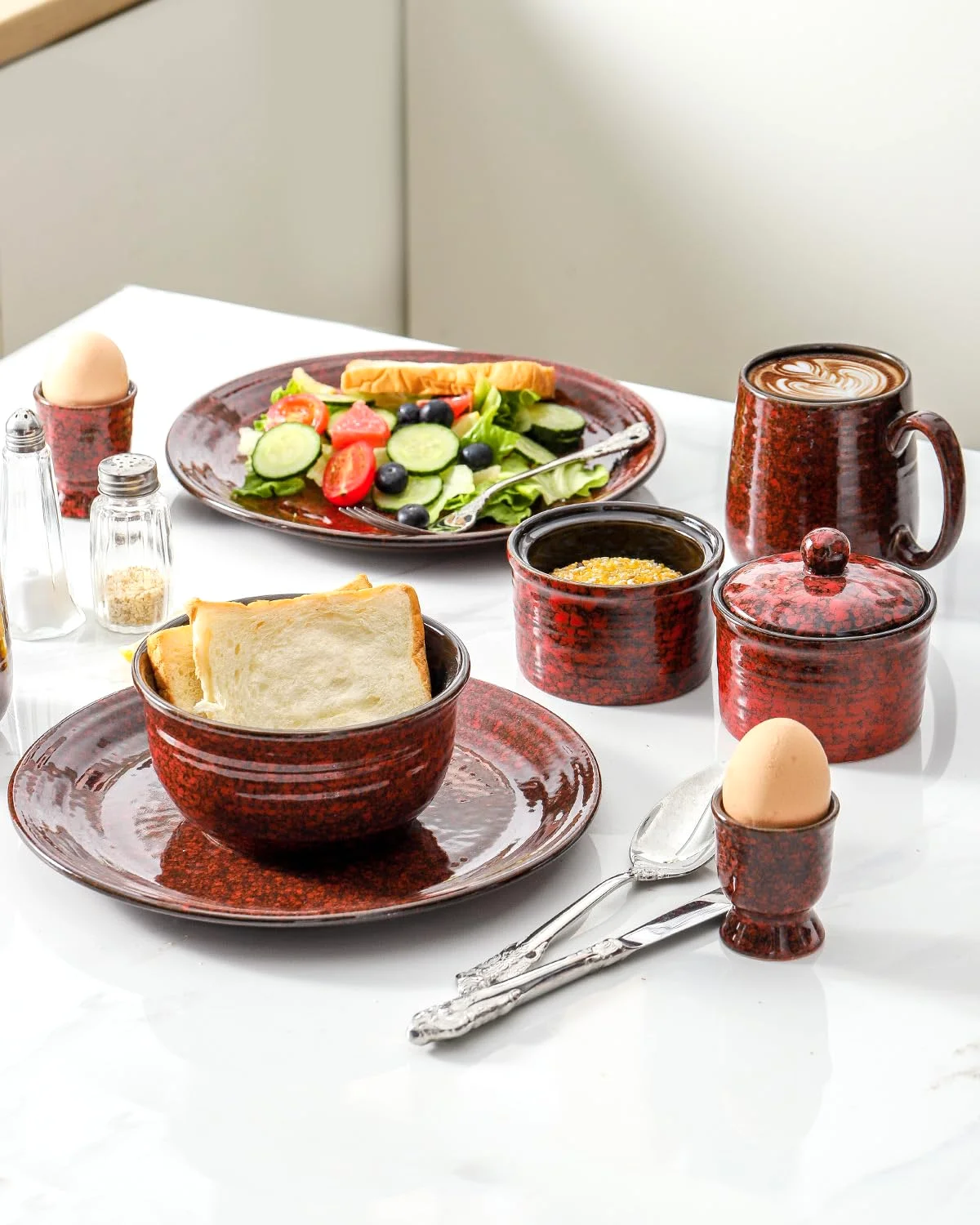
Reactive and gradient finishes pool at the base and break paler at every rim, so no two pieces leave the kiln identical.
Wide shallow bowls for pasta and grain, deeper ones for soup and cereal, and dinner plates with a rounded rim that survives a fork. Sized to fit a dishwasher rack and a twelve inch shelf.
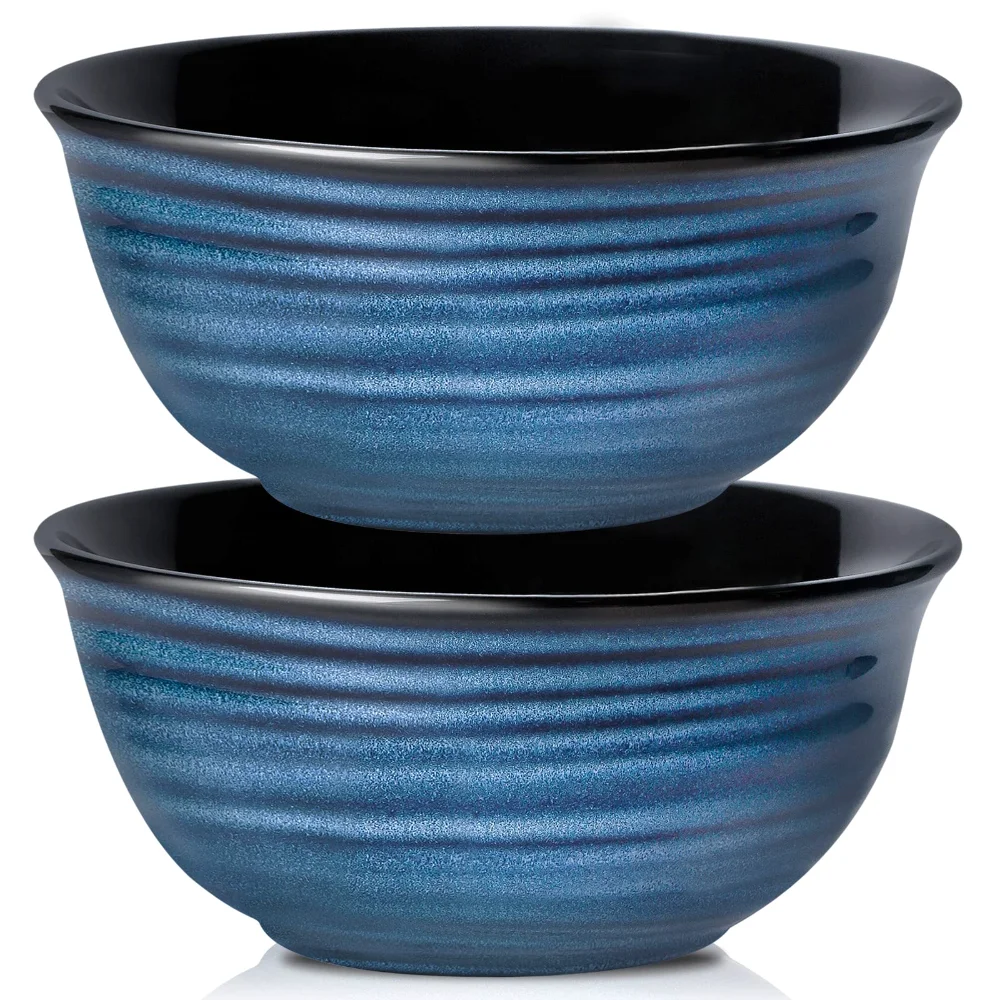
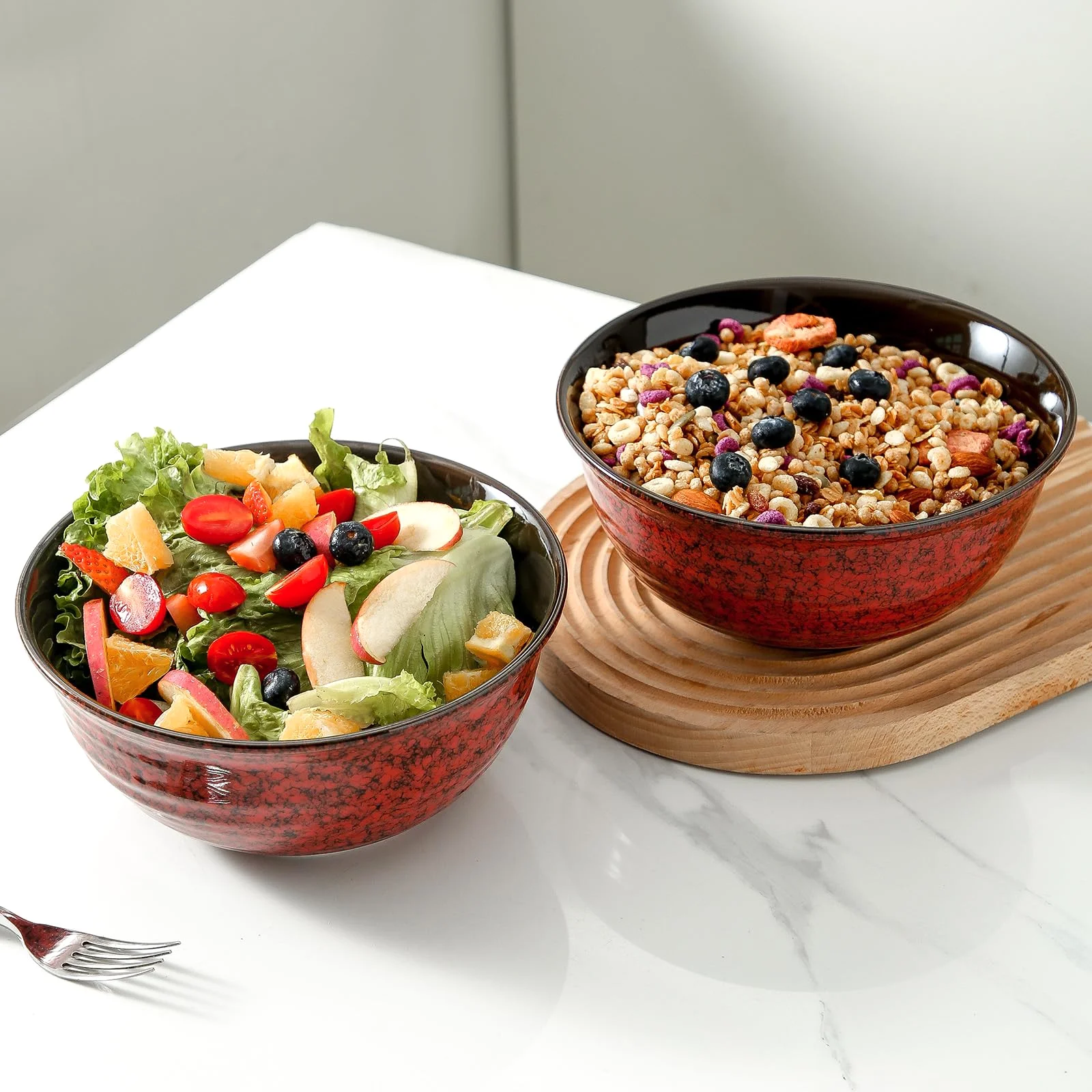
A bowl for the middle of the table rather than a place setting. 2 in the box, 60 oz.
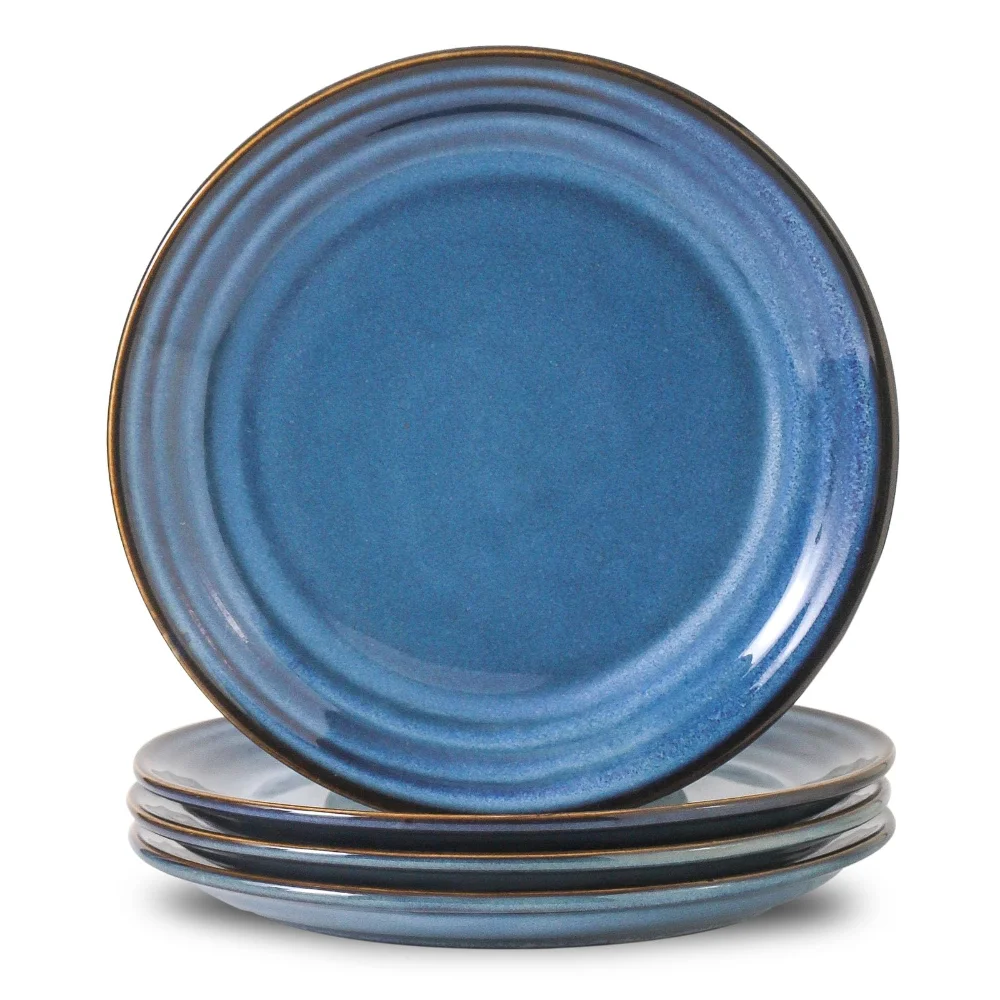
A second-course plate that doubles as a bread or cheese plate. 4 in the box, 8 in.
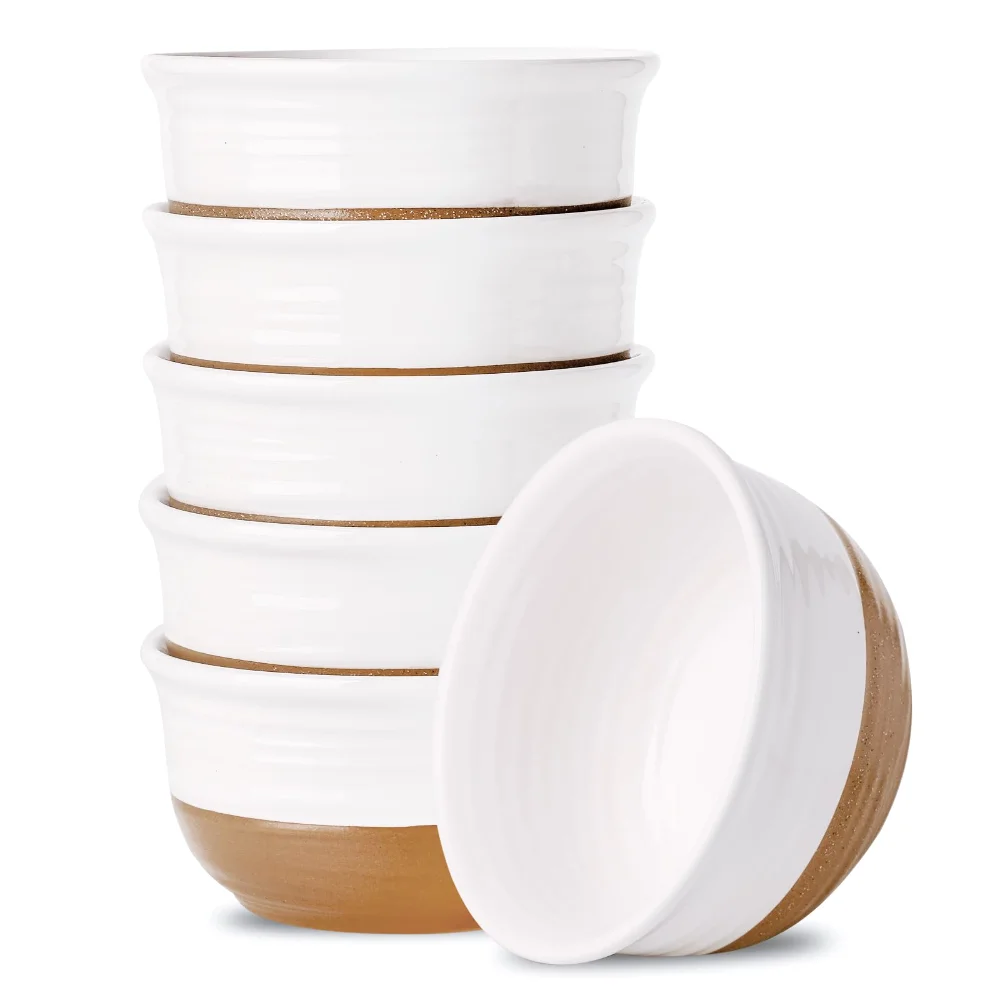
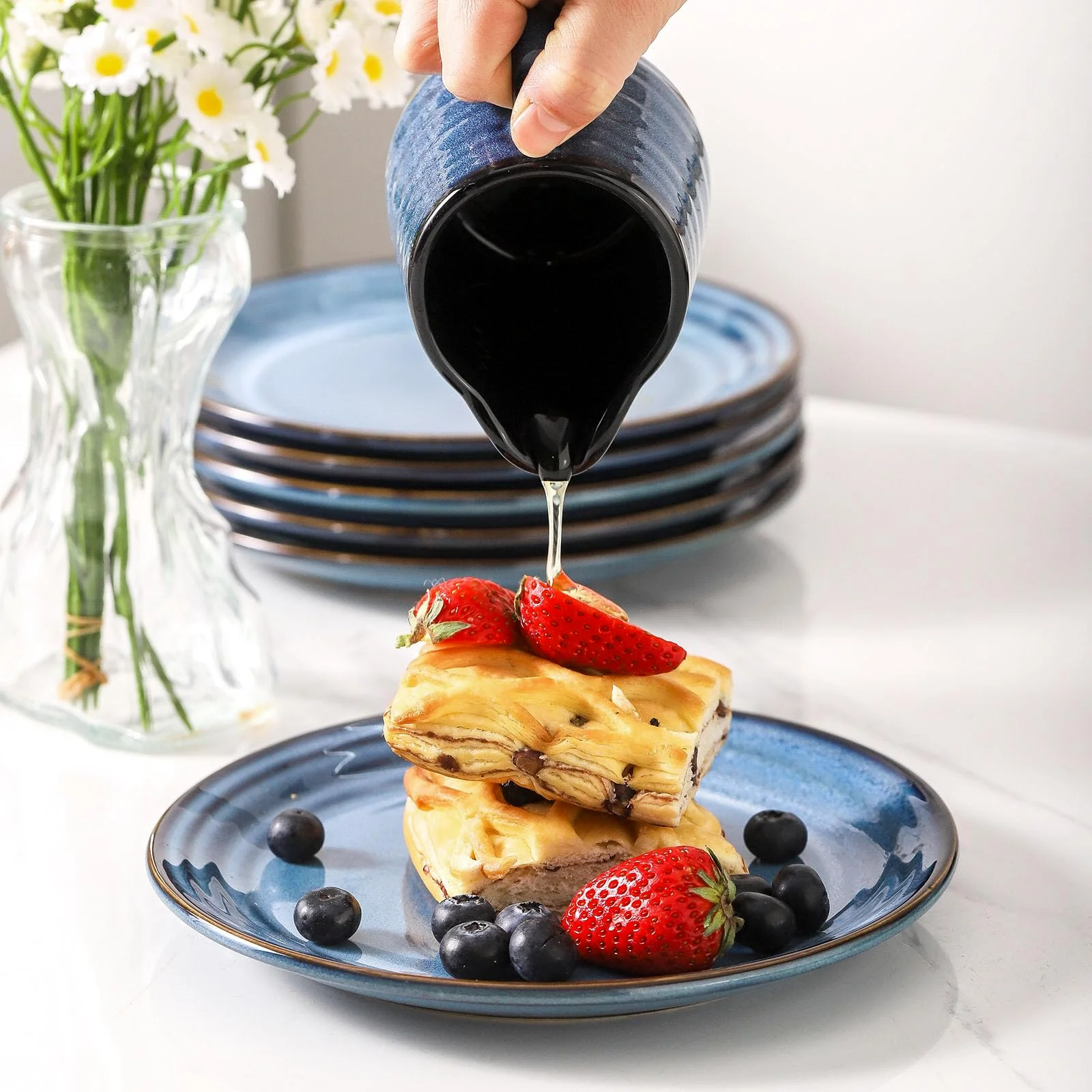
The breakfast bowl that gets used and washed every day. 6 in the box, 20 oz, stackable finish.
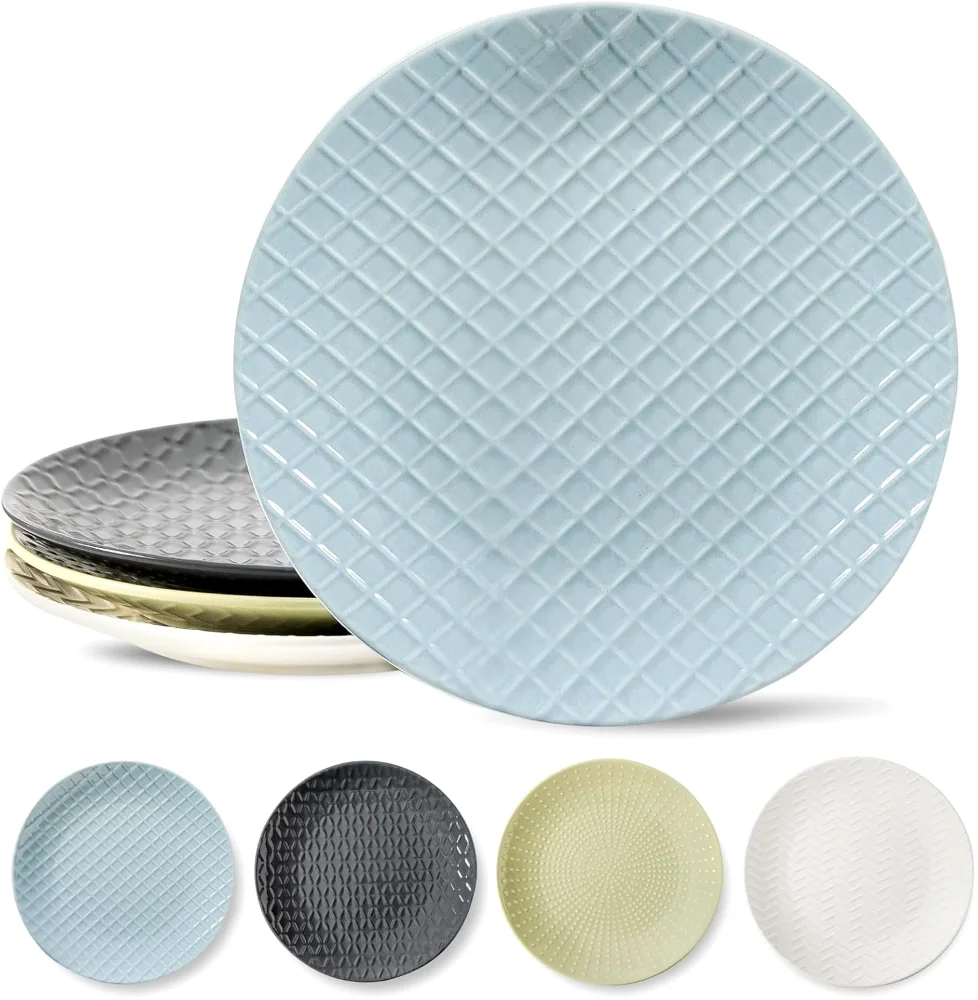
The workhorse plate, sized to fit a dishwasher rack. 4 in the box, 10 in, embossed finish.
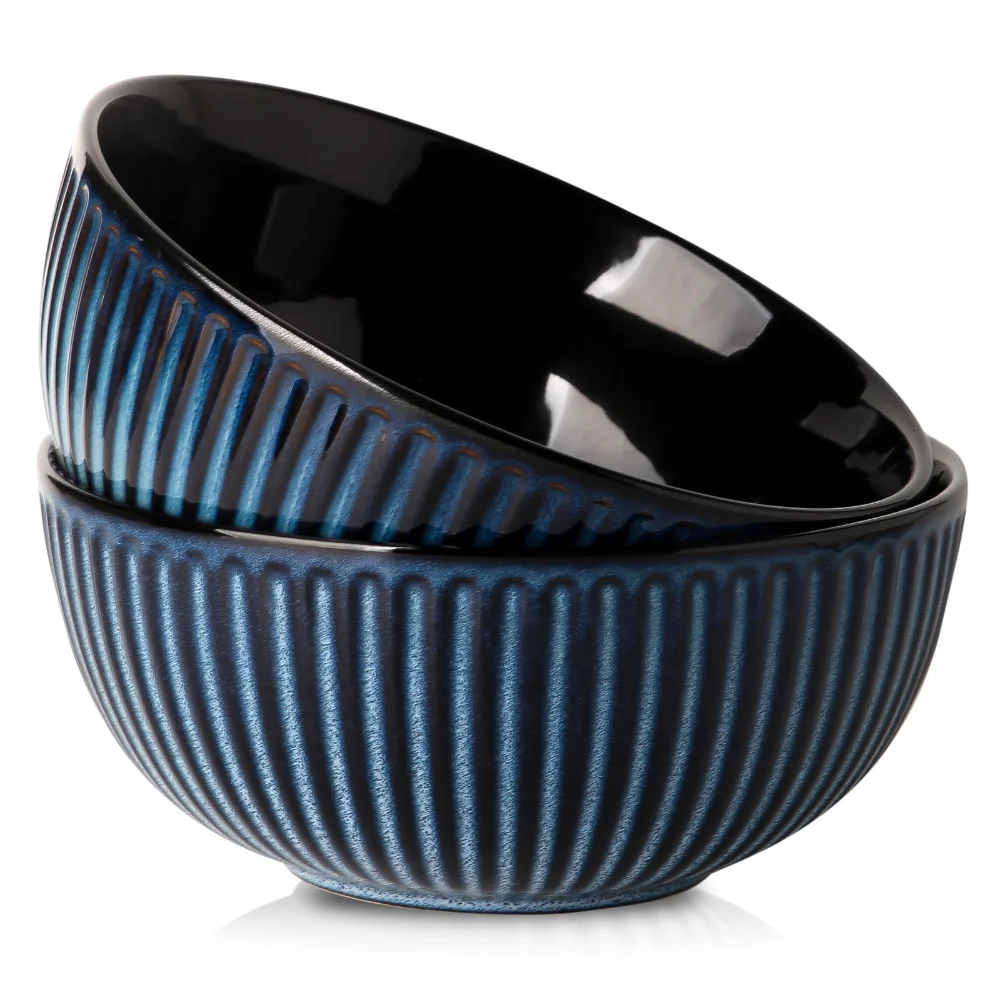
Wide and deep enough to toss in rather than only to serve from. 60 oz, ribbed finish.
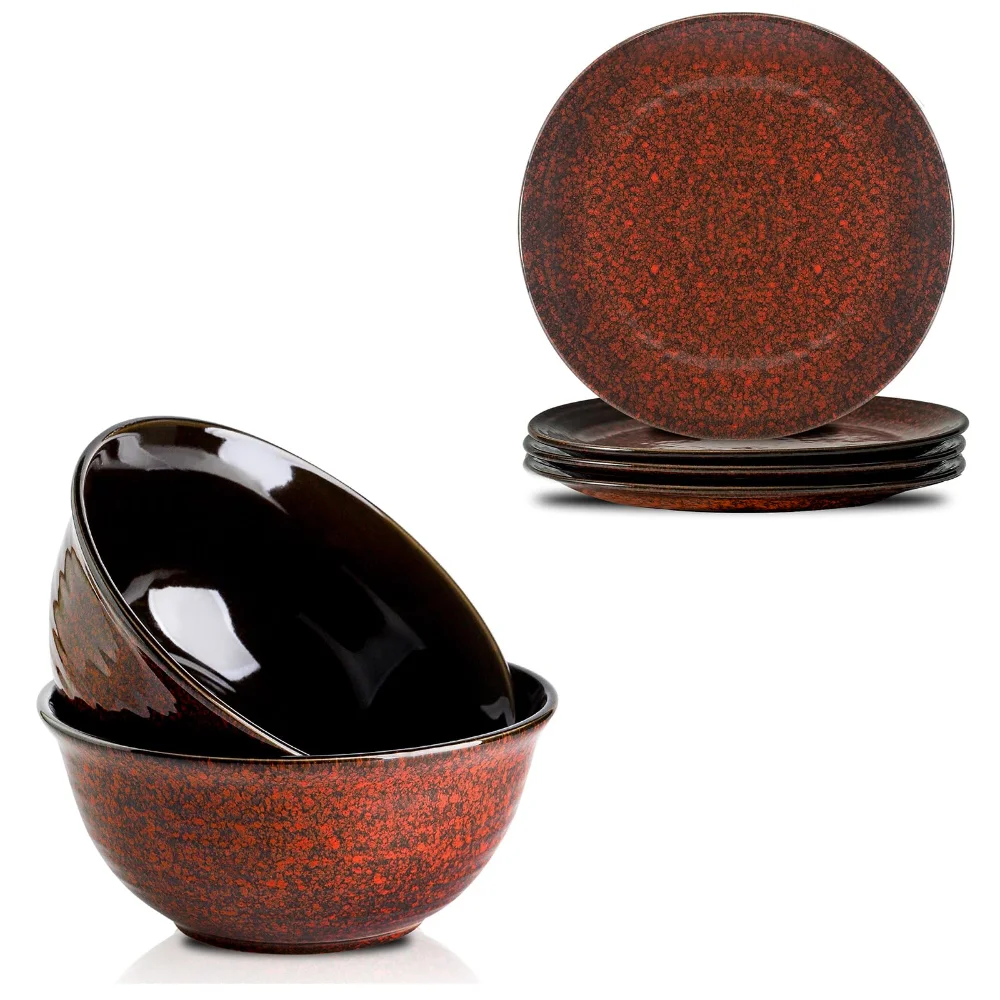
Plates and bowls together, enough to lay a table out of one box. 6 in the box, 10 in.
The same shapes in the finishes we fire them in. Colour pools where a piece is thick and breaks paler at every edge, which is what makes two pieces from one firing recognisably related and never identical.
None of these steps is unusual. Which of them get rushed is what separates one ceramic mug from another at the same price.
Clay, feldspar and quartz are ground with water and passed through a screen. The screen is there to catch a stray iron particle, which would otherwise fire to a brown speck in a white glaze.
Round open shapes are pressed on a mould. Anything with a hollow handle, a spout or an undercut is cast in plaster, which pulls water out of the slip and leaves a shell of clay behind.
The piece dries to leather hardness and the mould line is finished off. Run a thumb up the side of a handle: this is the step you can feel.
The body hardens and shrinks, and becomes porous enough to take glaze evenly.
Dipped, poured or sprayed, then the ring the piece stands on is wiped bare. Glaze on a foot fuses a piece to the kiln shelf.
The glaze melts into glass and bonds to the body. Reactive finishes do their moving here, and the kiln decides what each piece will look like.
Pinholes, crawls where a glaze pulled away from the body, and warping are the usual reasons a piece does not leave.
We started with one shape and one glaze, and the shelves grew outwards from the pieces people came back for. That is why our shelves are wide across small things and narrow across grand ones: nobody was ever short of a soup tureen, and everybody was short of a butter dish. the HASENSE range still follows that shape today.
Butter kept spreadable under a lid, a spoon that stops making rings on the worktop, coffee in a jar that seals, and a crock heavy enough to stay put when you pull a spatula out of it.
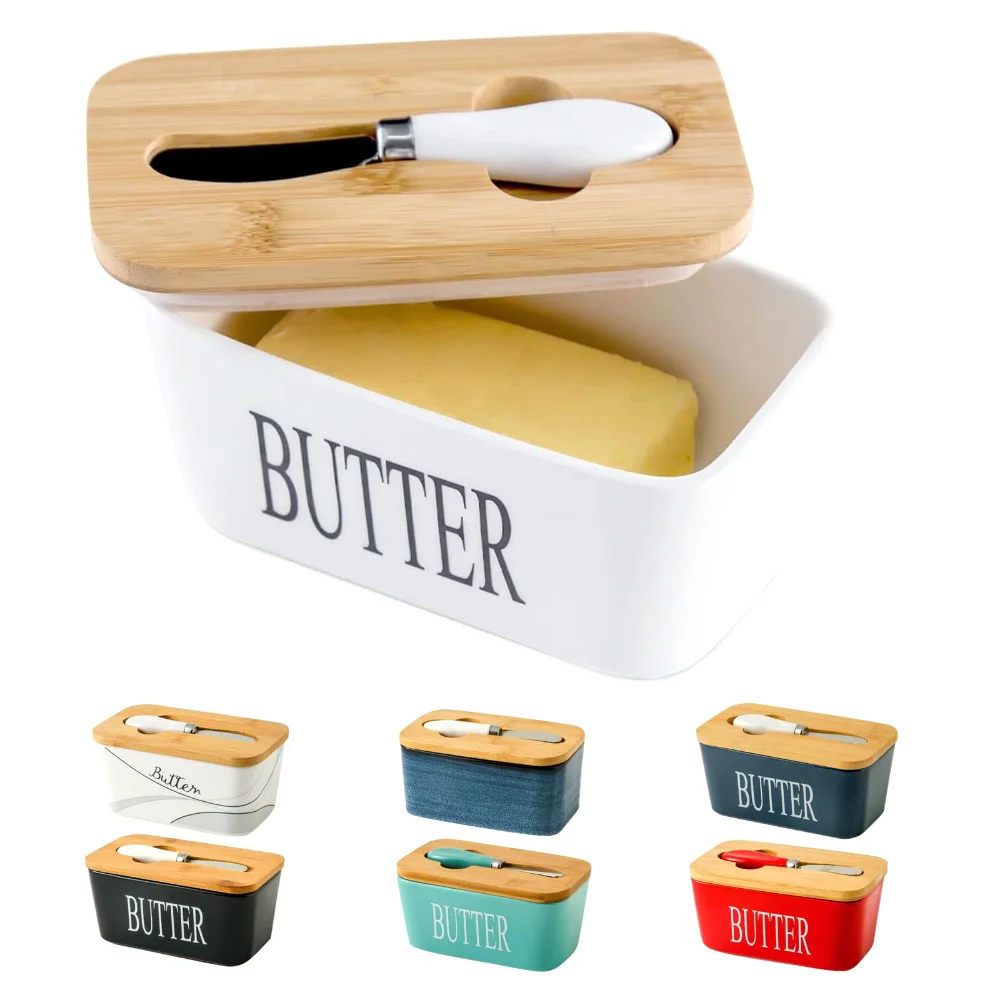
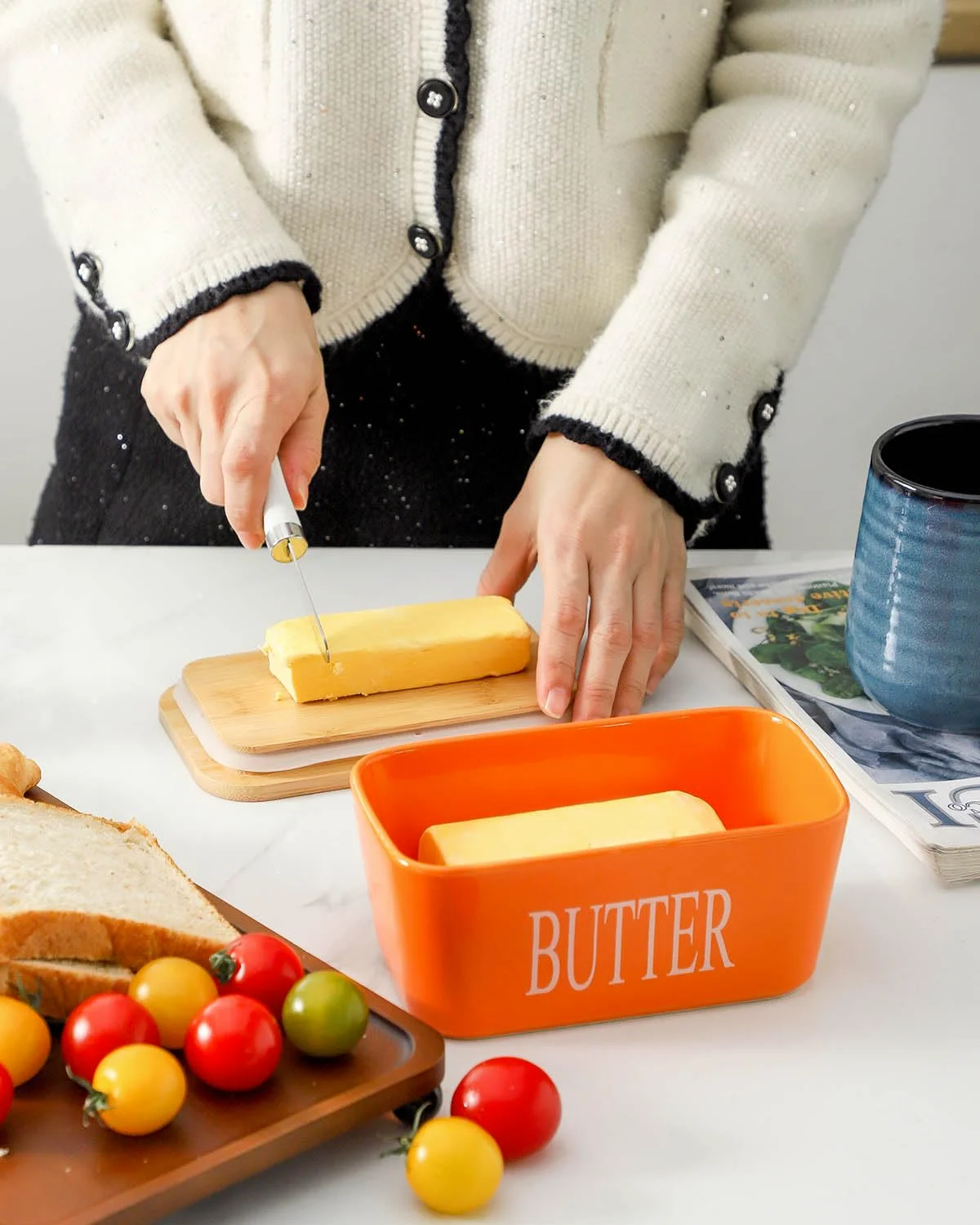
A covered keeper that holds butter spreadable and clean.
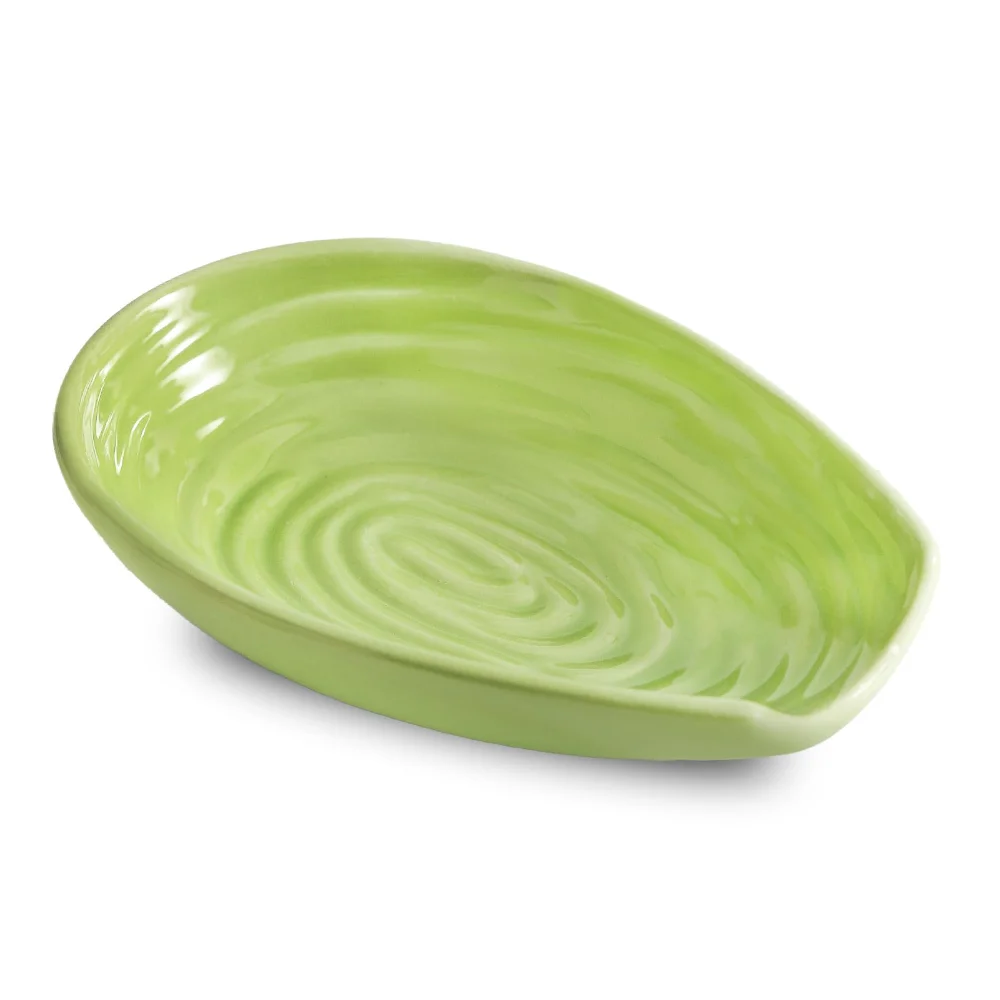
Wide enough for a ladle without the handle tipping it.
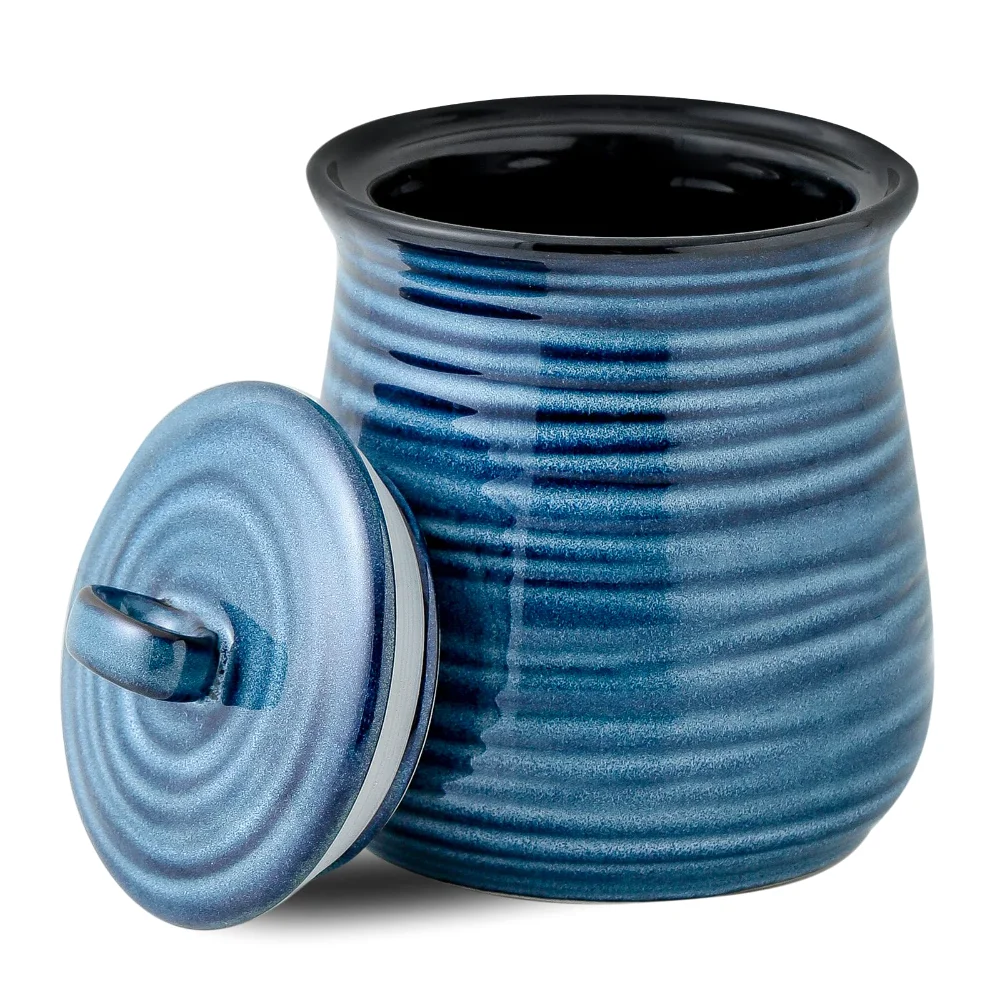
A sealed jar for a worktop rather than the back of a cupboard. 30 oz.
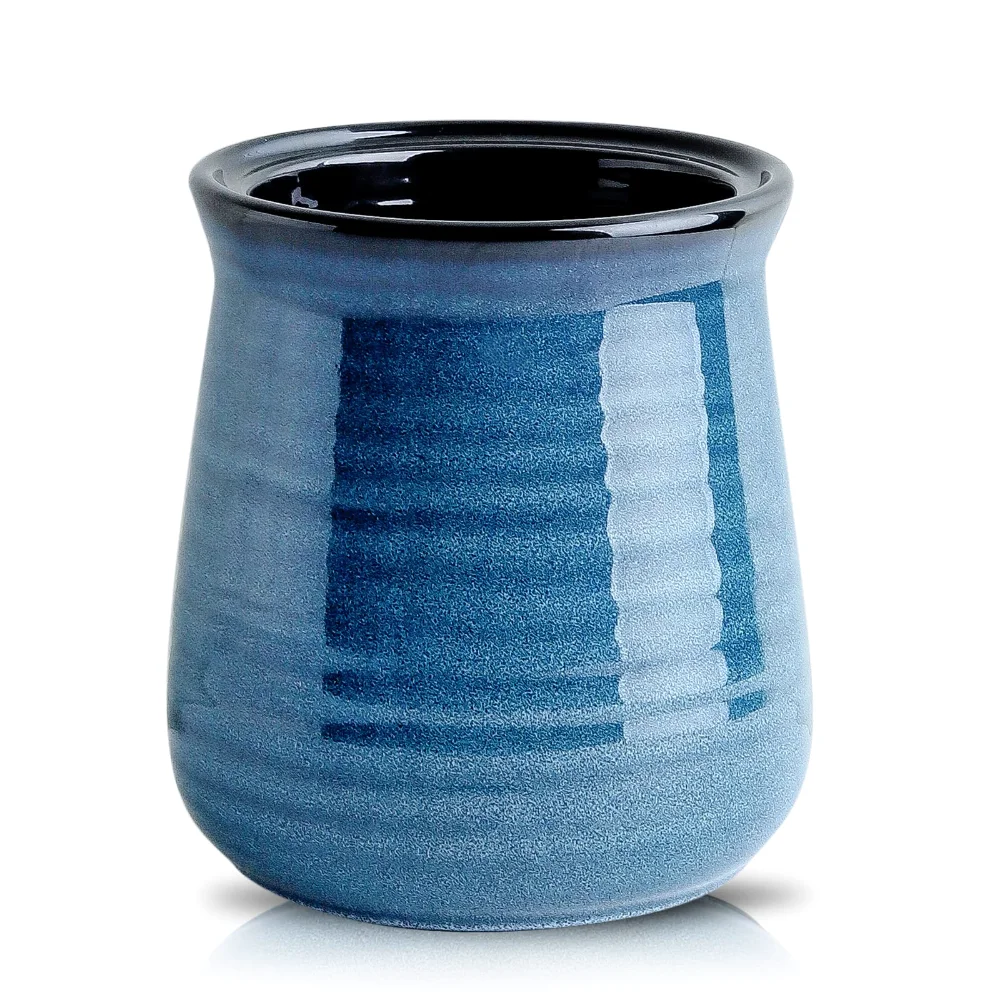
Heavy enough to stay put when a spatula comes out of it. 7.1 in, reactive glaze finish.
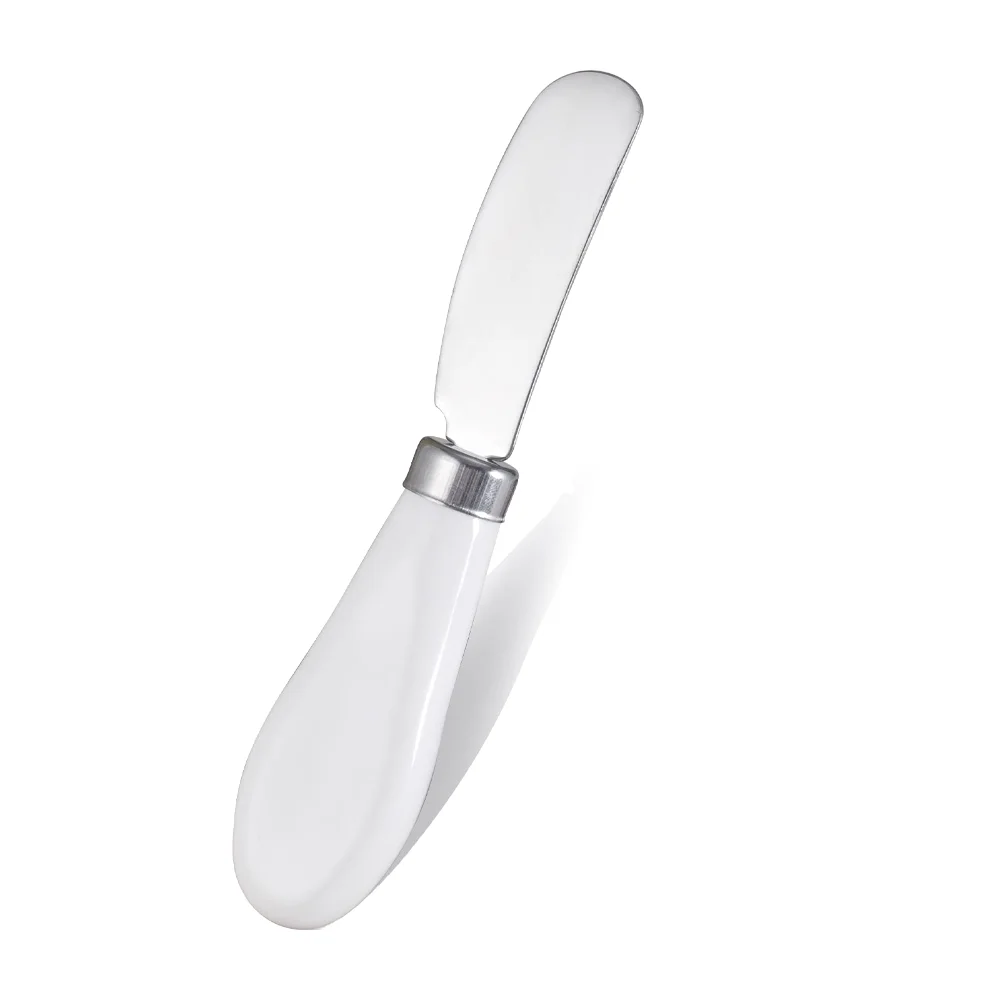
The knife that fits inside the keeper.
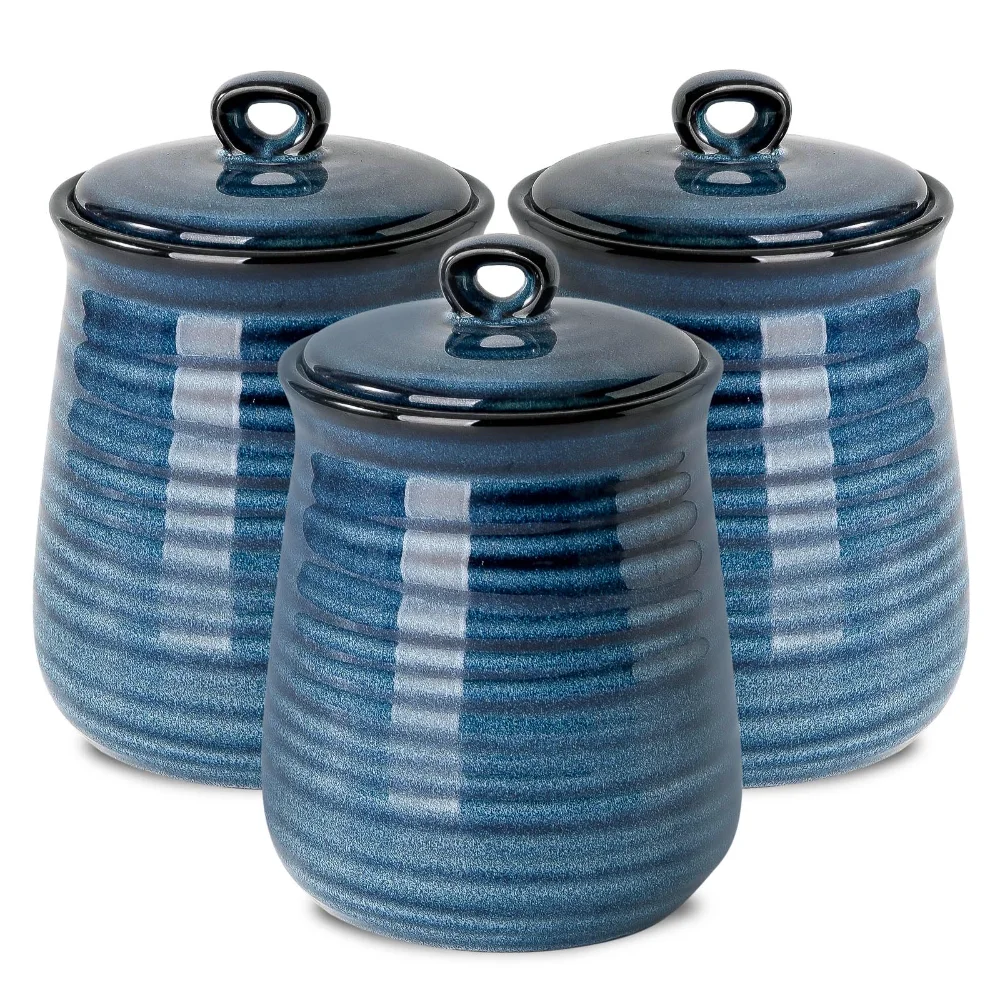
An airtight canister for coffee, tea, sugar or flour. 3 in the box, 25 oz, vintage finish.
Four materials that all end up on a dinner table, with the properties that matter in a kitchen rather than in a showroom. The middle column is ours.
| HASENSE high-fired ceramic | Low-fired earthenware | Bone china | Melamine | |
|---|---|---|---|---|
| Typical firing | Twice at about 2,200 °F | Once, 1,800 to 2,100 °F | About 2,200 °F, then decorated | Not fired; moulded plastic resin |
| Water absorption | Very low, body is vitrified | High, relies on the glaze to hold liquid | Very low | None |
| Weight for the size | Heavy | Light | Very light | Very light |
| Chipping at the rim | Resists it well with a rounded rim | Chips readily | Chips at a thin rim, though the body is hard | Does not chip; scratches and dulls |
| Microwave | Yes | Yes, unless decorated with metal | Usually not, gold rims are common | No |
| Oven | Yes on the bakeware shelf, to the figure on the card | Rarely | No | No |
| Dishwasher | Yes | Yes, though a porous foot stays damp | Often hand wash only | Yes, top rack |
| Keeps a drink hot | Yes, the mass does the work | Moderately | Poorly, the wall is thin | Poorly |
| Feels like | Solid, cool, slightly heavy | Warm, light, casual | Fine, formal, delicate | Light, plastic, forgiving |
| Best at | Everyday use that includes a dishwasher and a hard floor | Decorative pieces and planters | A table set on purpose | Outdoors and small children |
Rows describe the material classes as they are generally made. Figures for our own pieces are on each card, and the oven limits differ from shelf to shelf.
Our pieces are heavier than bone china and than melamine. A stack of six dinner plates is a real carry, and outdoors with small children a plastic plate is the sensible answer.
Heat. A thick vitrified wall holds a drink warm through a long morning, and the bakeware goes from freezer to oven without a change of dish.
Dishwashers. Almost everything modern survives one. What separates pieces is whether the glaze crazes after a year, and that is decided in the kiln.
Glaze chemistry is the one part of ceramics that genuinely matters to health, and the agencies that publish on it outrank any opinion of ours.
Historically the most effective way to make a glaze melt at a low temperature was to put lead in it. Lead flows smoothly and produces a bright, glossy surface in a simple kiln. That is the whole reason lead glazes existed.
The United States Food and Drug Administration sets out the mechanism plainly. Earthenware is porous and has to be glazed in order to hold food or liquid; a lead glaze binds its lead into the glass only when the piece is fired at the right temperature for long enough; and if the firing is too cool or too short, the lead can move out of the glaze and into food. The same agency notes that ware made in commercial factories for everyday use is far less likely to have a lead problem than traditional pottery fired in old or small kilns.
The agency also states that no federal regulation authorises lead as a component of foodware, cookware or food-contact surfaces, and publishes a compliance guide that inspectors work from when deciding whether ceramic ware releasing lead should be held at the border or taken off sale.
Our own clay and glaze are specified free of lead and of cadmium, and every piece is fired twice at around 2,200 degrees. Those two facts are on the product sheets. What we will not do is print a certificate number that a reader cannot go and check.
Specified out of both the clay body and the glaze, on every shelf.
Two passes at about 2,200 °F. Binding a glaze is a matter of heat and time.
Everything here is made to hold food. Decorative ceramicware is labelled differently, and for a reason.
No gold or platinum rims anywhere, which is what keeps the whole range microwave-safe.
This is general information about ceramics and food safety, not medical advice. If you are worried about a specific piece of pottery you already own, the public guidance linked below is the place to start, and a question about a person’s health belongs with a healthcare professional.
Ramekins and baking dishes rated for real oven heat, salt and sugar in something better than a packet, and planters with a drainage hole and a saucer that matches.
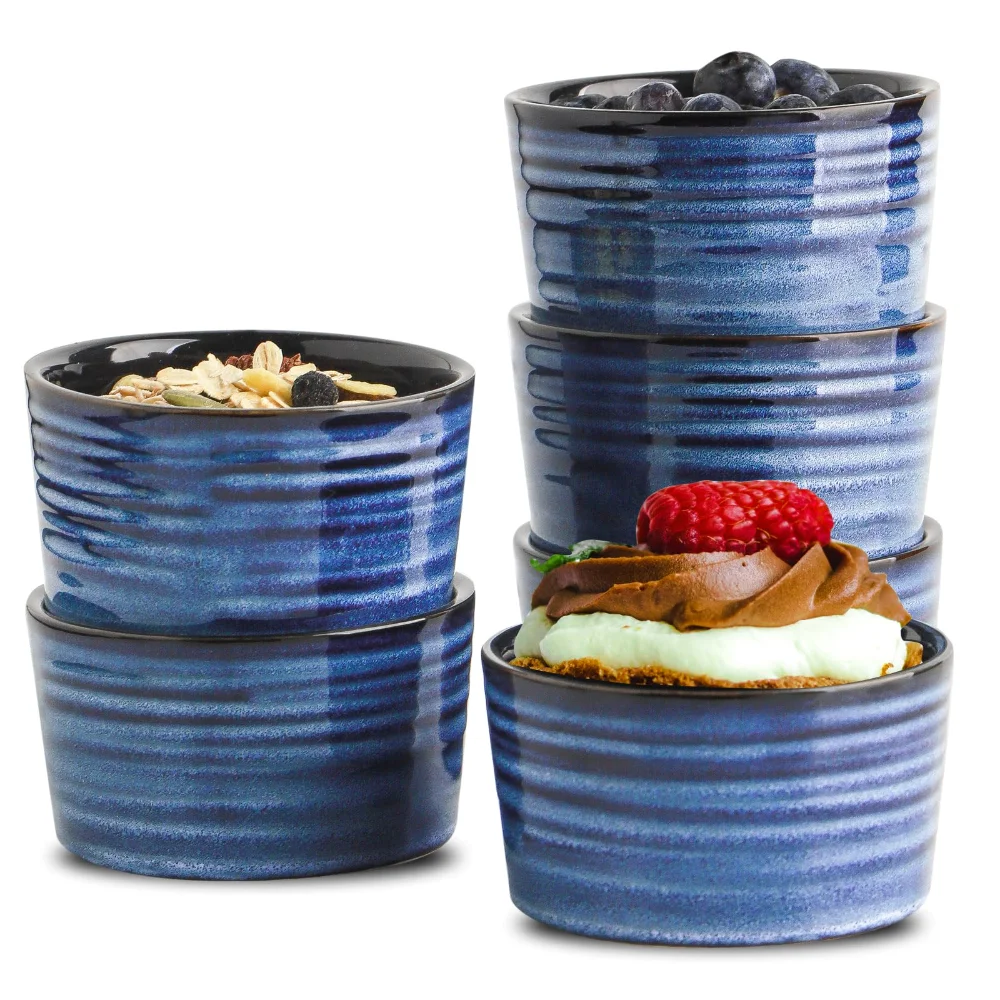
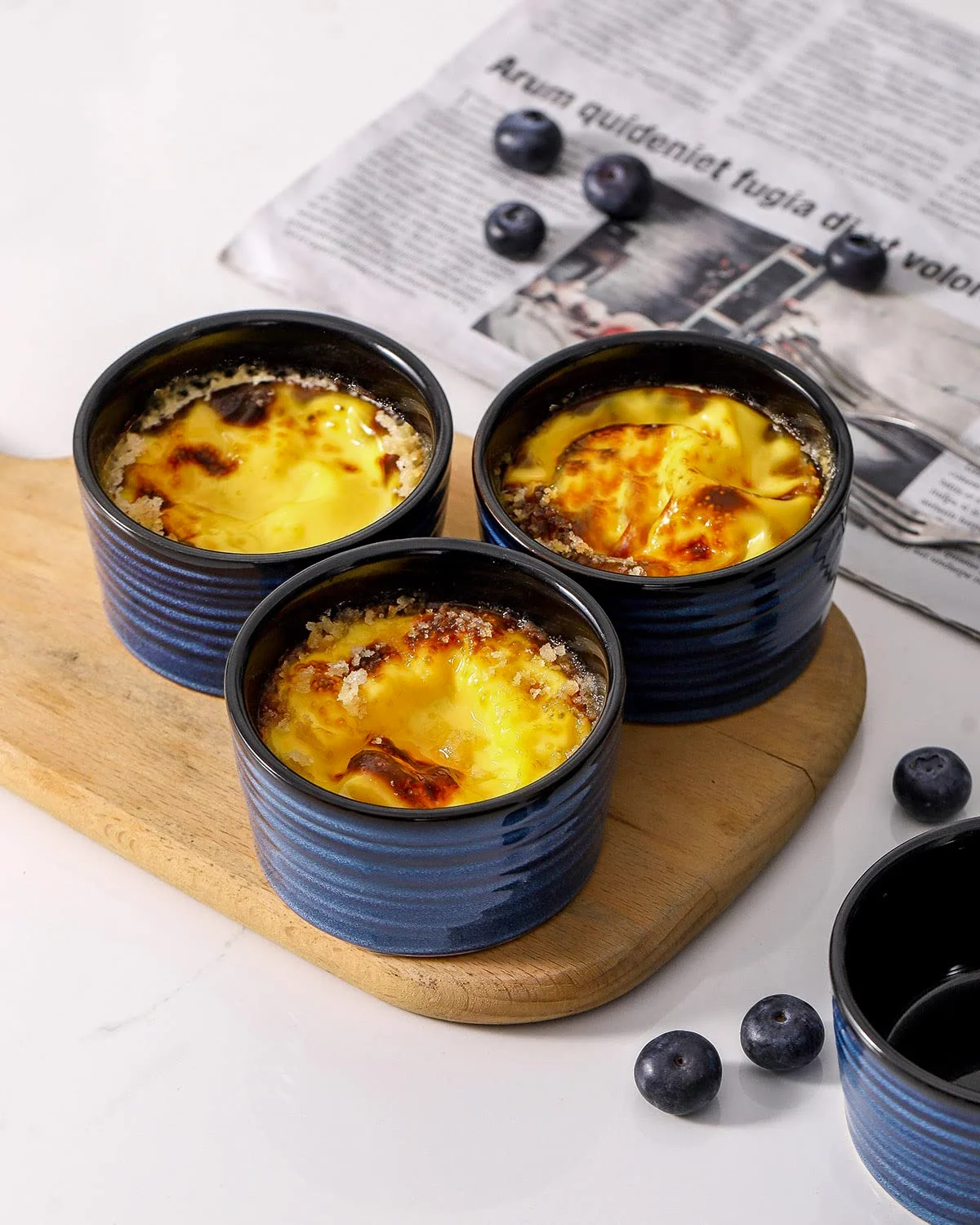
Oven-safe dishes for baking, prep and dips. 6 in the box, 6 oz.
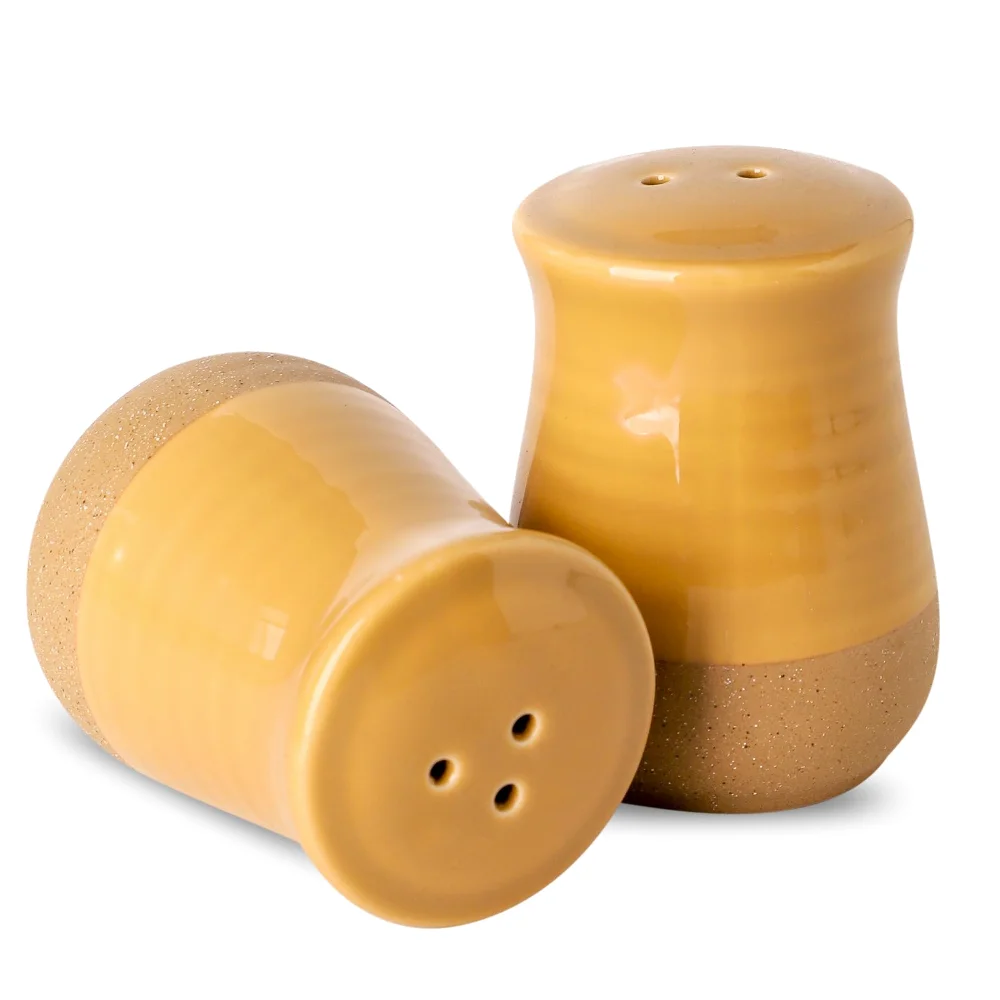
A pair for the table, filled from the base. 2 in the box, farmhouse finish.
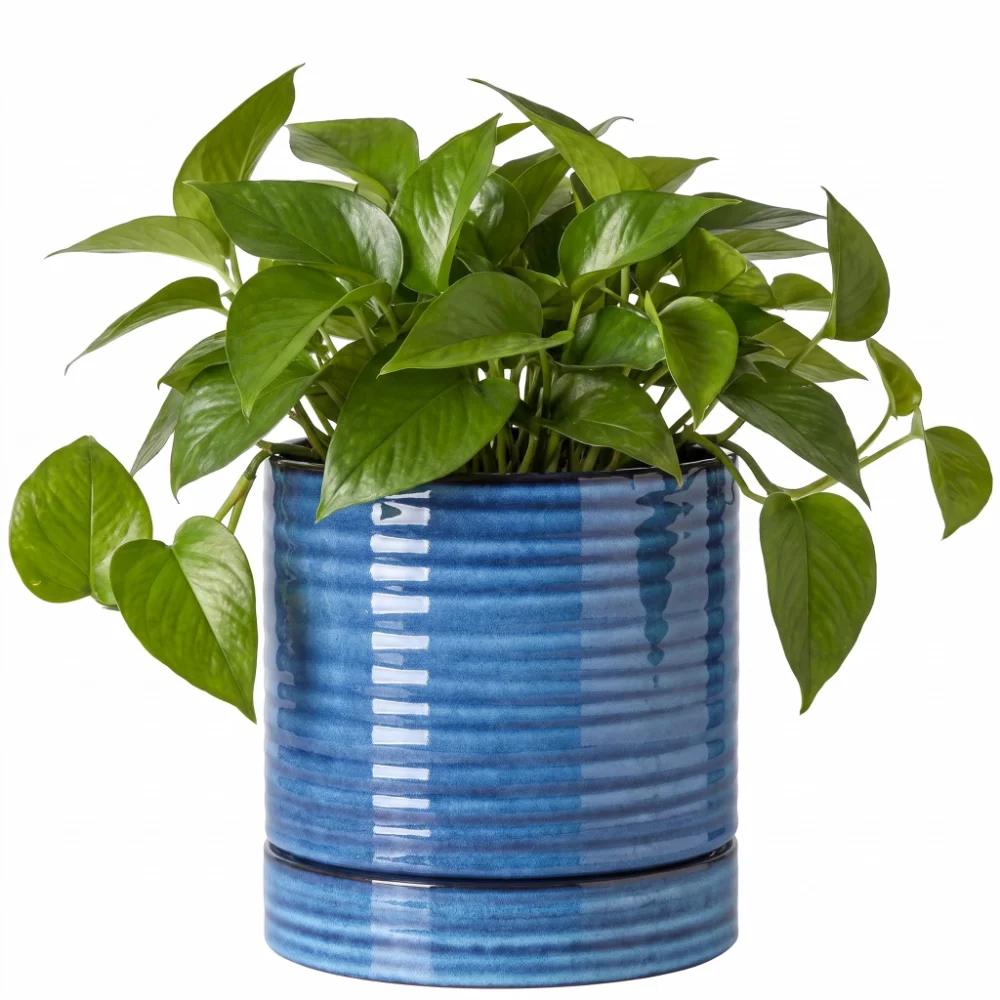
A drainage hole and a saucer that matches. 6 in, reactive glaze finish.
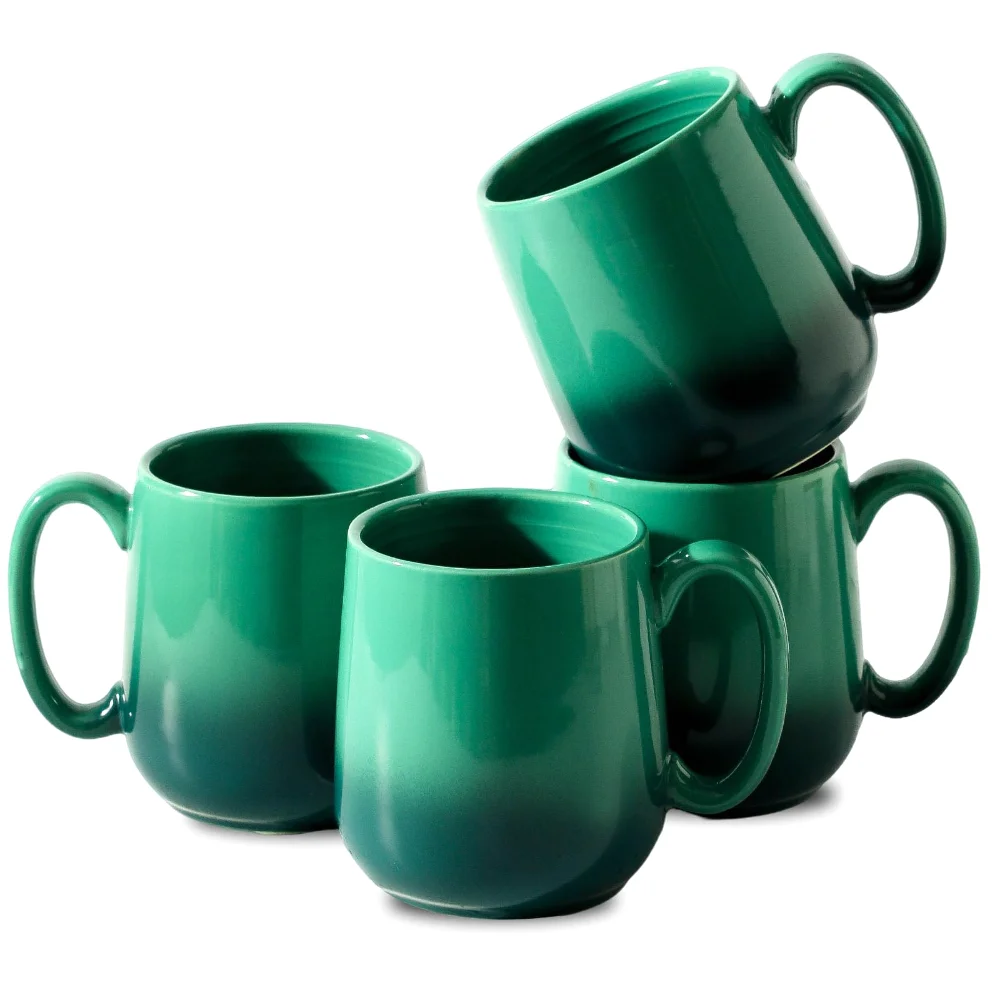
Two pieces in one glaze, packed together. 4 in the box, 15 oz, ombre finish.
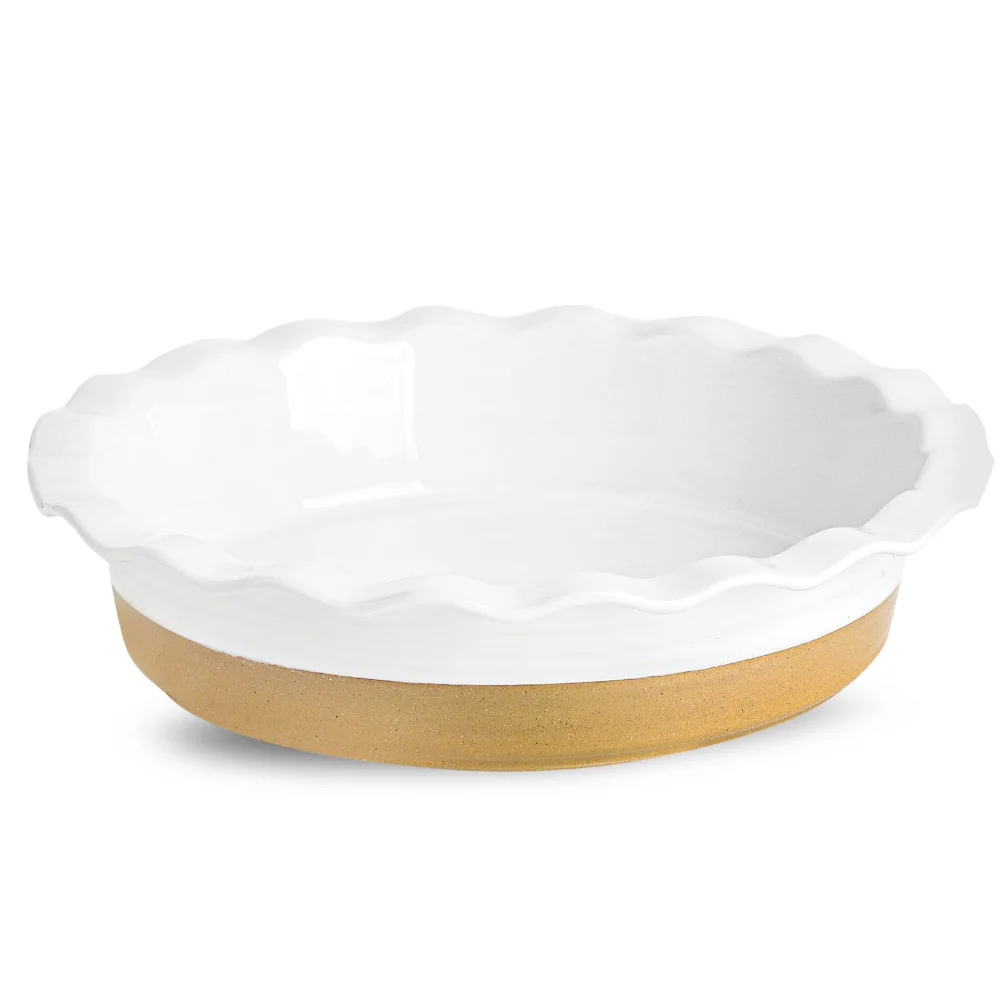
A fluted ceramic pan that goes from oven to table. 9 in, farmhouse finish.
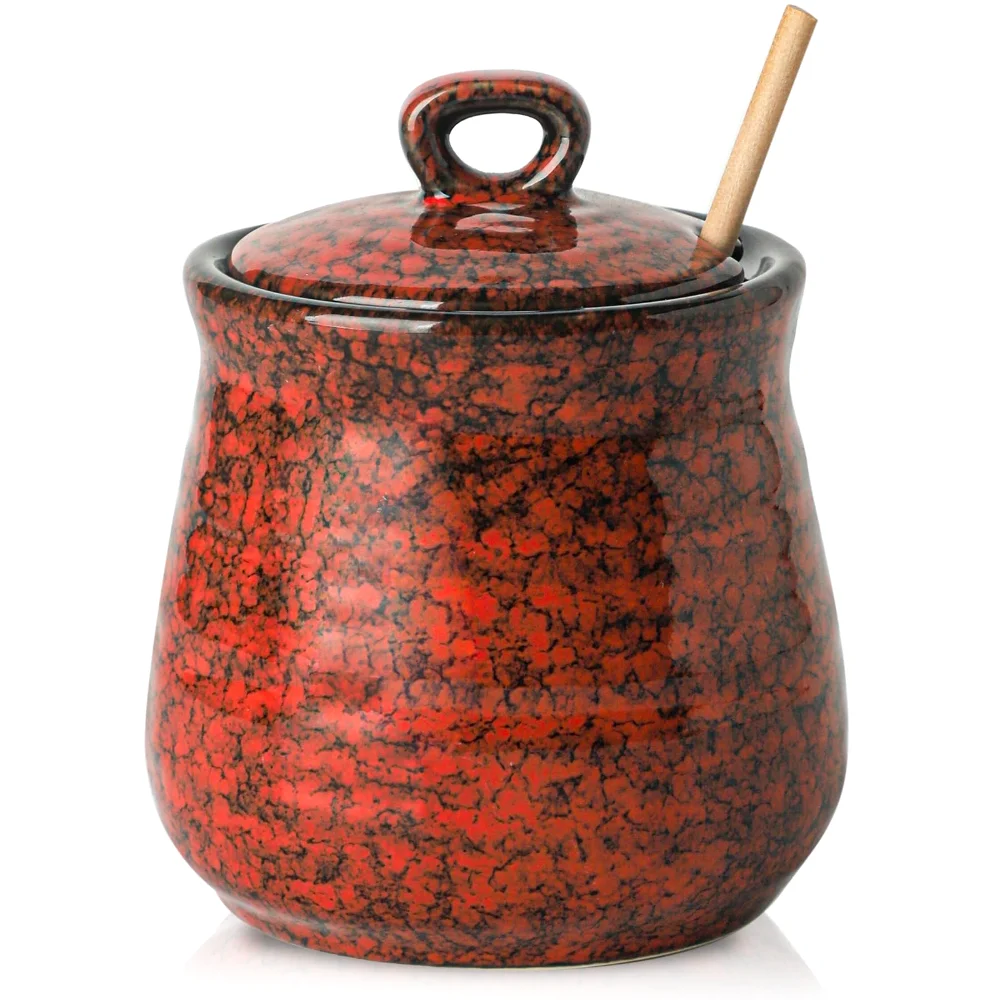
A lidded pot with its own dipper. holiday finish.
Look at our shelves and the shape of the catalogue is obvious: sixty-odd mugs, two dozen butter dishes, two dozen spoon rests, and exactly one vase. That is not an accident of stock, and it is not a plan drawn on a whiteboard either. It is what happens when a maker adds the piece people ask for next and stops adding the piece they do not.
The pattern that produced it is worth naming, because it explains what HASENSE is for. The pieces that get reordered are the ones a kitchen uses several times a day and replaces when they chip: mugs, bowls, the covered dish that keeps butter spreadable. The pieces that do not are the grand ones. A soup tureen is bought once in a life and often never used. So we went wide across the small, frequently handled things and stayed narrow everywhere else.
That decision shows up in the way each shelf is built. A mug shelf that only sold one mug would be a shorter page. Ours carries the same working body in ten finishes because the people buying a second set of four already know what capacity they want and are choosing on how it looks. The butter shelf carries the same keeper in a dozen glazes for exactly the same reason.
Our first colour was a blue, and blue is still the largest part of what we make by a wide margin. It is the colour that reads as ceramic rather than as a manufactured object, it sits well against both wood and stone, and it hides the marks that cutlery leaves on white. White came second because a table needs a neutral, and the reactive and gradient finishes came third, once we had a kiln schedule steady enough for a glaze that moves in the heat to move the same way twice.
The finishes on the shelf now fall into three families. Plain glazes, gloss or matte, where the surface is even and the shape does the work. Textured bodies, ribbed or embossed, where the pattern is pressed into the clay before firing and gives a wet hand something to hold. And reactive glazes, where two coatings move against each other in the kiln and no two pieces come out the same.
| Shelf | What it is for | Working sizes | Pieces in stock |
|---|---|---|---|
| Mugs & Coffee Cups | Our ceramic and porcelain mugs, from a 10 ounce everyday cup to the 20 ounce latte mug, sold singly and in sets of four and six | 15 oz, 20 oz, 12 oz | 76 |
| Espresso & Tea Cups | Demitasse cups, cappuccino cups and tea cups with their own saucers, in stackable sets that keep a small counter clear | 3.5 oz, 6 oz, 4 oz | 20 |
| Bowls | Serving, mixing, soup, cereal and pasta bowls in the sizes a table actually needs, from a 20 ounce cereal bowl to an 84 ounce salad bowl | 20 oz, 60 oz, 84 oz | 62 |
| Plates & Dinnerware | Dinner plates, salad and dessert plates, and the plate-and-bowl sets that lay a table for four or six out of one box | 8 in, 10 in | 13 |
| Bundles & Gift Sets | Two pieces packed together in one glaze: mugs with a butter dish, pasta bowls with dinner plates, a serving bowl with its own salt cellar | 15 oz, 8 oz, 11 oz | 119 |
| Butter Dishes | Covered butter keepers with ceramic, bamboo and wooden lids, most of them packed with the butter knife that fits inside | Varies by piece | 28 |
| Spoon Rests | Glazed spoon rests for the stove top and the counter, wide enough to hold a ladle without the handle tipping it | 5.7 in, 8.7 in, 7 in | 23 |
| Salt, Sugar & Honey | Salt and pepper shakers, salt cellars, sugar and creamer sets, egg cups and honey pots with their own dippers | 12 oz, 9 oz, 10 oz | 11 |
| Canisters & Storage Jars | Airtight ceramic canisters and storage jars with bamboo and silicone-sealed lids, for coffee, tea, sugar and flour | 30 oz, 325 oz, 80 oz | 18 |
| Utensil Crocks | Heavy glazed crocks that hold a full set of cooking utensils upright and stay put when you pull one out | 7.1 in, 7.4 in, 7.3 in | 13 |
| Ramekins & Bakeware | Oven-safe ramekins, souffle dishes, pie pans and casserole dishes in the same glazes as the table pieces | 4 oz, 6 oz, 8 oz | 13 |
| Planters & Vases | Ceramic plant pots with drainage holes and matching saucers, self-watering pots for indoor plants, and a plain stoneware vase | 6 in, 4.6 in, 10 in | 16 |
Counts and sizes are our own, and they move with the shelves.
What a card carries is the whole of what we know about a piece: capacity, diameter, piece count, colour, the price from our last update, and the rating pool that piece belongs to. Where a figure is missing from a product sheet the card shows nothing rather than an estimate, and the small print sets out the rest of how we work.
A mug that survived two years of a dishwasher, a butter dish that fits a European block, and a glaze somebody expected to be darker. Owners in their own words, four-star cupboards included. The average across our rated pools stands at 4.67.
These are gorgeous ceramic mugs! The handle is comfy and the weight of the mug is substantial yet not bulky, it feels very durable. The glaze is smooth and glossy, and feels pleasant to drink from.
Redoing my kitchen pink. Been deciding on getting this for a few weeks now. Caved and ordered it. I love it. I love that it comes with a little butter knife. The butter dish is pretty big and a bit on the heavier side. It adds to my pink kitchen perfectly. Would definitely recommend.
Very well made. It’s ceramic so it keeps it from accidentally burning like my previous melanine spoon rest. The aqua color looks beautiful on my stove. Big enough but not too big to interfere with the extra burner on my new ceramic top electric range.
They are nice coffee mugs that match my new dishes pretty well. However, as a tea drinker, who likes 14oz of water, these would be 5 star, if they held 16oz. Overall, I am very pleased with the handle (large enough for 3 fingers), the style, color, and value for the money.
Very nice, it has the weight to hold the utensils without tipping over, It's very sturdy and large opening. Best of all it looks great, wonderful color.
Great Ramekins! I purchased these to make crème brûlée and they definitely did the job. I really like the color scheme. They are absolutely beautiful and they held up well in the oven. Super excited to make more things in them.
Works good, pretty, knife is flimsy.
Great looking cereal bowls. Deep, not shallow and wide. Work great. For us.
It’s a ceramic spoon holder. It looks exactly like the photo and holds spoons. It also looks way better than that stupid old school metal one you see in counters. Honestly, why are you looking at reviews for a ceramic aooon holder? Not much to it!
What separates porcelain from stoneware and earthenware, which sizes a table is really short of, and where a cheaper material beats ours.
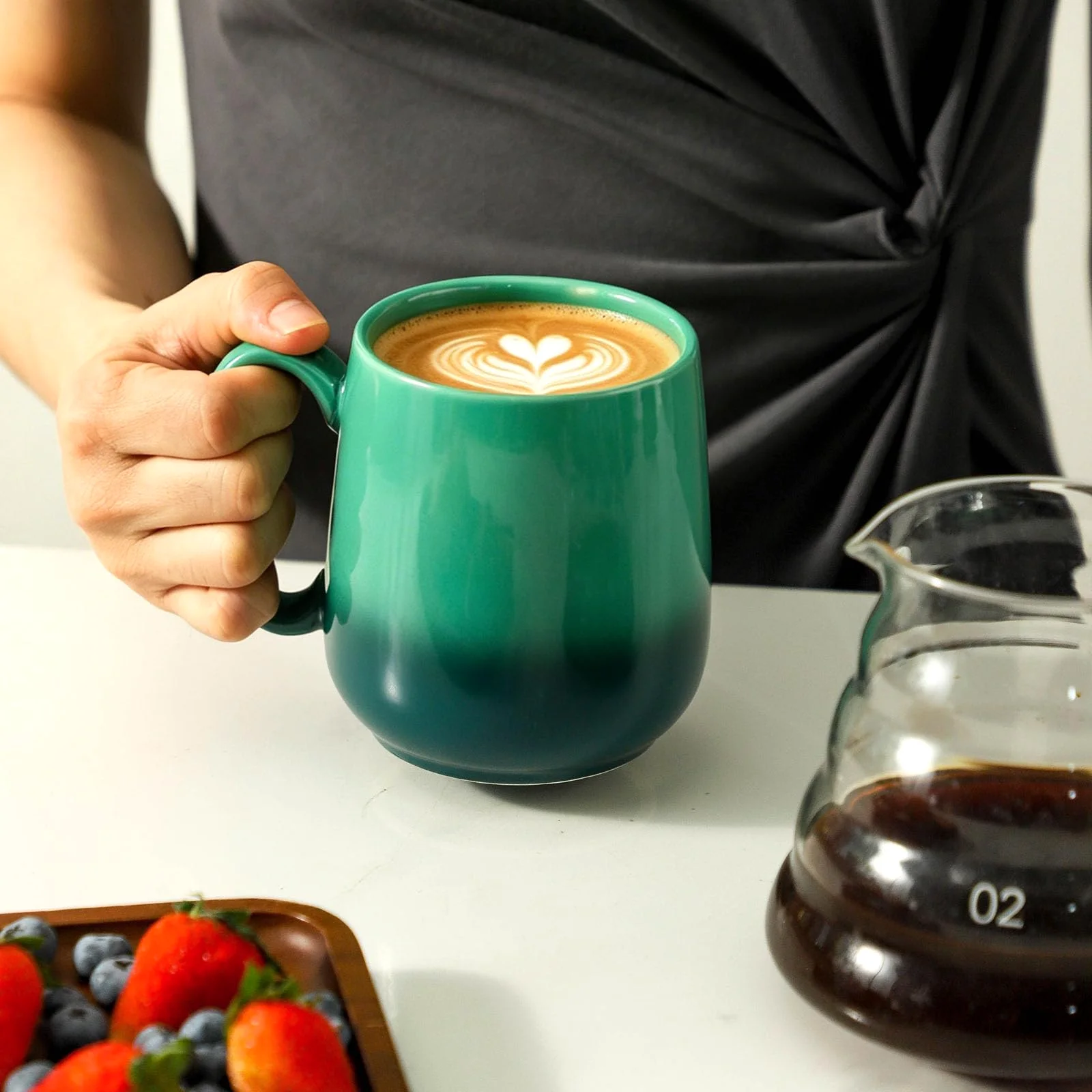
A cupboard usually holds eight mugs and a household uses two. This is about what makes those two the ones that get picked, and how to buy for it on purpose instead of by accident.
Read it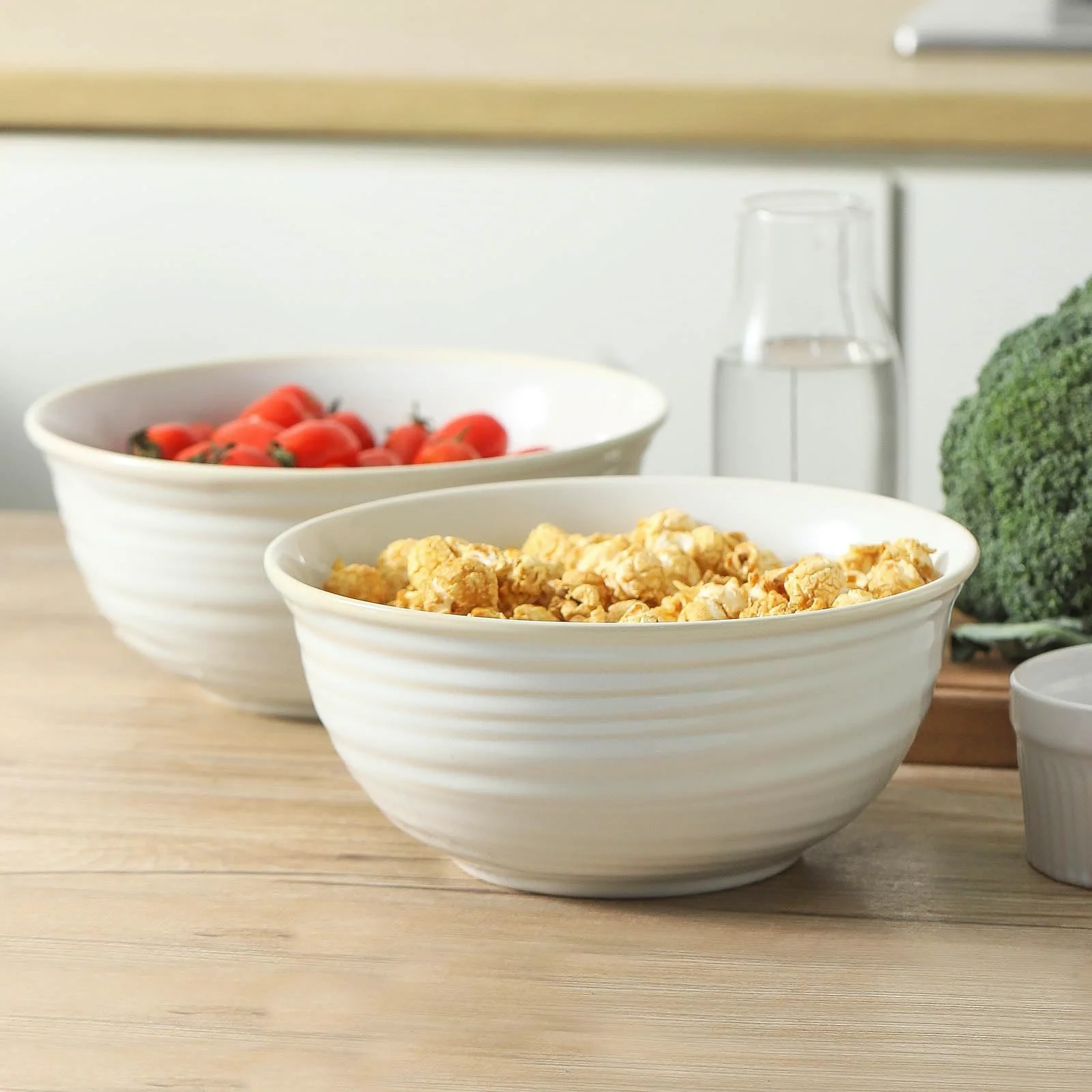
Three words get used as if they were interchangeable, and they are not. The difference is a temperature, and that temperature decides how strong a plate is, how heavy it feels and how it behaves in an oven.
Read it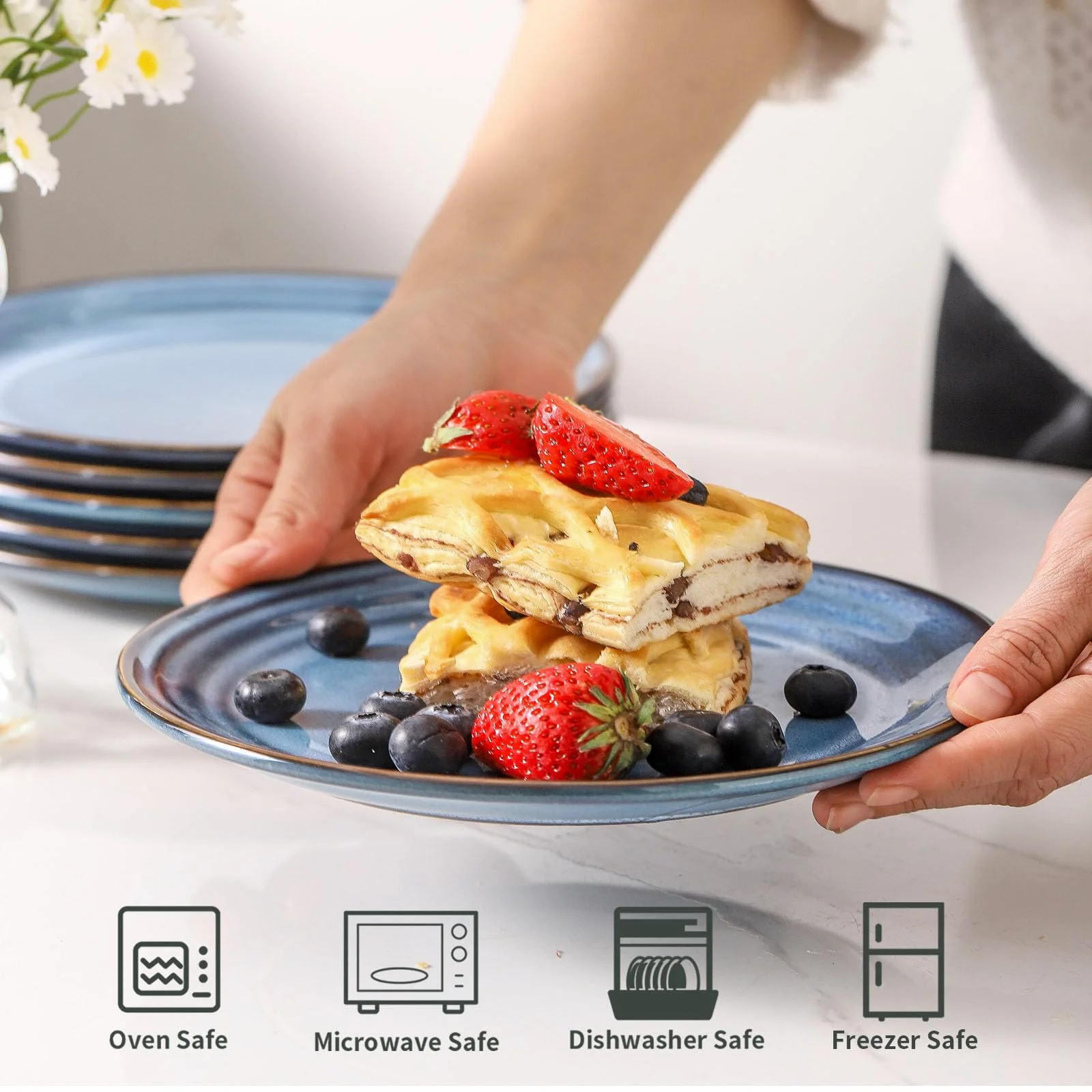
A boxed dinner service is the fastest way to own forty pieces and use eleven of them. Built one shelf at a time, the same money buys a table that fits how you eat.
Read itYes, across every shelf. There is no metallic decoration anywhere in our range, which is the usual reason a mug cannot go in a microwave. The oven is different: only the pieces whose card states an oven figure are oven-safe, and those figures differ from shelf to shelf.
On our reactive and gradient finishes, that is the product rather than a fault. Two glazes are layered and they move against each other in the kiln, pooling where the piece is thick and breaking paler at every rim. If you want six identical pieces, our plain and matte glazes are the ones to choose.
No. Our clay and our glazes are specified free of both lead and cadmium, and the pieces are fired twice at around 2,200 °F, which is the temperature range where a glaze binds properly. The food-safety section on the front page links the public guidance this all rests on.
Fifteen ounces suits most people, because a stated capacity is a brim measurement and the pour you actually get is about two ounces short of it. Ten and twelve ounce mugs suit a single espresso-based drink or a small hand; twenty ounces is a two-handed mug for a slow morning.
Yes. Most shelves carry the same piece as a single and in sets of two, four or six. Four is the count that works in most households: it covers two people, a visitor and one in the dishwasher.
Almost certainly not. Those are metal marks left by cutlery, sitting on the glaze rather than in it, and they lift with a paste of bicarbonate of soda on a damp cloth. A mark that survives a cream cleaner is in the glass rather than on it, and nothing will lift it. Steel wool has no business near ceramics.
No. This is a catalogue, not a shop: the money, the parcel and any return are handled at checkout with our retail partner. Every button here hands you straight to the piece you were looking at.
Prices move, and ours follow on a schedule rather than second by second. The figure on a card is what we put in at our last update. Where the two differ, the till is the one that counts.
412 pieces across 12 shelves, from an eight dollar spoon rest to a full dinner service. Prices on the cards come from our last update; the till is always the figure that counts.
We make glazed ceramics for the table: high-fired porcelain and stoneware mugs, bowls, plates and the small covered pieces that live on a counter, in lead-free glazes that come out of the kiln a little different every time.


 Payment, delivery and returns are handled at checkout with our retail partner. The payment marks are shown for information and are not clickable.
