How to choose a coffee mug you will still be using in a year
A cupboard usually holds eight mugs and a household uses two. This is about what makes those two the ones that get picked, and how to buy for it on purpose instead of by accident.
We make mugs in four working sizes and about a dozen finishes, and we can see which of them people come back for. The pattern is consistent enough to be worth writing down. People do not choose a mug for its picture. They choose it for a handful of physical facts that are easy to check before you buy and impossible to argue with once the mug is on the counter: how much it holds, how thick its wall is, whether the handle fits the hand doing the carrying, and whether it stacks. Everything else is decoration, and decoration is the part you can safely pick with your eyes.
Start with capacity, because it decides everything else
Capacity is the only mug specification that changes your morning. A mug that is too small means a second trip to the pot; a mug that is too large means the last third goes cold and gets poured away. Both are small annoyances that repeat every day for years, which is exactly the kind of annoyance worth spending five minutes to avoid.
The confusing part is that a stated capacity is a brim measurement. A mug sold as fifteen ounces holds fifteen ounces filled to the very edge, which nobody does. Working capacity, filled to a sensible level with room to carry it without a spill, runs roughly two ounces short of the number on the box. That single fact explains most disappointment with a new mug.
| Stated size | Realistic pour | What it suits | Where it sits in our range |
|---|---|---|---|
| 10 oz | 8 oz | A single espresso-based drink, tea with milk, a small hand | Our smallest everyday mug |
| 12 oz | 10 oz | A standard drip coffee, a mug of tea, a child-sized hot chocolate | The size most people already own |
| 15 oz | 13 oz | A large drip coffee, a cappuccino at home, soup at a desk | Our most-sold size by a wide margin |
| 20 oz | 17 oz | A slow morning, a work session, a second cup that never happens | Our largest, sold singly and in twos |
The realistic pour column is the fill level that survives a walk across a kitchen, not a laboratory figure.
Fifteen ounces sells the most for us, and the reason is arithmetic rather than fashion. A twelve-ounce mug filled to a carrying level holds about ten ounces, which is one standard coffee pod or one small pour-over. A fifteen-ounce mug filled the same way holds thirteen, which is one pod with room for milk, or two thirds of a large drip cup. The gap between ten and thirteen ounces is the gap between a second trip to the kitchen and none.
Twenty ounces is a different decision, not a bigger version of the same one. It is a mug you hold with both hands or by the body rather than the handle, and it is heavier before you fill it. We sell it mostly in ones and twos rather than in fours, which tells you how it gets used: somebody in the house has claimed it, and nobody else touches it.
Wall thickness is the specification nobody reads
Two mugs of the same capacity can behave completely differently, and the difference is the thickness of the wall. A thick wall takes longer to warm up, which steals a little heat from the first minute of the drink, and then holds temperature far longer. A thin wall does the opposite. Neither is better; they suit different drinking speeds.
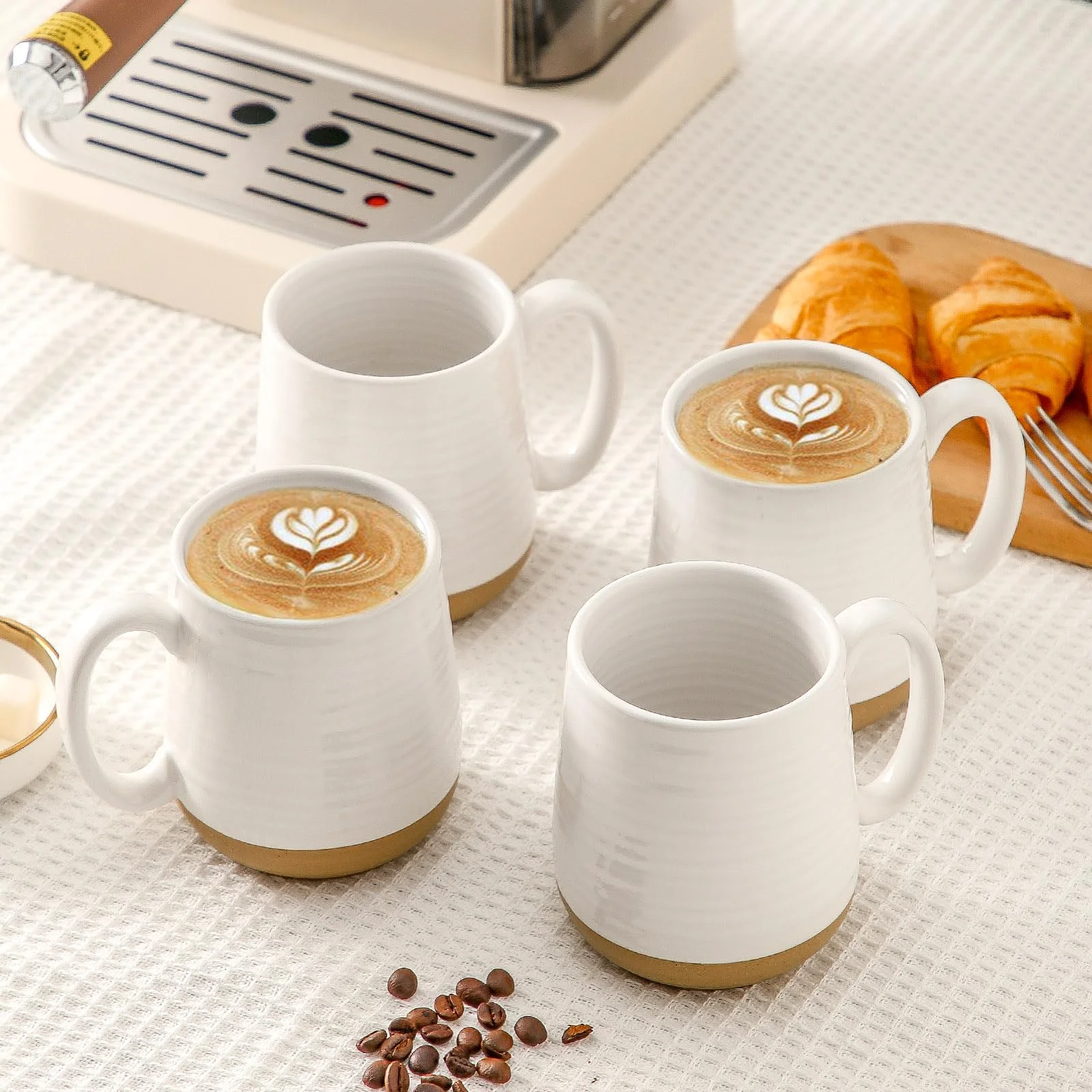
If you drink a coffee in ten minutes, a thin wall is fine and the mug will feel lighter and more elegant in the hand. If your coffee sits beside a keyboard and gets sipped over forty minutes, a thick wall is the whole point, and a thin one will hand you a cold cup at minute twenty-five. Our mugs sit on the thick side deliberately. The fifteen-ounce ribbed body weighs a little over three quarters of a pound empty, and that mass is where the heat goes.
You can feel wall thickness through a photograph if you know where to look. Check the rim in profile. A thick-walled mug shows a visible band at the lip, usually two to four millimetres; a thin one shows a line. Check the handle too: a thick body almost always carries a chunkier handle, because a delicate handle on a heavy mug is a stress point waiting to happen.
The mug you keep is the one whose handle fits the finger you actually hook through it.
What the mug shelf keeps telling usHandles: three fingers, two fingers, or none
Handle openings vary more than any other part of a mug and are almost never specified. A narrow handle takes one finger and gets carried pinched, which is fine for a small mug and unpleasant for a full twenty-ounce one. A wide handle takes three fingers and lets the weight hang from the whole hand.
- One-finger handles look neat and photograph beautifully. They suit mugs up to about twelve ounces and are the usual choice on espresso and cappuccino cups, where the cup is small and the saucer does the carrying.
- Two-finger handles are the compromise most fifteen-ounce mugs use, including most of ours. They work for the majority of hands and do not add bulk to the silhouette.
- Three-finger handles and the wide D-shaped loops belong on the twenty-ounce mugs and on anything a person carries between rooms. They look heavier because they are, and that is the trade.
- No handle at all is a genuine option that people forget. A straight-sided tumbler shape is easier to stack, easier to wash and impossible to break by the handle, which is how nearly every mug in the world dies.
One more handle detail worth checking: where the lower join meets the body. A join placed high leaves the mug hanging below your knuckles and makes a full mug feel unstable. A join placed low, roughly a third of the way up from the base, balances the weight against your palm. Look at the side view before you buy.
Stacking is a cupboard problem, and cupboards are small
A set of six mugs takes a whole shelf if the mugs do not stack, and about a third of one if they do. That sounds like a minor convenience until you count how many households keep mugs on a draining rack permanently because there is nowhere else to put them.
Stacking needs two things: a body that tapers, so the base of one mug drops inside the mouth of the next, and a foot that is narrower than the interior rim. Ribbed and fluted bodies stack perfectly well, as long as the ribs run vertically rather than as raised bands around the circumference. Where we sell a stackable set with its own metal stand, the stand is doing a different job: it keeps four mugs off the shelf entirely and puts them within reach of a kettle.
| Arrangement | Shelf footprint | Height needed | Practical note |
|---|---|---|---|
| Four mugs side by side | About 8 by 8 inches | One mug high | The default, and the reason mugs end up on the counter |
| Two stacks of two | About 8 by 4 inches | Two mugs high, roughly 9 inches | Needs a tall shelf, halves the footprint |
| One stack of four | About 4 by 4 inches | Roughly 17 inches | Only works in a tall cupboard, and the bottom mug is awkward to reach |
| Four on a stand | About 6 by 6 inches of counter | Roughly 12 inches | Off the shelf entirely, next to the kettle |
Footprints are for a typical fifteen-ounce mug of about four inches across the body.
Glaze: the part you can choose with your eyes
Once capacity, wall and handle are settled, the finish is a free choice, and this is where our shelf gets interesting. A glaze is a thin layer of glass melted onto the clay in the kiln. What it does under heat is chemistry, and small changes in the recipe produce completely different surfaces.
- Plain white. Even, bright, shows the drink rather than itself. It also shows every grey mark that a spoon or a fork leaves, which is a cosmetic scuff of metal on glaze rather than damage, and lifts with a paste of bicarbonate of soda.
- Reactive glaze. Two glazes that move against each other in the kiln. Every mug comes out slightly different, with pooling at the base and breaking colour on the rim. If you want a set of six identical mugs, this is the wrong glaze; if you want six that clearly belong together, it is the right one.
- Ombre and gradient. Colour laid on thickly at one end and thinly at the other, so it fades up the body. It hides marks better than plain white.
- Ribbed and fluted. The texture is in the clay, not the glaze, and it does real work: vertical ribs give a wet hand something to grip.
- Embossed. A raised pattern pressed into the body before firing. It changes how light sits on the mug and adds a little weight.
- Matte. A glaze formulated to stay flat rather than glossy. It feels chalky and warm, and it is the finish that most reads as handmade.
The one thing to know about reactive and gradient glazes is that variation is the product. Two mugs from the same firing will not match perfectly, and that is not a fault. If two people in a house each want to know which mug is theirs, this is an advantage.
Dishwasher, microwave and the questions people actually ask
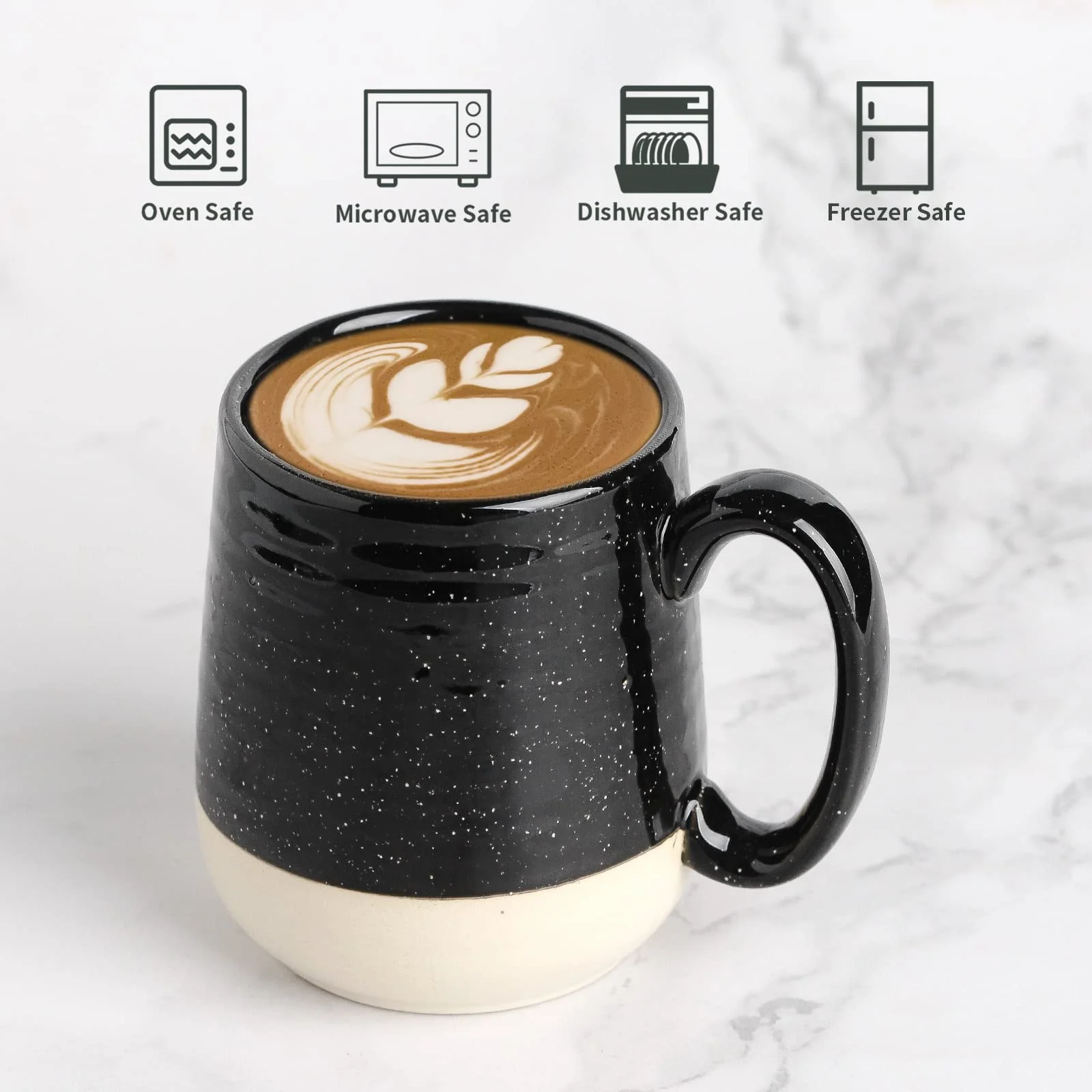
Our mugs go in the dishwasher and in the microwave. That is true of the whole mug shelf, and it is the baseline we work to rather than a feature. Two practical notes go with it.
In the microwave, the mug does not absorb the energy; the drink does, and then the drink heats the mug. That is why a mug can come out hotter than you expect after a long run, and why the public guidance on microwave ovens points out that most microwave injuries are burns from hot containers rather than anything more exotic. Use a cloth for anything over a minute.
In the dishwasher, the enemy is not water but contact. Mugs that touch each other on a moving rack chip at the rim, and a chipped rim is the end of a mug because it is sharp. Space them, and put nothing heavy in the same basket.
The last common question is about the fine grey lines that appear on a white glaze after a few months. Those are metal marks from cutlery, deposited on the glaze surface the way a pencil marks paper. They are cosmetic and they lift. What does not lift is a scratch through the glaze itself. A mug should never be scoured with steel wool.
Buying for one, two or six
How many to buy is a genuinely different question from which one, and it gets answered badly more often than any other part of this. The honest guidance is not to buy a set matched to the number of people in the house.
- Buying for yourself. One mug, the size you actually drink, in a finish you like enough to pick out of a full cupboard. Singles exist for this and there is nothing sad about owning one good mug.
- Buying for two. A pair, and if the two of you drink different amounts, buy two different sizes rather than a matched pair. Nobody has ever regretted this.
- Buying for a household. Four is the number that works. Six is for people who host; four covers a family plus a visitor, and the fifth and sixth mugs of most sets live untouched at the back of the shelf.
- Buying as a gift. A set of four in a reactive or gradient glaze, because the variation makes it look considered, and because a gift mug that turns out to be a duplicate of one they own is a wasted gift.
Across our own shelves the mug sets people reorder are almost all fours. The sixes sell at Christmas and the ones sell all year, which is roughly what you would guess if you thought about how mugs are actually used.
Where mugs actually break
Almost nobody breaks a mug by dropping it on the floor. Mugs die in three predictable places, and knowing them changes what you look for in a photograph.
The first is the rim, and the cause is contact rather than impact. Two mugs touching on a dishwasher rack knock against each other every time the spray arm turns, and after a few dozen cycles one of them loses a flake of glaze at the lip. A chipped rim ends a drinking vessel, because the exposed body edge is porous and sharp against a mouth. Rounded rims survive this better than thin rolled ones, and spacing survives it better than either.
The second is the handle, and specifically the lower join. A handle is attached wet and the join is the last part of the piece to dry, which makes it the part most likely to carry an internal stress. A handle that has been knocked repeatedly against a tap or a shelf edge will eventually part at that lower join, usually while full. This is the argument for a thicker handle and for a wider opening: a hand that fits comfortably does not clatter the mug against things.
The third is thermal shock, and it is rarer than people think in a mug because the wall is thin enough to heat evenly. It happens when a mug that has been standing in a cold cupboard takes boiling water straight in, and it happens more often with a thick wall than a thin one. If your cupboard is genuinely cold, a splash of warm water first costs nothing.
What the price is buying
Across our own mug shelf a single mug runs from the low teens to the high twenties, and a set of four from the high twenties to the mid forties. That is a real spread for what looks like the same object, so here is what actually moves the number.
| Factor | Effect on price | Effect on the mug | Worth paying for? |
|---|---|---|---|
| Body weight and wall thickness | Meaningful | Heat retention, feel in the hand, chip resistance | Yes, if you drink slowly |
| Number of kiln passes | Meaningful | Glaze sits on a stable body rather than shrinking with it | Yes, and it is rarely advertised |
| Glaze complexity | Meaningful | Reactive and gradient finishes need more handling and reject more pieces | Only if you want the look |
| Piece count in the box | Large | Nothing about the mug itself | Only buy the count you will use |
| Embossing or moulded texture | Small to moderate | Grip, and how light sits on the body | Yes for grip, taste for the rest |
| Packaging and gift boxes | Small | Nothing after the first ten seconds | Only when it is genuinely a gift |
Bands describe our own shelf. Every card carries its own figure from our last update.
The one place where paying more is close to pure gain is the kiln. A second pass costs real money and shows up nowhere in a photograph, so it is the corner most often cut. It is also the reason a cheap mug can look identical on a screen and craze along fine lines in the glaze after a year of dishwashing.
How many colours a cupboard can carry
A shelf of eight mugs in eight colours looks like a jumble sale. A shelf of eight in one colour looks like a canteen. The number that works is two, sometimes three, and the trick is to keep something constant across them.
Two ways to do that. Keep the shape constant and vary the colour: four identical mugs in navy and white read as one set with a reason behind it. Or keep the glaze family constant and vary the shape: a ribbed mug, a plain mug and an espresso cup in the same white read as a collection. What does not work is varying both at once, which is the accident most cupboards arrive at over five years of replacing broken mugs one at a time.
This is also the practical argument for buying two of a size rather than four. Two navy and two white, bought together, gives a household a way to tell whose drink is whose without a second thought, and still reads as deliberate on the shelf.
A five-minute checklist before you buy
- Decide the capacity first, and subtract two ounces from whatever the box says to get the pour you will actually get.
- Look at the rim in profile. A visible band means a thick wall and a drink that stays warm; a thin line means a lighter mug that cools faster.
- Count the fingers the handle will take, and check where its lower join meets the body.
- Decide whether it needs to stack, and if it does, look for a tapered body and a foot narrower than the rim.
- Choose the glaze last. It is the only part of the decision where being wrong costs nothing but taste.
Everything above applies to any mug, ours or anyone else’s. Where our own shelf fits into it: we build the thick-walled fifteen-ounce two-finger mug as the centre of the shelf, because that is the mug that keeps getting reordered, and then let the finishes do the work of being different. The rest of the HASENSE range is built on the same principle, one shelf at a time.
The other two pieces
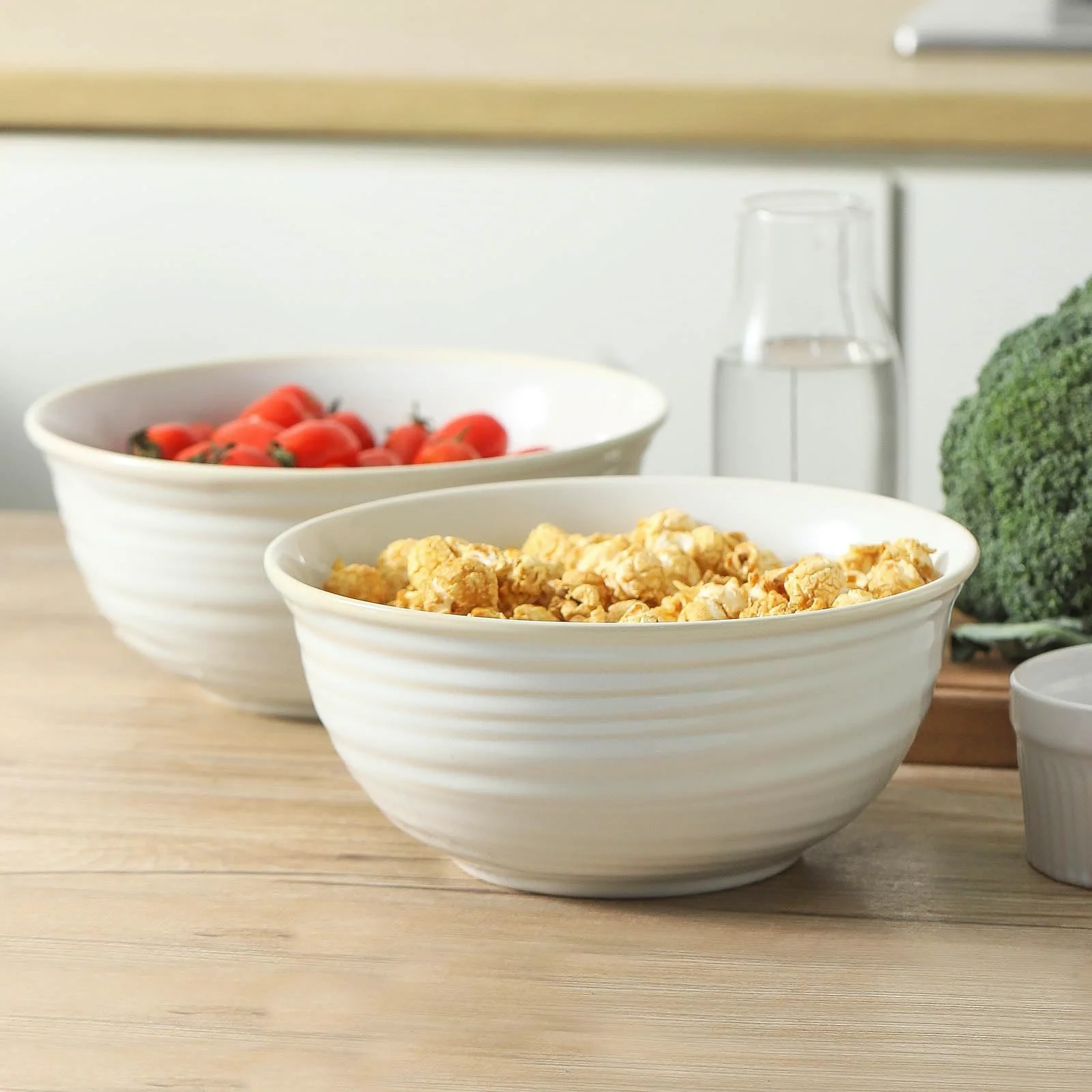
Porcelain, stoneware and earthenware: what the difference does to your table
Three words get used as if they were interchangeable, and they are not. The difference is a temperature, and that temperature decides how strong a plate is, how heavy it feels and how it behaves in an oven.
Read it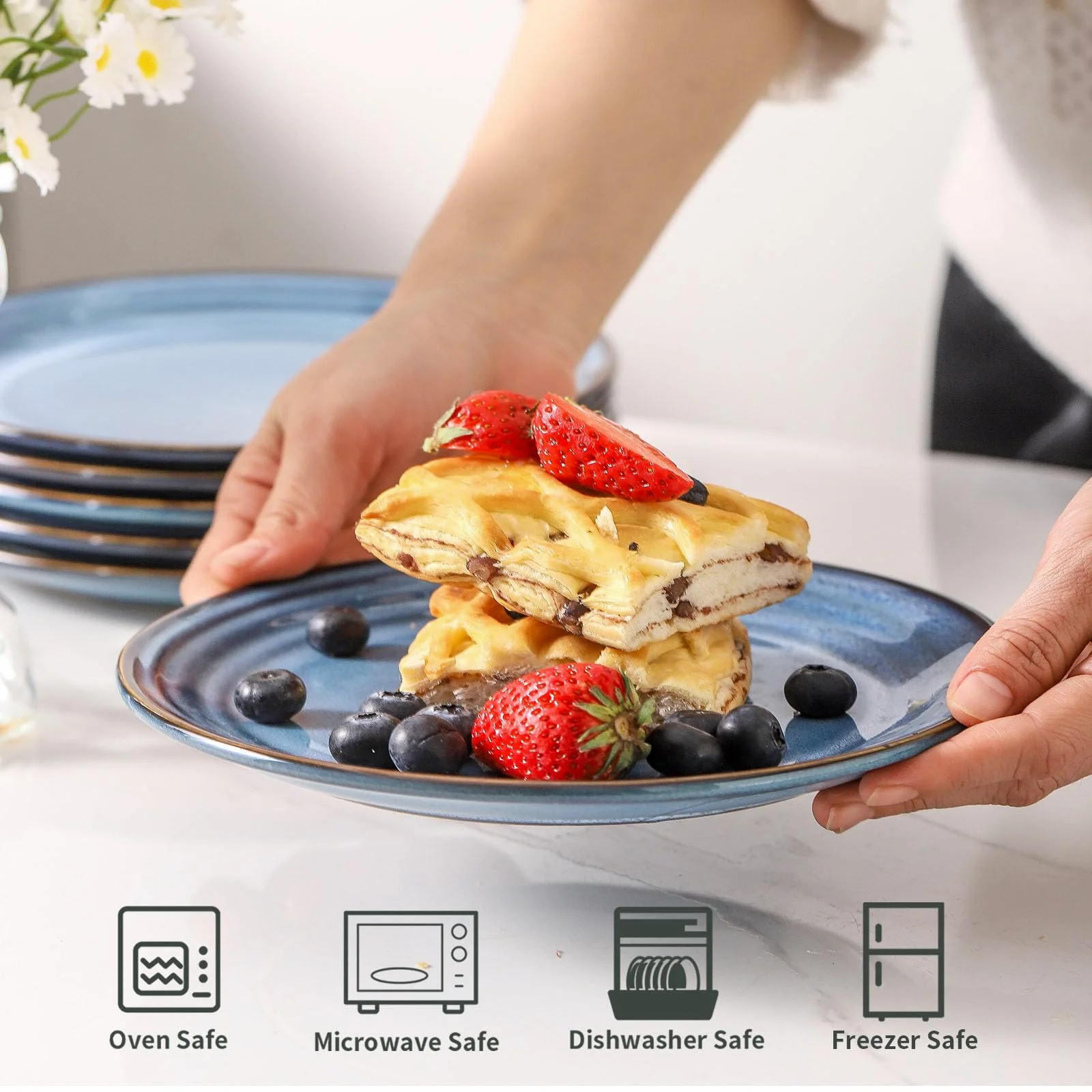
Laying a table for four without buying a forty-piece set
A boxed dinner service is the fastest way to own forty pieces and use eleven of them. Built one shelf at a time, the same money buys a table that fits how you eat.
Read itCare and use
Dishwasher, microwave, oven and the marks cutlery leaves on a white glaze, shelf by shelf.
Read it



