Porcelain, stoneware and earthenware: what the difference does to your table
Three words get used as if they were interchangeable, and they are not. The difference is a temperature, and that temperature decides how strong a plate is, how heavy it feels and how it behaves in an oven.
Every piece we make starts as the same kind of thing: a mixture of clay, ground rock and water, shaped while soft, dried, then heated until the mixture stops being a powder held together by water and becomes a single hard material. What separates porcelain from stoneware from earthenware is almost entirely how hot that heating goes and how long it lasts. Everything a buyer notices afterwards, the weight, the ring when you tap it, whether it survives a knock, whether it can go in an oven, follows from that one number.
The temperature that decides everything
Inside a kiln, heat does two separate jobs. Below about 1,800 degrees Fahrenheit it drives out water and burns off organic matter, leaving a porous, chalky body. Above that, the ground rock in the mixture begins to melt and flow into the spaces between the clay particles, gluing them together and sealing the pores. That process is called vitrification, and it is the difference between a flowerpot and a dinner plate.
| Body | Typical firing | Water absorption | Feel and behaviour |
|---|---|---|---|
| Earthenware | Roughly 1,800 to 2,100 °F | High, often above five per cent | Light, porous, warm-looking. Must be fully glazed to hold liquid. Chips easily and soaks up water through an unglazed foot |
| Stoneware | Roughly 2,150 to 2,340 °F | Low, generally under three per cent | Heavy, dense, opaque. Rings dully. Tolerates temperature change well and takes a knock without shattering |
| Porcelain | Roughly 2,300 to 2,500 °F | Very low, near zero | Dense, fine-grained, often slightly translucent at the rim. Rings clearly. Hard, and hard means brittle at an edge |
Ranges describe the material classes as they are generally fired. The figures for our own pieces are on the shelf pages, and most of what we make is double-fired at 2,200 °F.
That last line is the one worth carrying away. Our mugs and bowls go through the kiln twice at around 2,200 degrees Fahrenheit, which puts them at the top of the stoneware band and the bottom of the porcelain one. The first pass hardens the body. The second melts the glaze onto it. Two passes cost more than one, and the reason we do it is that a glaze fired onto an already-hardened body sits on a stable surface instead of shrinking with it.
Water absorption, and why it matters more than it sounds
Absorption is the single most useful number for predicting how a piece will age. A body that soaks up water holds it, and held water does three things. It adds weight. It carries stains and smells into the material where no washing reaches them. And it expands when heated, which is how a piece that has lived a year in a damp cupboard cracks the first time it meets a hot oven.
A vitrified body does none of that. You can tell the difference at home without any equipment: turn the piece over and look at the unglazed ring on the base, the foot it stands on. Wet a finger and touch it. On earthenware the mark vanishes almost instantly as the water is drawn in. On stoneware and porcelain it sits there and evaporates.
This is also why we leave that foot unglazed. Glaze is glass; glass sticks to kiln shelves. Every piece of vitrified ware in the world stands on a bare ring for that reason, and a bare ring on a properly fired body is not a weak point.
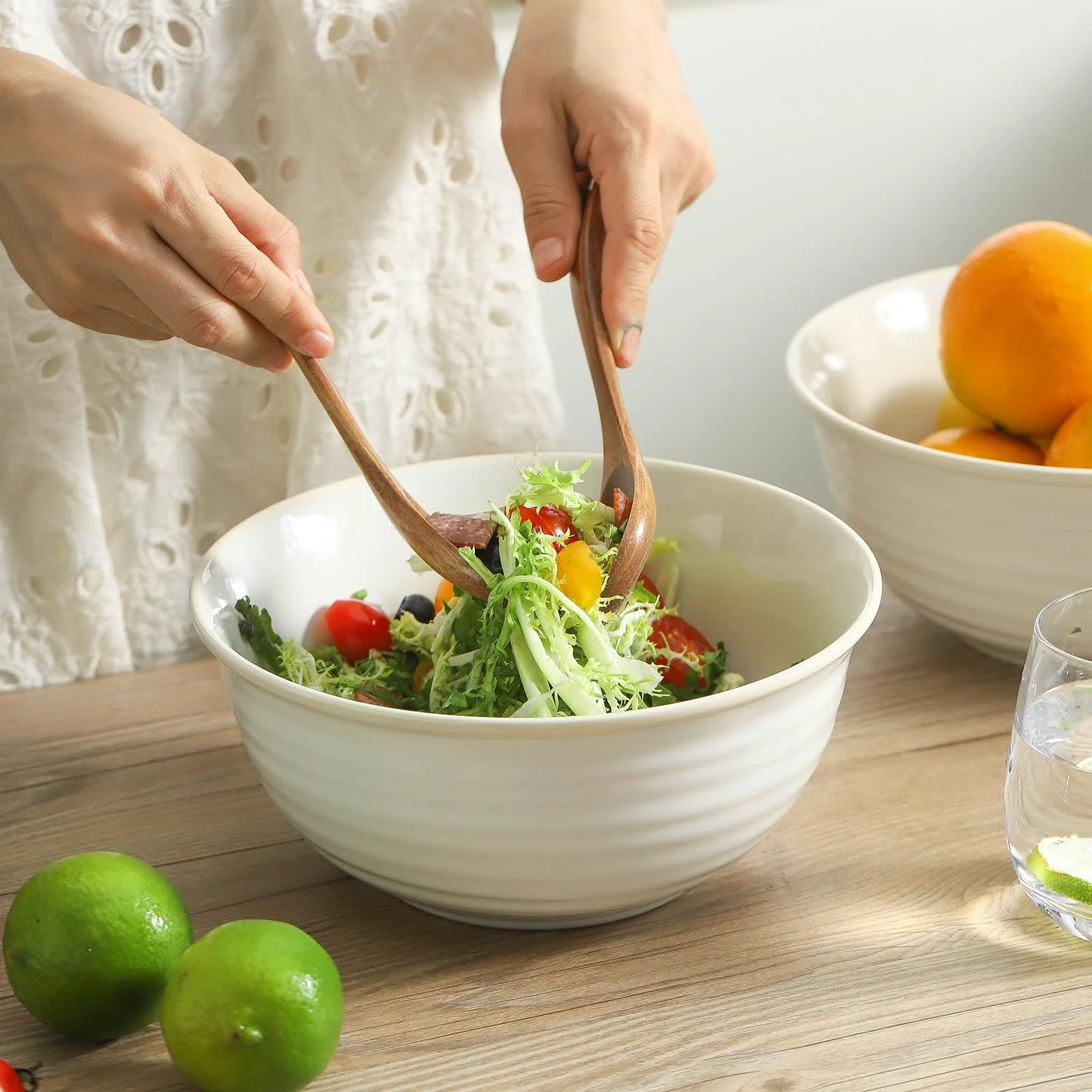
Chipping: hardness and toughness are not the same thing
People assume the harder material is the harder-wearing one, and for the flat middle of a plate that is true. At an edge it inverts. Hardness resists scratching; toughness resists cracking. Porcelain is harder than stoneware and slightly less tough, which means a fine porcelain rim survives a fork better and a dropped stoneware mug survives a tile floor better.
Rim shape matters more than either. A thin rolled rim concentrates any impact into a small area; a thicker rounded one spreads it. That is why almost everything on our plate shelf carries a rounded rim rather than a knife edge, and why a plate that looks chunky in a photograph is usually the one still in service after three years.
- Chips happen at rims and feet, almost never in the middle of a piece.
- Most chips are not drops. They are two pieces meeting in a sink or on a dishwasher rack.
- A chipped rim on a drinking vessel is finished, because the exposed body edge is sharp and porous. A chipped foot on a bowl is cosmetic.
- Stacking wet is worse than stacking dry: a film of water lets pieces slide into each other rather than settle.
Hardness is what survives the fork. Toughness is what survives the floor. A table needs some of each.
The short version of this whole sectionGlaze is glass, and glass has a recipe
A glaze is a coating of silica plus other minerals that melts in the kiln and cools into a thin layer of glass fused to the body. Its job is to seal the surface, make it washable and give it colour. Its recipe decides everything about how it looks.
The minerals that lower the melting point are called fluxes, and historically the most effective flux available to potters was lead. It melts early, flows smoothly, and produces a bright, even, glossy surface at temperatures a simple kiln can reach. That is the whole reason lead glazes existed, and the whole reason they are a food-safety subject today.
What the public guidance actually says
The United States Food and Drug Administration explains the mechanism plainly. Earthenware is porous and has to be glazed in order to hold food or liquid at all. A glaze that contains lead binds that lead into the glass when the piece is fired at the right temperature for long enough. If the firing is too cool or too short, the lead does not fuse, and it can then move out of the glaze and into food. The agency notes separately that ware made in commercial factories for everyday use is far less likely to have a lead problem than traditional or folk pottery fired in small or old kilns.
The same agency states that no federal regulation authorises lead for use as a component of foodware, cookware or food-contact surfaces, and it publishes a compliance guide that inspectors work from when deciding whether ceramic ware leaching lead should be held at the border or taken off sale. There is also an import alert covering lead and cadmium in ceramicware specifically.
Our own position on this is short. The clay and the glaze we use are specified free of lead and cadmium, the pieces are fired twice at around 2,200 degrees Fahrenheit, and both of those facts appear on the product sheet of every piece rather than only in an article. What we will not do is publish a certificate number we cannot show you.
What "lead-free" does and does not mean
The phrase is used two ways and the difference is worth knowing. One meaning is that lead was never in the recipe. The other is that the finished piece releases lead below a threshold when tested. The second is a weaker statement than the first, because a glaze can contain lead and still test below a limit while it is new.
There is a third possibility that the public guidance raises and most articles skip: a kiln that once fired lead glazes can leave residues that contaminate later pieces made with a lead-free recipe. That is a workshop problem rather than a recipe problem, and it is one of the reasons the guidance treats small traditional pottery differently from factory ware.
For a buyer, three practical rules follow. Ware bought for food should be sold as tableware rather than as decoration, because decorative ceramicware is labelled differently for exactly this reason. Bright orange, red and yellow glazes on unfamiliar traditional pottery deserve more caution than plain ones, which is the specific warning the agency gives. And no amount of washing or boiling removes lead from a glaze, so a piece you are unsure about is not rescued by cleaning it.
Cadmium, the other metal
Lead gets the attention; cadmium travels with it. Cadmium compounds produce the strong reds, oranges and yellows that are hard to achieve any other way, and they appear in the same guidance and the same import alerts as lead. The mechanism is the same: a properly fired glaze binds the metal into the glass, and an improperly fired one does not.
Our clay and glaze are specified free of both, and both words appear together on our product sheets rather than one on its own. That pairing is the thing to look for when you read anybody else’s sheet too.
How a piece is actually made
The steps are the same for a mug and for a casserole dish, and they explain most of what a price is buying.
- Body preparation. Clay, feldspar and quartz are milled with water into a slip and screened, then either dried to a plastic mass for pressing or kept liquid for casting. Screening is what keeps a stray iron particle out of a white glaze, where it would fire to a brown speck.
- Forming. Simple round shapes are pressed on a mould; anything with an undercut, a spout or a hollow handle is cast in plaster, which draws water out of the slip and leaves a shell of clay against the mould wall.
- Drying and fettling. The piece dries slowly to leather hardness, then the seam left by the mould is sponged away by hand. This is the step that most obviously separates a careful piece from a rushed one, and you can feel it by running a thumb up the side of a handle.
- Bisque firing. The first pass. The body hardens, shrinks and becomes porous enough to take glaze evenly. Ours goes to around 2,200 degrees Fahrenheit.
- Glazing. Dipped, poured or sprayed. The foot ring is wiped clean by hand, because glaze on a foot fuses the piece to the kiln shelf.
- Gloss firing. The second pass. The glaze melts and bonds. Reactive finishes do their moving here, and this is where the kiln decides what each piece will look like.
- Sorting. Every piece is looked at. Pinholes, crawls where the glaze pulled away from the body, and warping are the usual reasons a piece does not leave.
Two things in that list are invisible in a photograph and account for most of the difference between pieces that look alike. One is the fettling, because a badly finished seam is a place where a glaze pools and a rim goes uneven. The other is the second firing, because a single-fired piece saves a whole kiln cycle and gives up glaze stability to do it.
Reading a product sheet without being fooled
Ceramic product sheets use a small vocabulary loosely, and a few words carry almost no information at all.
| Phrase | What it can mean | What to check instead |
|---|---|---|
| "Ceramic" | Anything fired from clay, at any temperature | A firing temperature, or the words stoneware or porcelain |
| "Porcelain" | Often accurate, sometimes marketing for any white body | Weight, translucency at the rim, the ring when tapped |
| "Stoneware" | Usually accurate; it is not a flattering word | Absorption behaviour on the unglazed foot |
| "High-fired" | No fixed meaning without a number | A stated temperature in degrees |
| "Handmade" | May mean hand-finished on a mould | Whether pieces vary from one another |
| "Microwave safe" | No metallic decoration, body will not crack | Nothing further; it is a low bar and nearly universal |
| "Oven safe" | Rated to a specific temperature, which varies enormously | The actual figure, per piece, not per brand |
The right-hand column is what we would look for on anybody’s sheet, including ours.
Reactive glazes, and why two of ours never match
Some of our finishes use two glazes layered on top of one another. In the heat they move, mix at the boundary and pull apart again as they cool, so colour pools where the piece is thick and breaks to a paler shade at every edge. The technical term is a reactive glaze and the practical consequence is that no two pieces come out identical.
This is a genuine trade rather than a hidden flaw. A set of six reactive-glazed mugs will not photograph as a matched row, and if a matched row is what you want, our plain white and matte finishes are the ones to pick. What you get instead is a set where each piece is identifiable, which turns out to be surprisingly useful in a household where two people put a mug down and walk away.
Heat: the oven, the microwave and the shock
Vitrified bodies handle heat well, but "handles heat" and "handles sudden change in heat" are separate properties. Thermal shock is what happens when one part of a piece expands faster than another, and the crack it produces is instant and permanent.
- A piece from a hot oven onto a cold wet worktop is the classic failure. Put it on a dry board or a folded cloth.
- Cold liquid into a hot dish does the same thing in reverse.
- Oven limits differ across our shelves and are not interchangeable. Our casserole and baking dishes are rated to 500 °F, several ramekin sets to lower figures, and dinner plates lower still. The limit on the card for the piece you own is the one that applies.
- A microwave heats the food, not the ceramic. The container gets hot from the food inside it, and the federal guidance on microwave ovens observes that most microwave injuries are heat burns from hot containers.
- Never put a piece with a metallic decoration in a microwave. We do not make one, but a great many mugs do carry a gold rim.
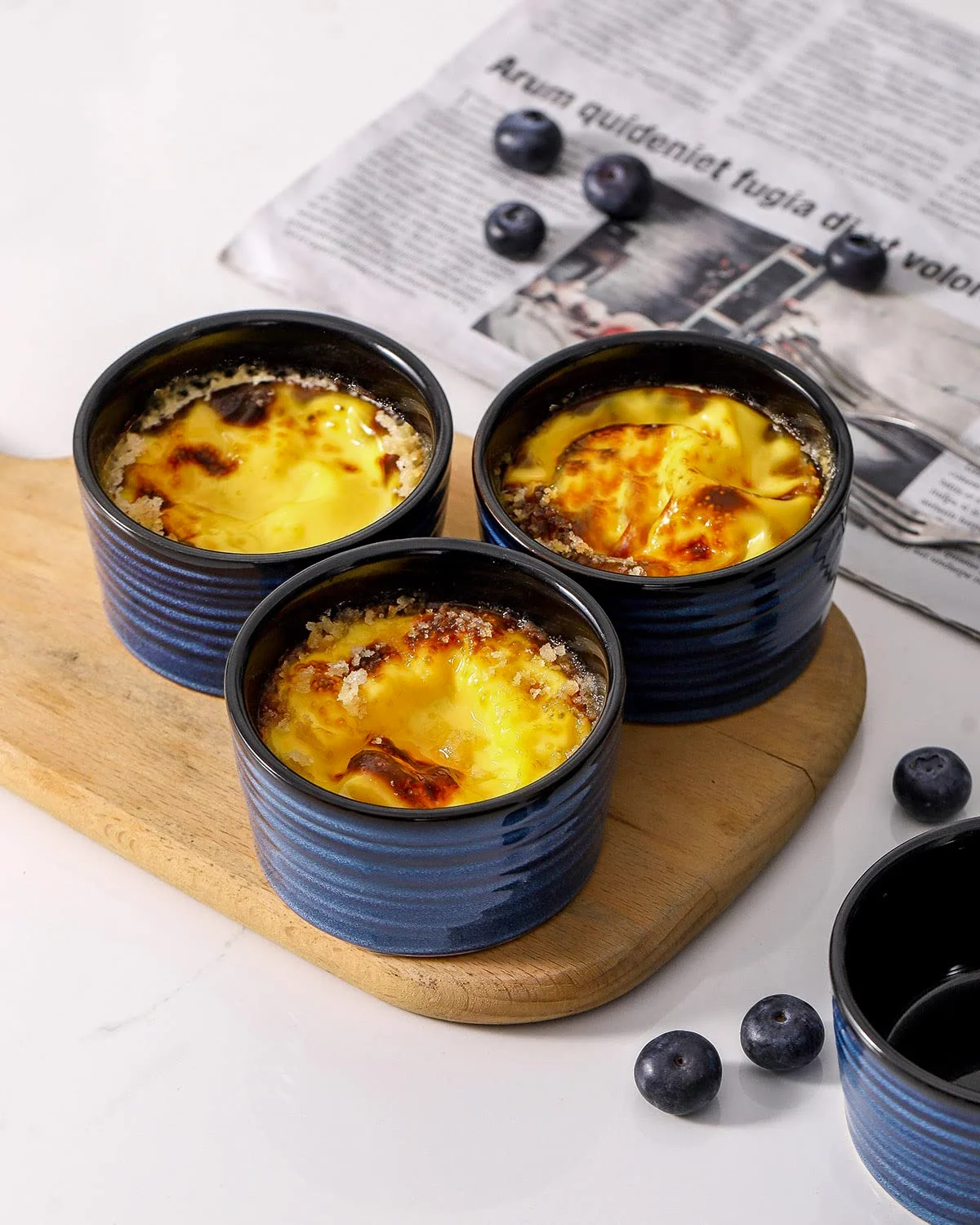
Weight, and what a heavy plate is actually telling you
A heavier piece of the same size is usually a denser or thicker one, and both are usually good news for longevity. There are limits. A dinner plate that a person has to carry six of at a time can be too heavy to be pleasant, and a mug over about a pound empty starts to feel like a task before you have poured anything into it.
| Piece | Comfortable range | What too light usually means | What too heavy usually means |
|---|---|---|---|
| Mug, 15 oz | Roughly 0.7 to 1.0 lb empty | Thin wall, drink cools fast | A full mug near two pounds, awkward at breakfast |
| Dinner plate, 10 in | Roughly 1.2 to 1.8 lb | Thin rim, chips at the edge | A stack of six that nobody wants to carry |
| Pasta bowl, 8.7 in | Roughly 1.1 to 1.6 lb | Flexes hot food heat straight through | Heavy in one hand at a buffet |
| Serving bowl, 84 oz | Roughly 3 to 5 lb | Feels like a mixing bowl, not a serving piece | Two hands and a clear route to the table |
Figures are the comfortable ranges we design to. Individual pieces state their own weight on the product sheet.
So which body should be on your table
For everyday use with children, a dishwasher and a tile floor, a vitrified stoneware body with rounded rims wins on every practical count and loses only on delicacy. For a table you set on purpose, thinner porcelain reads better and rewards being handled carefully. Earthenware belongs where its porosity is an advantage: planters, where drainage matters, and decorative pieces that never meet food.
That is roughly how our own shelves divide. The mugs, bowls and plates are dense high-fired bodies because they get used daily. The planters are a different animal entirely and are honest about it. If you want to see how the division works in practice, HASENSE mugs and bowls lays the shelves out side by side with the sizes and prices on each card.
About the food-safety notes on this page
The food-safety paragraphs here summarise public guidance and are not medical advice. A question about a person’s health belongs with a healthcare professional.
The other two pieces
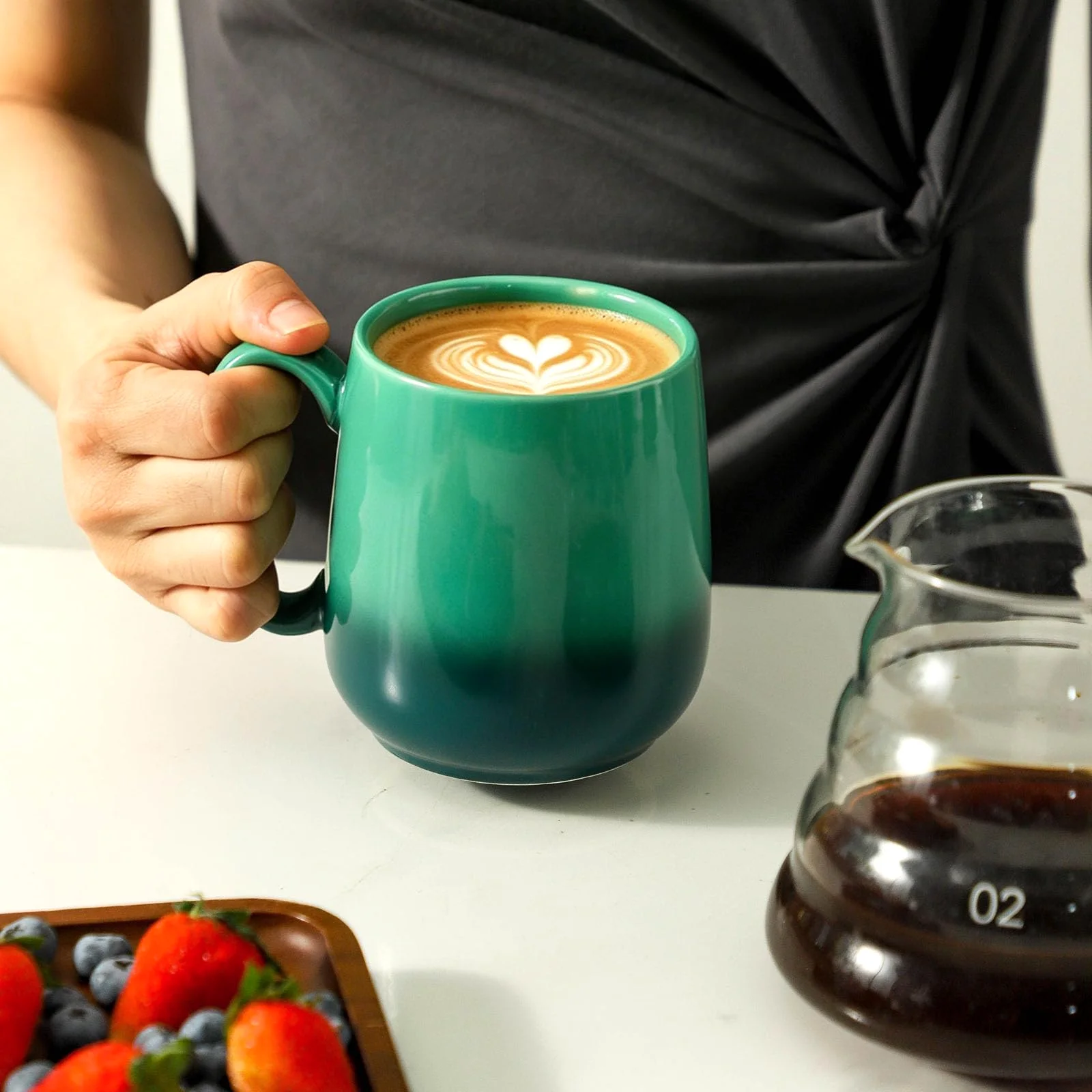
How to choose a coffee mug you will still be using in a year
A cupboard usually holds eight mugs and a household uses two. This is about what makes those two the ones that get picked, and how to buy for it on purpose instead of by accident.
Read it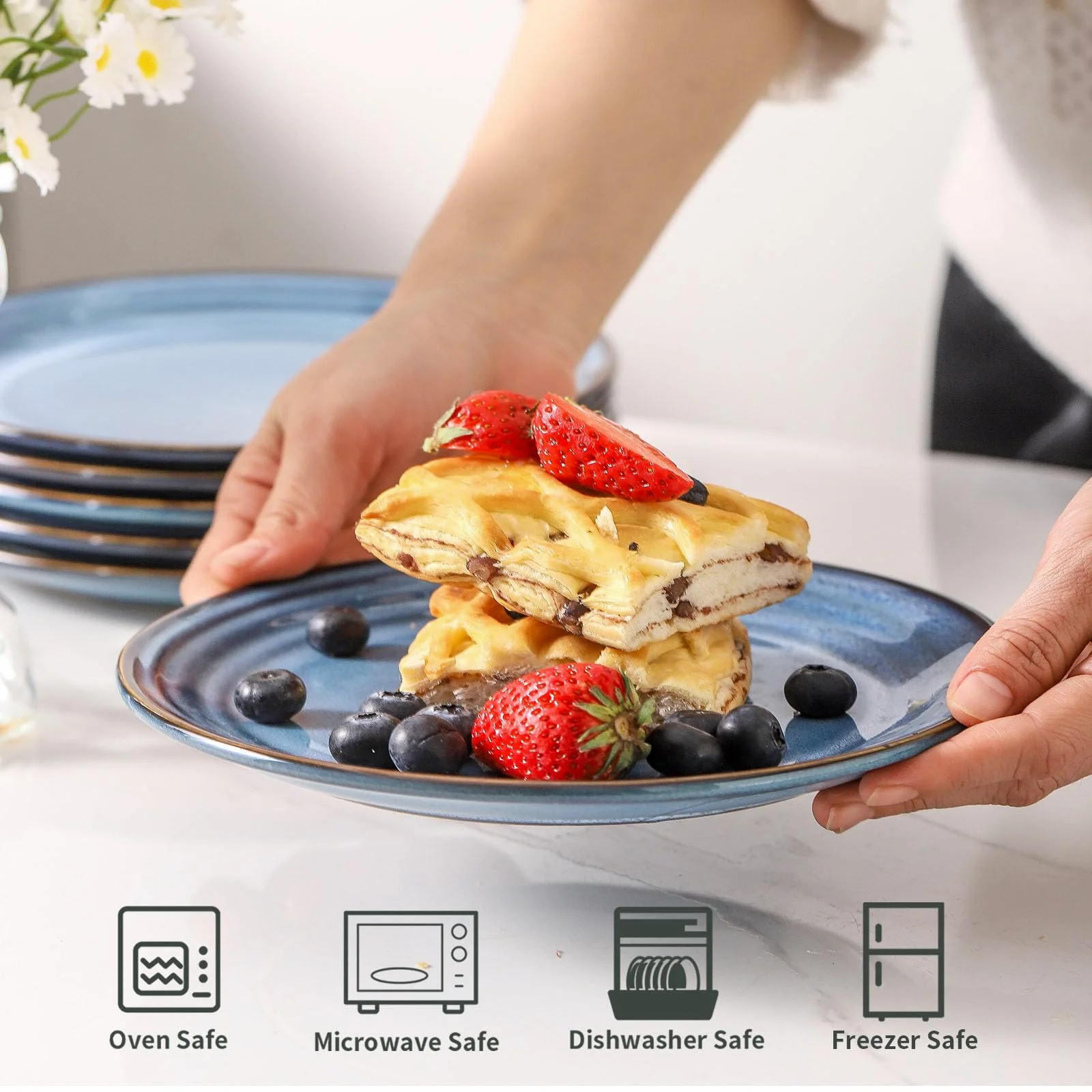
Laying a table for four without buying a forty-piece set
A boxed dinner service is the fastest way to own forty pieces and use eleven of them. Built one shelf at a time, the same money buys a table that fits how you eat.
Read itCare and use
Dishwasher, microwave, oven and the marks cutlery leaves on a white glaze, shelf by shelf.
Read it



