Laying a table for four without buying a forty-piece set
A boxed dinner service is the fastest way to own forty pieces and use eleven of them. Built one shelf at a time, the same money buys a table that fits how you eat.
We sell both. There are boxed sets on our plate shelf that lay a table for four out of one carton, and there are single mugs, single bowls and single butter dishes that people buy one at a time over a couple of years. Both are honest ways to buy. But if you have ever opened the cupboard of a household that bought the big set, you have seen the same thing we have: four dinner plates in use, four side plates untouched since a Christmas, and a soup tureen that has never held soup.
Starting a kitchen from nothing, this is the order we would buy in, with the reasoning attached at each step so that any of it can be argued with.
First: the bowl you eat out of, not the plate
This is the step most people get backwards, and it is worth being blunt about. Count the meals you eat in a week. In most households now, more of them arrive in a bowl than on a plate: pasta, rice, noodles, stew, grain salads, cereal, soup. A plate is for the meals that are cut with a knife, and there are fewer of those than there used to be.
A wide, shallow bowl with a low wall, usually sold as a pasta bowl, covers the largest number of those meals. It holds a portion without heaping it, the wall stops a fork pushing food over the edge, and it works as a plate for anything dry. If you buy exactly one thing, buy four of these.
| Bowl | Typical size | Holds | Job it does |
|---|---|---|---|
| Cereal bowl | 6 to 7 in, 20 to 26 oz | A breakfast portion, a small soup | The one that gets used every morning and washed every morning |
| Pasta bowl | 8.5 to 9 in, 32 to 42 oz | A full dinner portion with room to move a fork | The single most useful shape in a modern cupboard |
| Soup bowl with handles | 6 to 7 in, 20 to 26 oz | Soup you can carry hot | Handles mean you can move it full without a cloth |
| Serving bowl | 9 to 11 in, 60 to 84 oz | A salad or a side for four to six | Comes out for guests, lives at the back the rest of the time |
| Mixing bowl | Sets of 3, nested | Prep rather than eating | Kitchen equipment that happens to be pretty enough to serve from |
Sizes are the working ranges on our own bowl shelf. Each card states its own diameter and capacity.
Second: mugs, in the size the household actually drinks
Mugs are the second purchase for a straightforward reason: they are used more times per day than anything else in the cupboard, and they are the thing most likely to be replaced because the existing ones are chipped rather than because anyone chose them.
Four is the number. Not six, not eight. Four covers a household of two plus a visitor plus one in the dishwasher, and the fifth and sixth mugs in most sets are still at the back of the shelf a year later. If two people in the house drink very different amounts, buy two of one size and two of another rather than four of a compromise.
A note on matching. Nothing on a modern table has to match, and the fastest way to make a mismatched cupboard look deliberate rather than accidental is to keep one thing constant. Same glaze family across different shapes reads as a collection. Same shape in different colours reads as a set. Different shapes in different glazes reads as a jumble, however nice each piece is on its own.
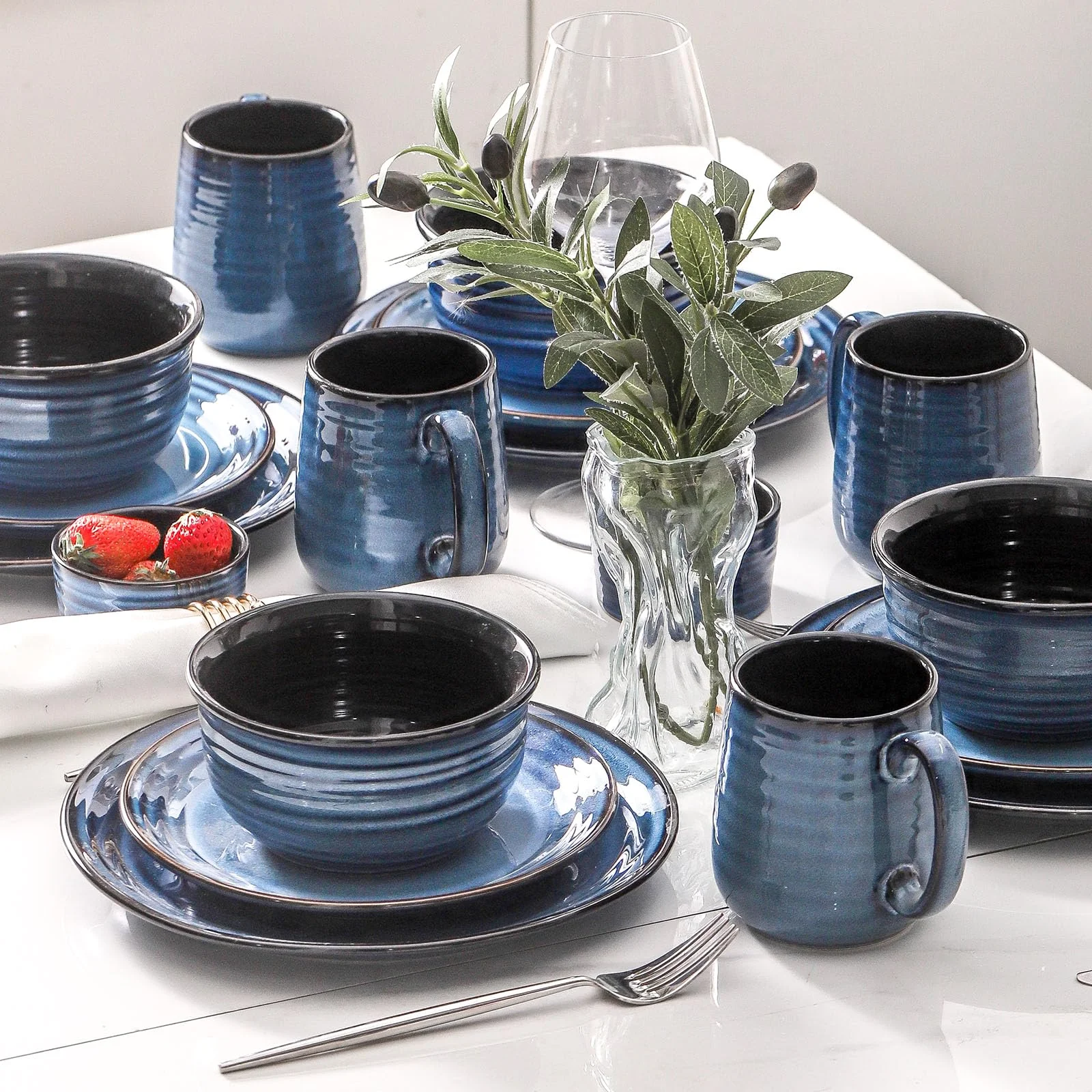
Third: plates, and only the sizes you will use
Now the plates, and here the boxed set gets its revenge, because plates are the one category where buying four at once genuinely saves money and effort. The question is which sizes.
- Ten inch dinner plates. The workhorse. Big enough for a full plated meal, small enough to fit a dishwasher rack and a standard cupboard shelf. If you buy one plate size, buy this one.
- Eight to nine inch salad and dessert plates. Genuinely useful, but as a second course plate, a toast plate and a serving surface for cheese rather than as half of a formal setting. Four is plenty.
- Twelve inch chargers and show plates. These are the pieces that never leave the cupboard in a normal household. Skip them until you know you want them.
- Side plates under six inches. Useful for bread and for a teacup, but only if you already have somewhere to keep them.
Two practical constraints beat aesthetics here, and both are worth measuring before you buy. Standard dishwasher racks take plates up to roughly eleven inches; anything larger has to be washed by hand or laid flat, and a plate that has to be washed by hand does not get used. Standard kitchen shelves are around twelve inches deep, which a twelve-inch charger will not sit in comfortably.
| Boxed set route | One shelf at a time | What changes | |
|---|---|---|---|
| What arrives | Sixteen to forty pieces in one carton | Four to eight pieces at a time | The second route spreads the cost and the cupboard space |
| Bowls | Usually four, often one shape only | The shapes you actually eat out of | The single biggest difference in daily use |
| Plates | Two or three sizes, four of each | Four dinner plates, four smaller if wanted | Fewer plates, more of them in use |
| Mugs | Four, matched to the plates | Four in the size the house drinks | Capacity chosen rather than inherited |
| Replacement | A broken piece breaks the set | A broken piece is replaced on its own | Matters more than people expect over five years |
| Typical outlay | One larger payment | Several smaller ones | Same total, different shape |
Both routes exist on our own shelves. The comparison is about how the cupboard ends up, not about which costs less.
Fourth: the small covered things
This is the category people forget entirely and then buy in a rush. The pieces are small, cheap and individually unglamorous, and between them they do more to make a kitchen feel finished than any plate.
- A butter dish. Butter left in a wrapper in the fridge is too hard to spread; butter left out on a saucer picks up everything in the air. A covered dish solves both, and a ceramic one keeps the butter cooler than a glass one because it does not let light in. Ours are the single most-rated pieces we make, which says something about how many kitchens were missing one.
- A spoon rest. The alternative is a ring on the worktop. A wide one takes a ladle without the handle levering it off the counter, which is the only specification that matters.
- Salt and pepper, or a salt cellar. An open cellar with a lid is faster than a shaker if you cook by pinch rather than by grind.
- A sugar and creamer set. Only if you drink tea with both. Otherwise it is a decoration that needs dusting.
- A utensil crock. A heavy one. The whole job of a crock is to stay put when you pull a spoon out of it, and a light crock fails at exactly that.
Nobody has ever regretted owning a butter dish. Plenty of people have regretted a twelve-inch charger.
What gets reordered, and what does notFifth, and optional: the pieces that go in the oven
Ramekins, pie pans and casserole dishes are a separate purchase with a separate logic, because they are equipment rather than tableware. Buy them when a recipe demands them, not in advance.
The exception is ramekins. A set of six small oven-safe dishes turns out to be the most-borrowed items in a kitchen: they hold prepped ingredients while you cook, serve dips at a table, bake individual portions, and stack into almost no space. They are also the cheapest way to find out whether you like baking in ceramic before committing to a large dish.
One warning that belongs here rather than in the small print. Oven ratings differ from piece to piece and are not a property of the material. A casserole dish rated to 500 degrees and a dinner plate rated to 356 are both ours, both vitrified and both entirely correct; the difference is thickness, shape and how the piece was tested. Read the card for the piece in your hand.
Measure the cupboard before you measure the table
The commonest reason a nice piece stops being used is that it does not fit where it has to live. Five minutes with a tape measure before ordering saves that, and almost nobody does it.
- Shelf depth. Around twelve inches in most kitchens. A ten-inch dinner plate sits in that comfortably; a twelve-inch charger does not.
- Shelf height. Measure the gap, not the shelf. Two mugs stacked need roughly nine inches; a stack of four needs seventeen and nobody has that.
- Dishwasher rack. Most take plates to about eleven inches at the tallest slot, and the slots narrow towards the front. A bowl that will not lie in the top basket gets washed by hand, which means it gets used less.
- The route to the table. An eighty-four ounce serving bowl full of salad is a two-handed carry. If the route involves a door, that matters.
The other measurement worth taking is the one nobody thinks of: the width of the space beside the hob where a spoon rest and a utensil crock have to sit. Seven inches of clear counter is the difference between a crock that gets used and one that gets moved to a corner.
Colour, without it looking accidental
A table built one shelf at a time is a table bought over months, and the risk is that it ends up looking like a collection of things rather than a set. The fix is a rule, and almost any rule works as long as you keep to it.
- One neutral, one colour. White or cream for the plates and bowls, one strong colour for the mugs and the small covered pieces. This is the easiest rule to live with because the colour is on the things that move around.
- One glaze family, many shapes. A reactive blue across mugs, bowls and a butter dish reads as a deliberate collection even though no two pieces are the same shape.
- Dark below, light above. Plates in a dark glaze, bowls and mugs in a light one. Food reads well on both and the table has some structure to it.
What to avoid is a third colour arriving eighteen months in because it was on offer. If you want the option of adding later, buy the neutral pieces first: they carry any decision you make afterwards.
What the whole thing costs
The two routes cost roughly the same money and spend it in a different shape. Here is the arithmetic on our own shelves, using the middle of each price band rather than the cheapest thing we sell.
| All at once | Over six months | Note | |
|---|---|---|---|
| Month one | Bowls, plates, mugs together | Four wide bowls | The first purchase covers most weekday meals either way |
| Month two | Four mugs | By now you know which capacity the household reaches for | |
| Month three | Four dinner plates | Bought last of the three, because they are used least | |
| Month four | Butter dish and spoon rest | Small money, largest change to how the kitchen feels | |
| Month five | Cereal or soup bowls | Only the shape the first bowls proved you were missing | |
| Month six | Ramekins or a serving bowl | Whichever the last five months made obvious | |
| Total spend | One payment in the low hundreds | The same, in six pieces | The difference is what ends up unused |
Every figure on our cards comes from our last update, and the bands move with them.
When the boxed set is actually right
Three situations, and we would say the same if we sold nothing but singles.
The first is furnishing a rental or a second home, where the point is that the cupboard is full by Friday and nobody has to think about it again. The second is replacing a whole table at once after a move, when mixing new pieces with survivors of the old set is the thing that will look accidental. The third is a gift to someone setting up a first kitchen, where a set is legible as a gift in a way that four separate parcels is not.
Outside those three, the piece-at-a-time route wins on the only measure that matters after a year, which is what percentage of the cupboard is actually in use.
What we would not buy
A maker saying this out loud is unusual, so here it is plainly. There are pieces on our own shelves we would not put in a first kitchen.
- Sets of six anything, unless you regularly feed six people. Four plus a spare beats six that live in two layers.
- A second serving bowl before the first one has been used twice.
- Espresso cups, unless there is an espresso machine. A small mug does the same job and gets used the rest of the time.
- Anything above about eleven inches that has to be hand washed.
- A matching set bought because it matches, when the shapes are not shapes you eat out of.
Buying for somebody else
Ceramics are given as gifts more often than almost anything else in a kitchen, and gift buying breaks most of the rules above. Somebody setting up a first flat, somebody who has just moved, somebody whose old set finally gave out: in each case the person receiving does not get to choose, and the risk is not that the gift is wrong but that it duplicates.
Three rules make that unlikely. Buy the shape people do not buy for themselves, which almost always means one of the small covered pieces rather than a plate. Buy in a finish that varies, because a reactive or gradient glaze reads as considered in a way a plain white set does not. And buy four rather than six, because six of anything is a commitment to a cupboard the giver has never seen.
The single safest gift on our own shelves is a covered butter keeper, and the reason is dull and reliable: almost every household wants one, almost nobody buys one for themselves, and nobody owns two. The second safest is a set of ramekins, for the same reason with a smaller margin.
What to avoid giving is a full dinner service, unless you have been asked for one. It is a large object, it commits the recipient to a look, and it is the hardest thing in a kitchen to put away politely if it does not suit.
Replacing rather than starting
Most people are not furnishing an empty cupboard. They are replacing three chipped mugs and a plate that finally broke, and the temptation is to buy something that matches what is already there. That is usually a mistake, because a five-year-old glaze has aged and a new piece of the same colour will read as slightly wrong beside it.
The better move is to replace by category rather than by piece. If the mugs have gone, replace all the mugs at once and let them be different from the plates on purpose. A cupboard where mugs are one thing and plates are another looks deliberate; a cupboard where three mugs almost match looks like an accident, because it is one.
The same logic applies to sizes. If you are replacing anyway, this is the moment to change capacity rather than reproduce whatever you happened to own. Most people who move from twelve ounces to fifteen do not go back.
The whole thing on one page
| Step | What to buy | How many | Why here |
|---|---|---|---|
| 1 | Wide shallow bowls | Four | Covers more weekday meals than any other shape |
| 2 | Mugs in the size you drink | Four | Used more times a day than anything else |
| 3 | Ten inch dinner plates | Four | The plate that fits a dishwasher and a shelf |
| 4 | Butter dish, spoon rest, salt | One each | Small, cheap, and the reason a kitchen feels finished |
| 5 | Cereal or soup bowls | Four | Only once the pasta bowls have proved which meals you eat |
| 6 | Ramekins | Set of four or six | The most-borrowed pieces in any kitchen |
| 7 | A serving bowl | One | Buy it before the first time you host, not after |
Everything on this list exists on our shelves as a single piece as well as in a set.
None of this requires buying from us. It is the order that produces a cupboard where everything gets used, whoever made the pieces. If you do want to see it built out of one glaze family, the HASENSE range puts every shelf on one page with the sizes and the prices side by side, and each of the seven steps above has its own shelf.
The other two pieces
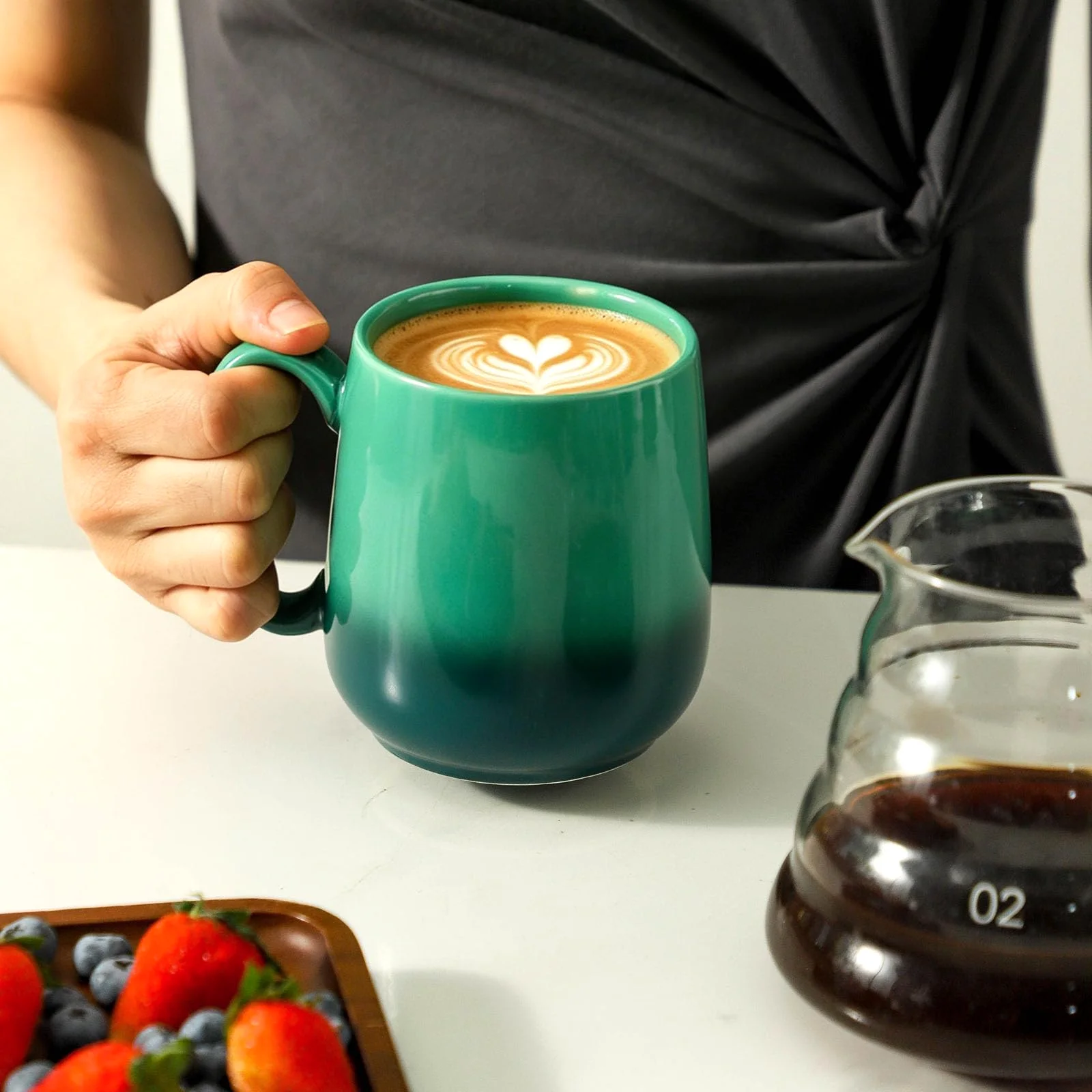
How to choose a coffee mug you will still be using in a year
A cupboard usually holds eight mugs and a household uses two. This is about what makes those two the ones that get picked, and how to buy for it on purpose instead of by accident.
Read it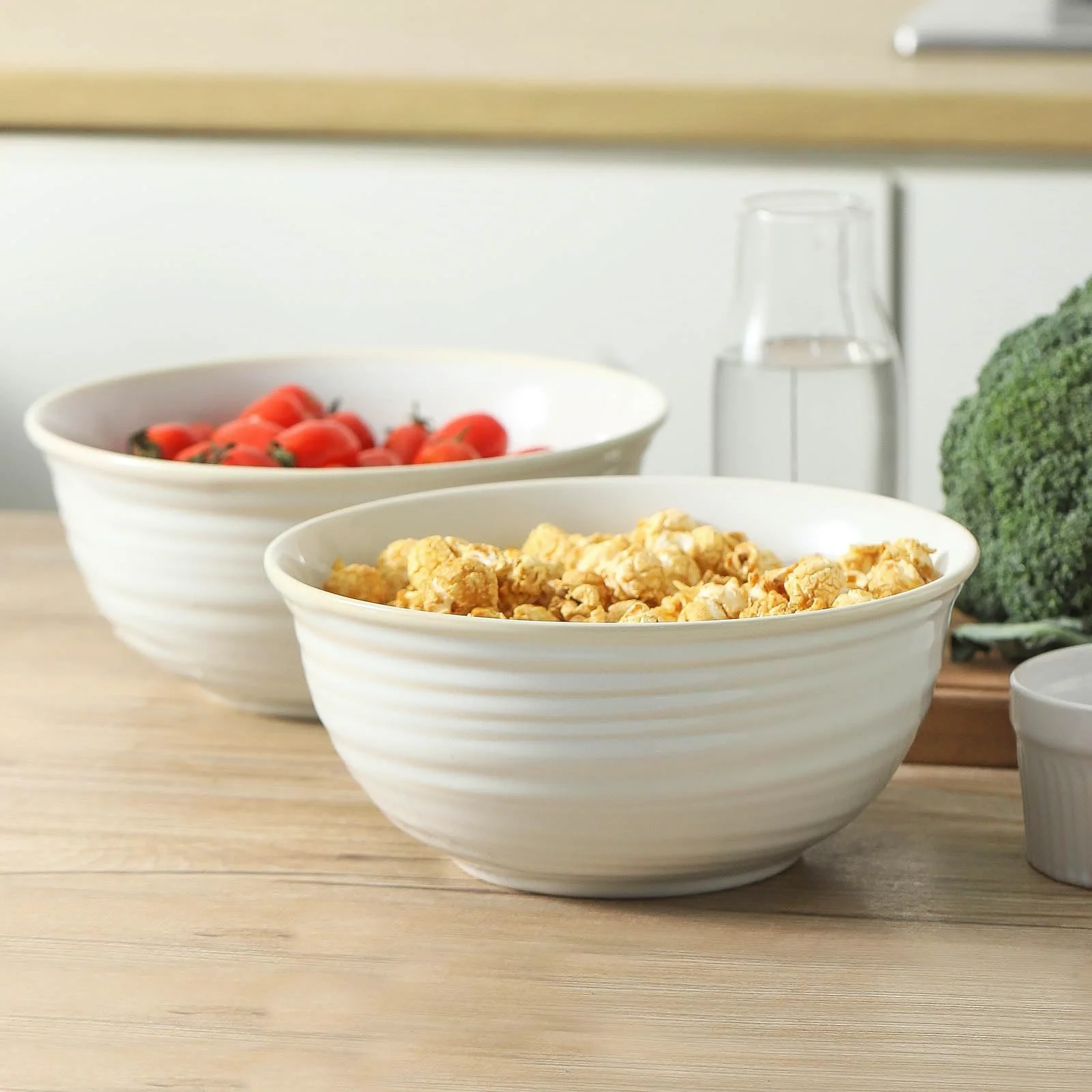
Porcelain, stoneware and earthenware: what the difference does to your table
Three words get used as if they were interchangeable, and they are not. The difference is a temperature, and that temperature decides how strong a plate is, how heavy it feels and how it behaves in an oven.
Read itCare and use
Dishwasher, microwave, oven and the marks cutlery leaves on a white glaze, shelf by shelf.
Read it



